General
7 Upgrades That Add Value to a Florida Home in 2026 (and What the Data Says)
Which home upgrades add the most value in Florida?
In Florida, the upgrades that add the most value do more than raise a sale price. They keep the home insurable, carry it through hurricane outages and lower what it costs to live in. A stronger roof, owned solar, battery backup, efficient HVAC, a heat pump water heater, water treatment and smart controls lead the list.
Most "upgrades that add value" lists are written for any house in any state: paint the kitchen, swap the front door, refresh the landscaping. Those help. But a Florida home has to stay insurable, get through hurricane season and stay cool for most of the year, and the upgrades that matter most here are the ones that do those jobs.
This guide ranks seven upgrades the way a Florida homeowner should: insurability and storms first, then the monthly cost of living in the home, then resale. Every claim links to a source. It is general information, not a promise about what any upgrade will do for your home's price, your insurance or your bills.
What does "value" mean for a Florida home?
Start with an honest point: very few home projects return their full cost when the house sells. In the National Association of Realtors' 2025 Remodeling Impact Report, the single best cost recovery was 100%, for a new steel front door [1]. Most projects in national surveys recover less than they cost [1] [2].
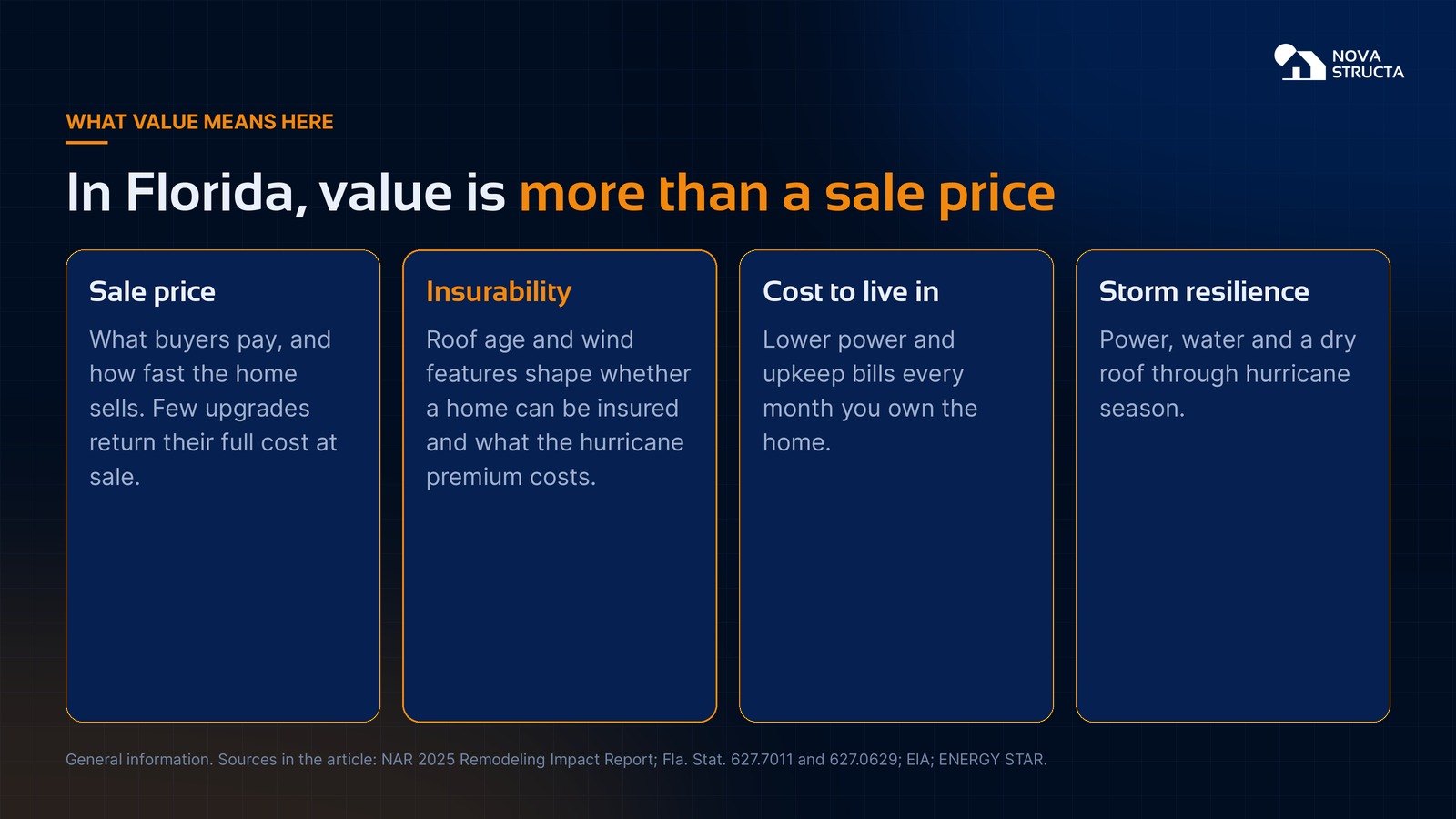
So it helps to count value four ways:
- Sale price. What buyers pay and how quickly the home sells.
- Insurability. In Florida, roof age and wind features shape whether a home can be insured and what the hurricane part of the premium costs [3] [4].
- Cost to live in. Lower power and upkeep bills every month you own the home.
- Storm resilience. Keeping power, water and a dry roof through hurricane season.
The upgrades below are the ones that score on more than one of those.
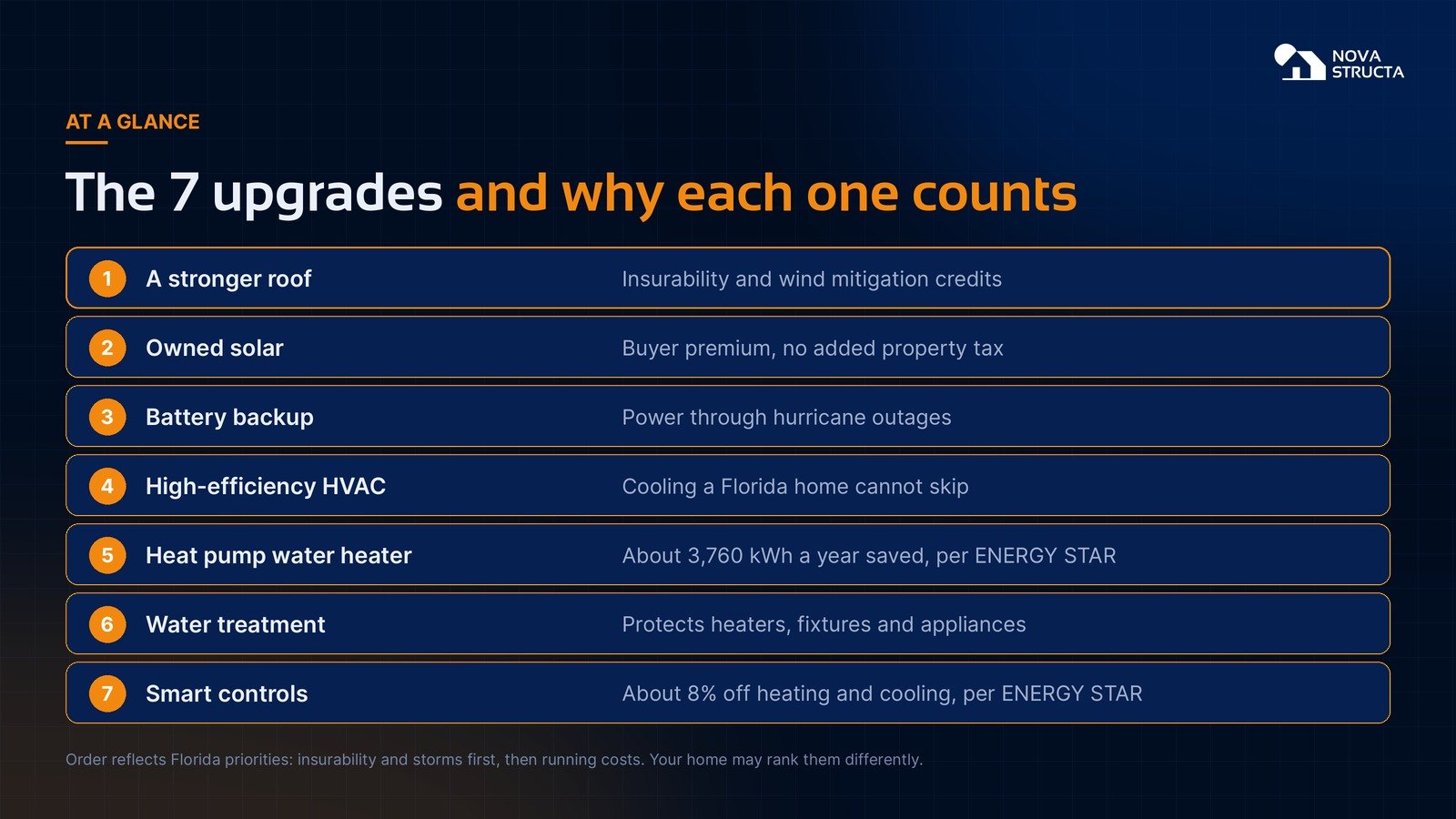
| Upgrade | Main value | What the data says |
|---|---|---|
| 1. A stronger roof | Insurability | Florida law limits refusals based on roof age under 15 years, and requires wind mitigation credits [3] [4] |
| 2. Owned solar | Sale price | Homes with solar sold for 4.1% more in Zillow's study [7]; the added value is left out of assessed value [10] |
| 3. Battery backup | Resilience | U.S. customers averaged 11 hours without power in 2024 [12] |
| 4. Efficient HVAC | Running costs | New split ACs in the Southeast must meet at least 14.3 SEER2 [14] |
| 5. Heat pump water heater | Running costs | About 3,760 kWh a year saved for a family of four, per ENERGY STAR [17] |
| 6. Water treatment | Upkeep | Electric tank heaters on hard water built about 2 lb of scale a year in testing [18] |
| 7. Smart controls | Running costs | About 8% off heating and cooling bills, per ENERGY STAR [15] |
1. Why does a stronger roof come first?
In Florida, the roof decides more than curb appeal. It decides whether the home can be insured on good terms.
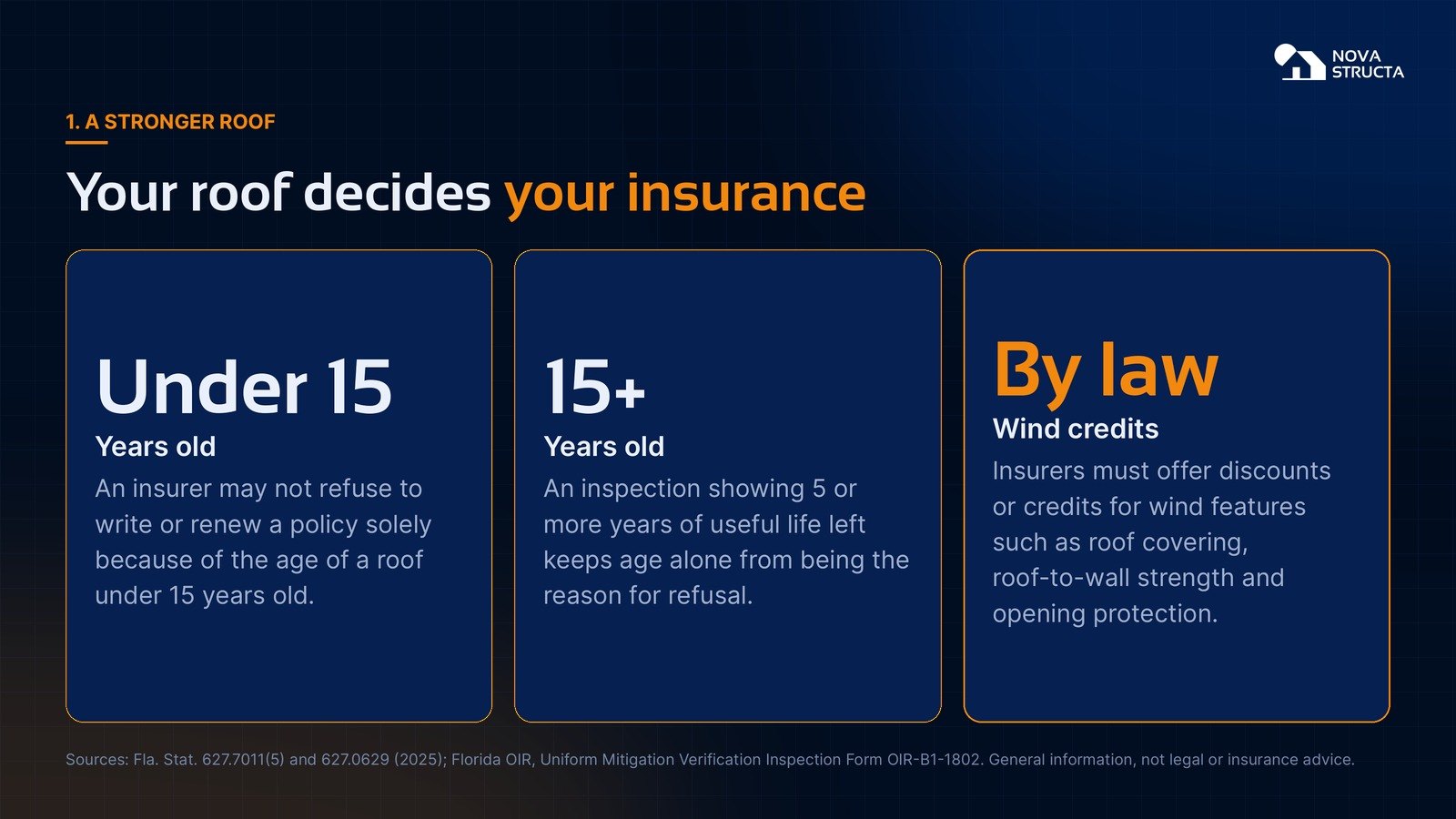
- Roof age. An insurer may not refuse to issue or renew a homeowners policy solely because of the age of a roof under 15 years old. For older roofs, an inspection showing at least 5 years of useful life left keeps age alone from being the reason for refusal [3].
- Wind mitigation credits. Florida law requires insurers to offer discounts, credits or deductible reductions for features shown to reduce wind losses, including roof covering performance, roof-to-wall strength and opening protection [4]. A wind mitigation inspection on the state form documents those features [5].
- Buyers and agents notice. New roofing is one of the top three projects Realtors recommend before selling (37%), and 43% of Realtors saw increased demand for it in the last two years. It also earned a perfect 10 Joy Score from homeowners [1].
On resale price alone, a roof does not pay back its full cost. According to the Remodeling 2025 Cost vs. Value Report (www.costvsvalue.com), an asphalt shingle replacement recouped 68% of its cost at resale nationally, and a metal roof replacement 50% [2]. The case for a new roof in Florida is the insurance and storm math, not a quick flip. Metal costs more upfront, but it had the lowest damage rate of any roof type in the Insurance Institute for Business & Home Safety's Hurricane Ian review, about 12% [19]. For the full comparison, see the best roofing materials for Florida homes and roof insurance in Florida.
The state's My Safe Florida Home program offers wind mitigation inspections and, for eligible homeowners, grants of up to $10,000 for approved hurricane upgrades such as roof improvements, impact windows and doors, garage door reinforcement and a secondary water barrier [6]. Eligibility rules and funding change, so check the program's site before you plan around it.
2. Does owned solar add value to a Florida home?
The evidence that buyers pay more for solar homes is solid, with two important conditions: the system has to be owned, and results vary by market.
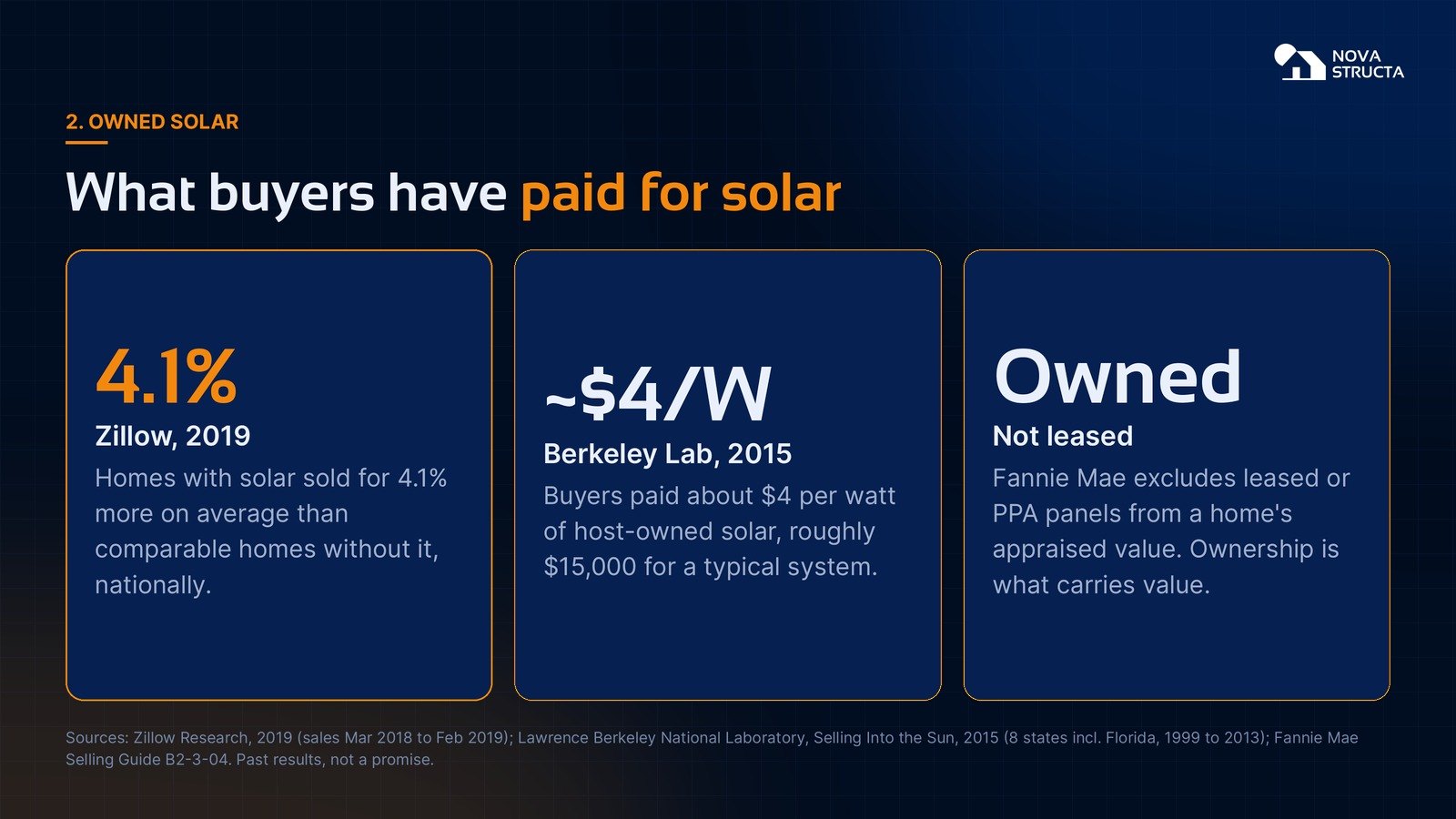
- Zillow (2019): homes with solar sold for 4.1% more on average than comparable homes without it, about $9,274 for a median-valued home nationally [7].
- Berkeley Lab (2015): across nearly 22,000 sales in eight states, including Florida, buyers paid about $4 per watt of host-owned solar, roughly $15,000 for a typical system [8].
- Listing language (2022): Zillow found listings that mention solar panels sold for 1.4% more than expected [16].
The condition that matters most is ownership. Under Fannie Mae's rules, panels that are leased or covered by a power purchase agreement cannot be included in a home's appraised value [9]. Owned panels, whether paid in cash, paid off or tied to the mortgage, follow standard appraisal requirements [9].
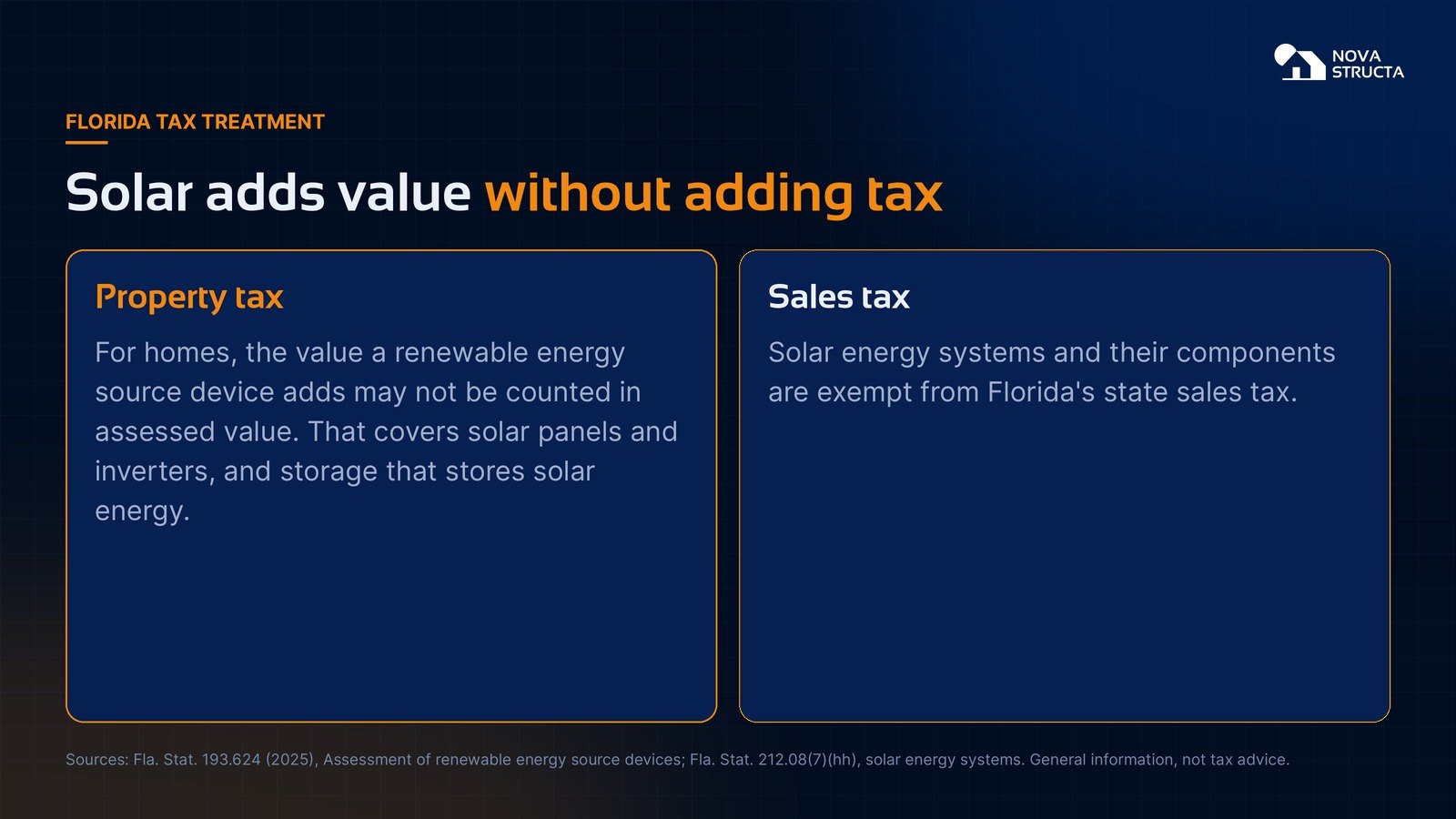
Florida adds two advantages of its own. For residential property, the value a renewable energy source device adds may not be counted when the home's assessed value is set, so solar does not raise your property tax [10]. And solar energy systems are exempt from state sales tax [11]. For the full picture, see is solar worth it in Florida in 2026 and solar incentives.
3. Is battery backup worth adding?
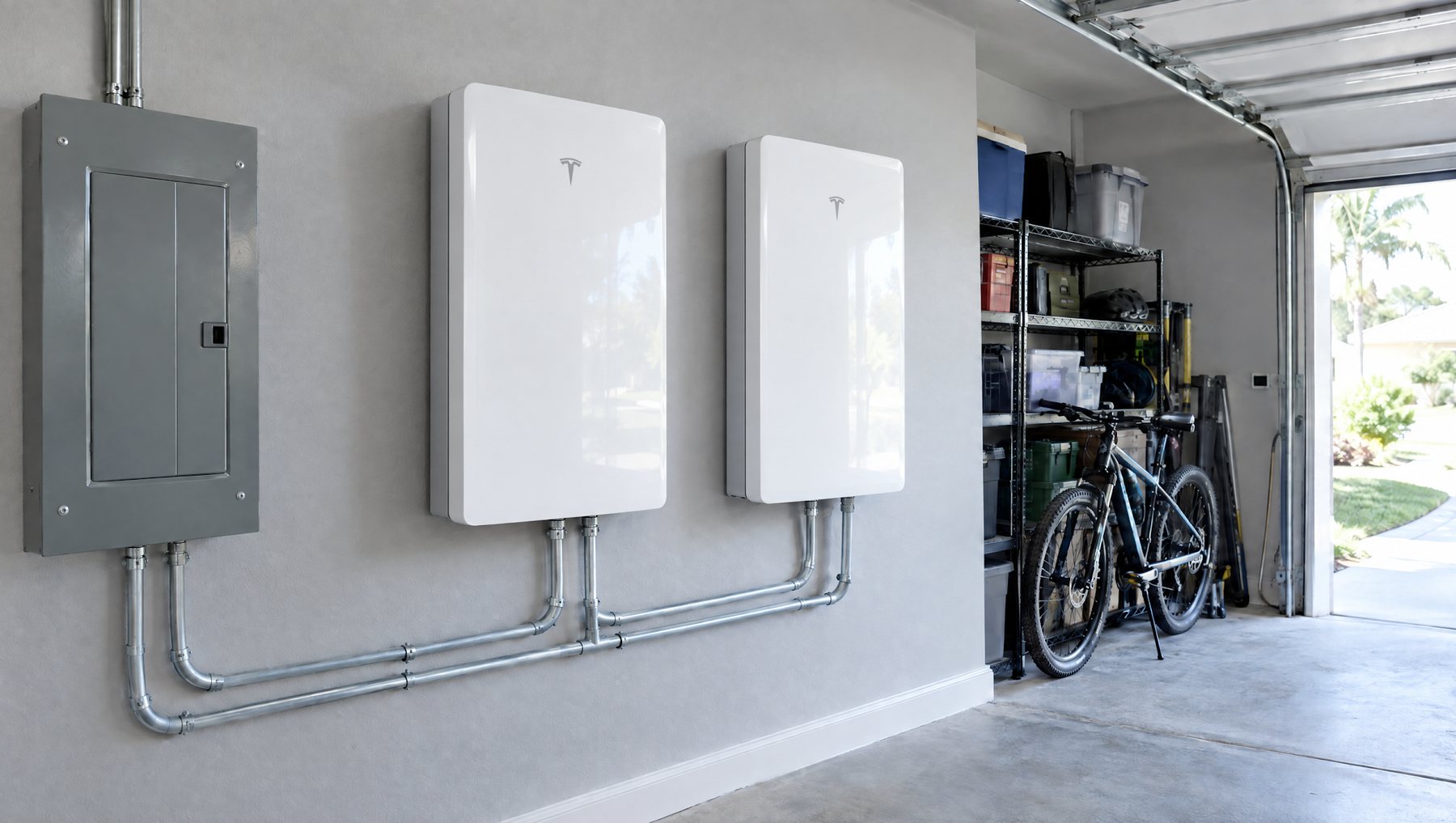
Hurricane season is the reason. In 2024, U.S. electricity customers averaged 11 hours of interruptions, nearly twice the average of the decade before, and major events such as Hurricanes Helene and Milton drove most of it. Milton alone left 3.4 million Florida customers without power [12].
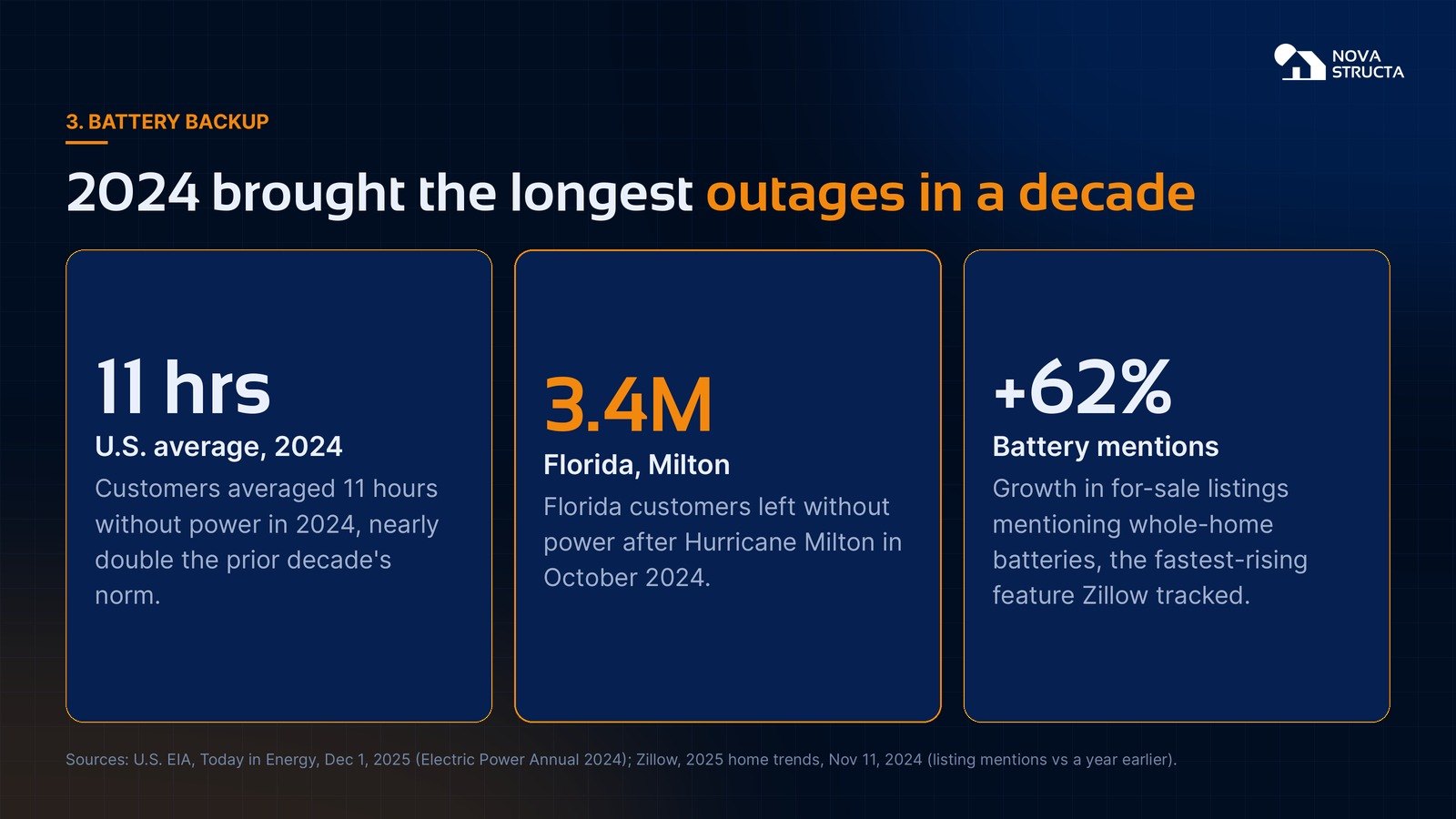
Buyers are paying attention. Mentions of whole-home batteries in for-sale listings on Zillow rose 62% in 2024, the fastest-growing feature in its analysis [13]. Backup power in general holds value well: in the Cost vs. Value Report, a backup power generator recouped 95% of its cost at resale nationally [2]. That figure is for a generator, not a battery, but it shows how buyers weigh backup power. A battery paired with solar can also recharge from the panels during a long outage, and Florida's property tax exclusion lists storage devices that store solar energy [10].
For how it works in a storm, see how Powerwalls work during a hurricane and Tesla roof and Powerwalls.
4. Does a new high-efficiency HVAC system add value?
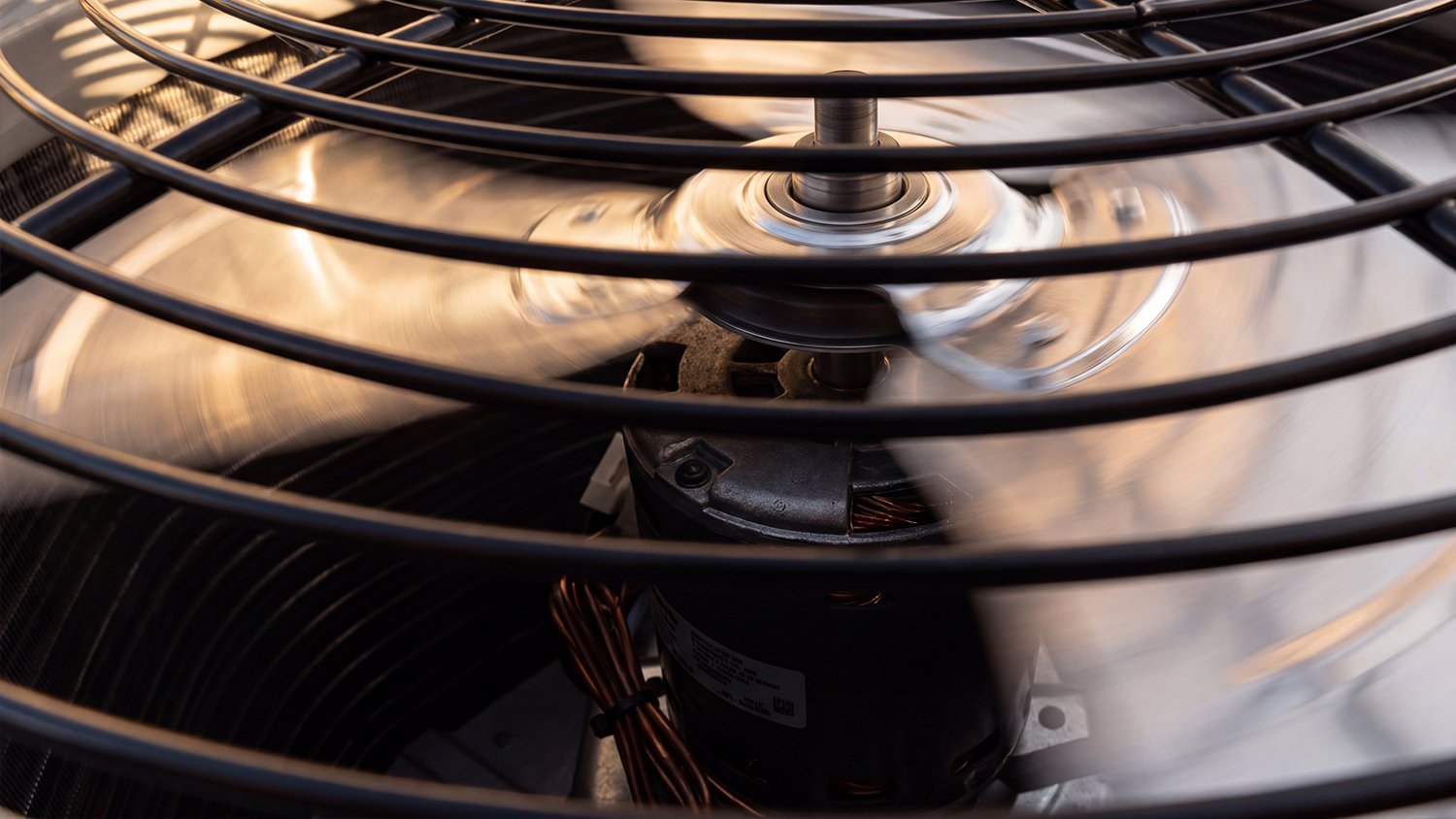
In Florida, air conditioning is not optional, and the age and condition of the system are among the first things buyers ask about. Nationally, almost half of a typical household's energy bill goes to heating and cooling, according to ENERGY STAR [15].
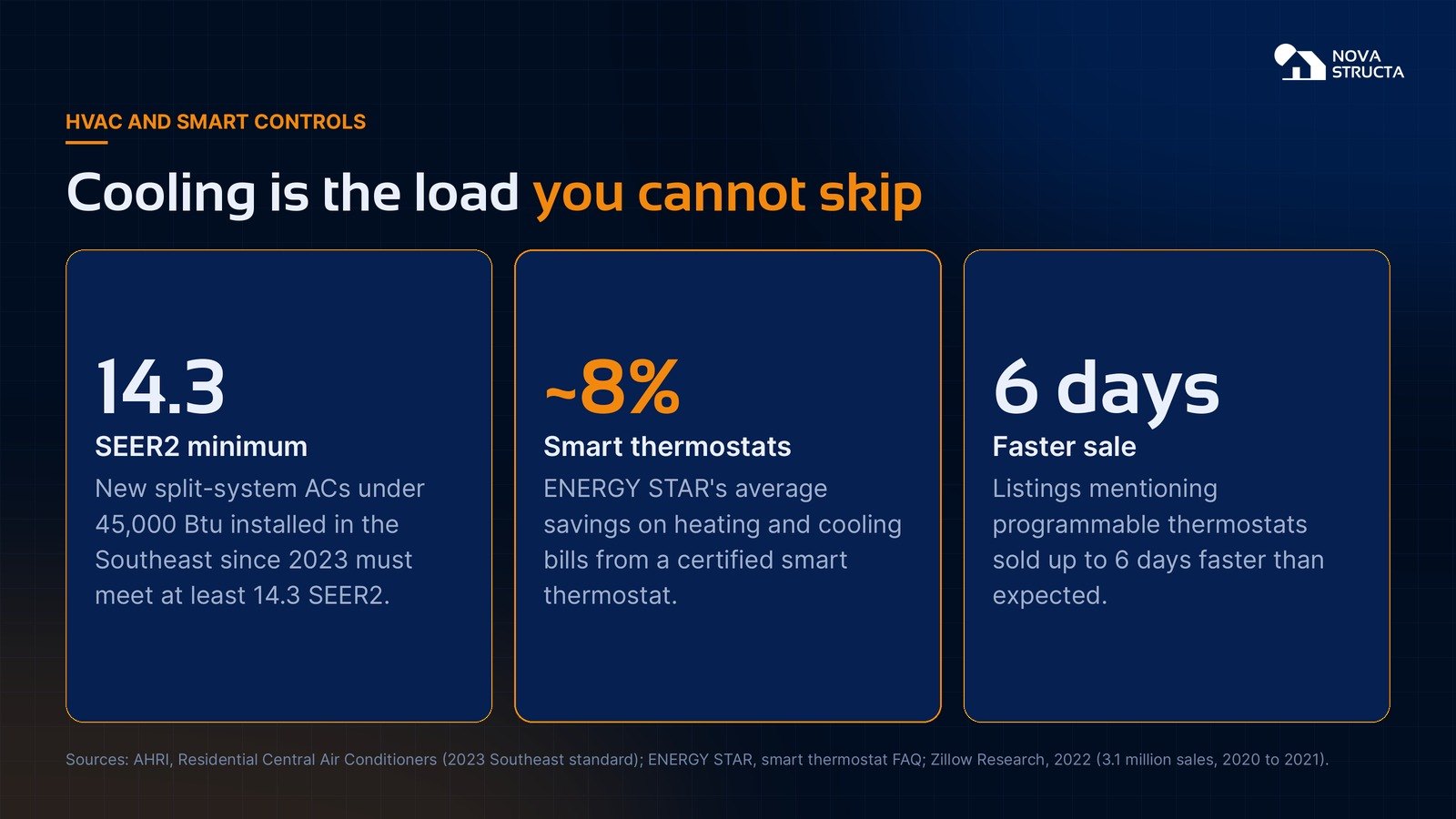
The floor has also moved. Since January 1, 2023, new split-system air conditioners under 45,000 Btu installed in the Southeast, including Florida, must meet at least 14.3 SEER2 [14]. In the Cost vs. Value Report, an HVAC conversion to an electric heat pump system recouped 72% of its cost at resale nationally [2]. Like a roof, an HVAC system earns most of its value while you live with it.
For timing and cost, see repair or replace your AC, how long an AC lasts in Florida and the cost to replace an AC.
5. Why a heat pump water heater?
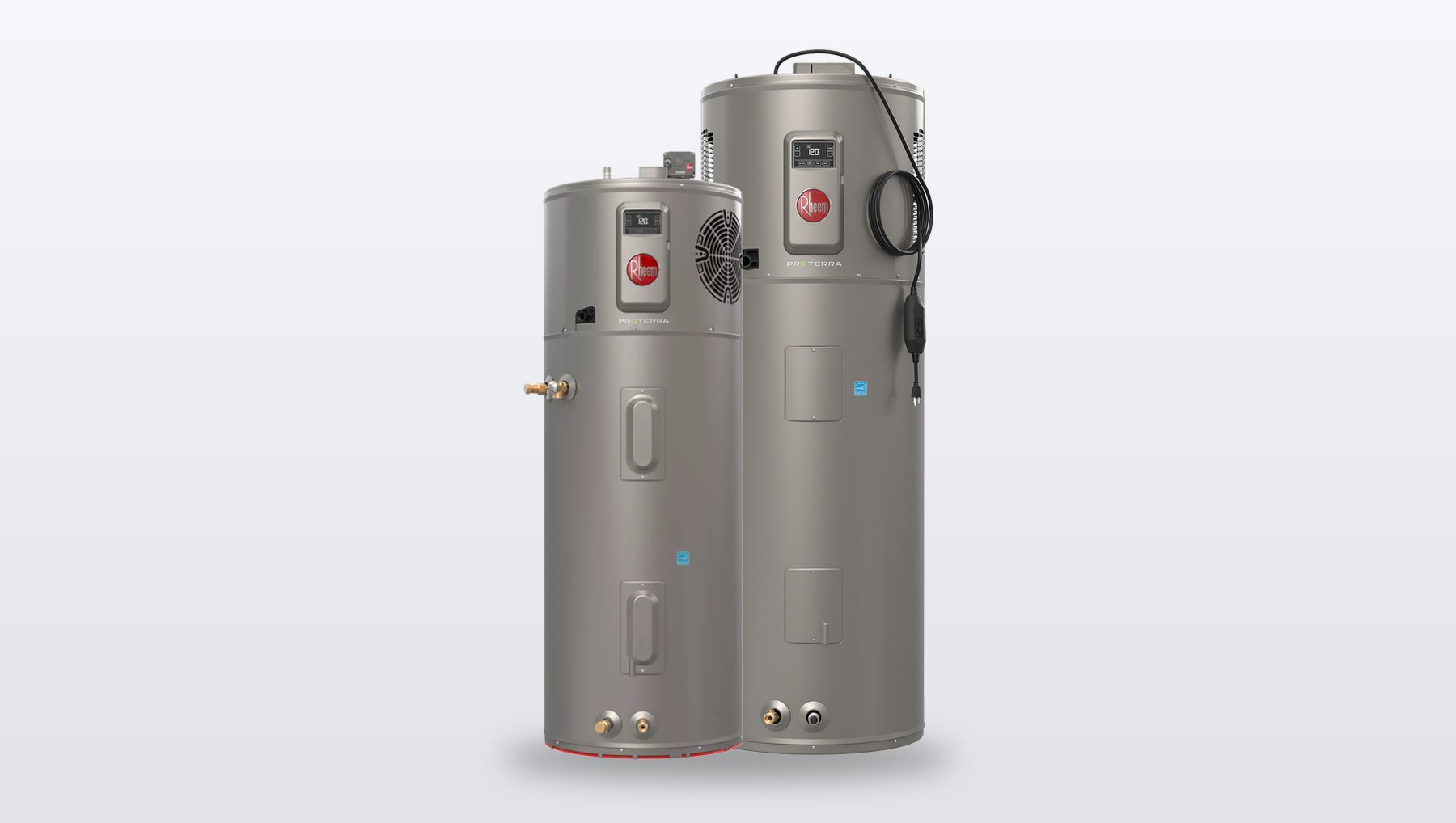
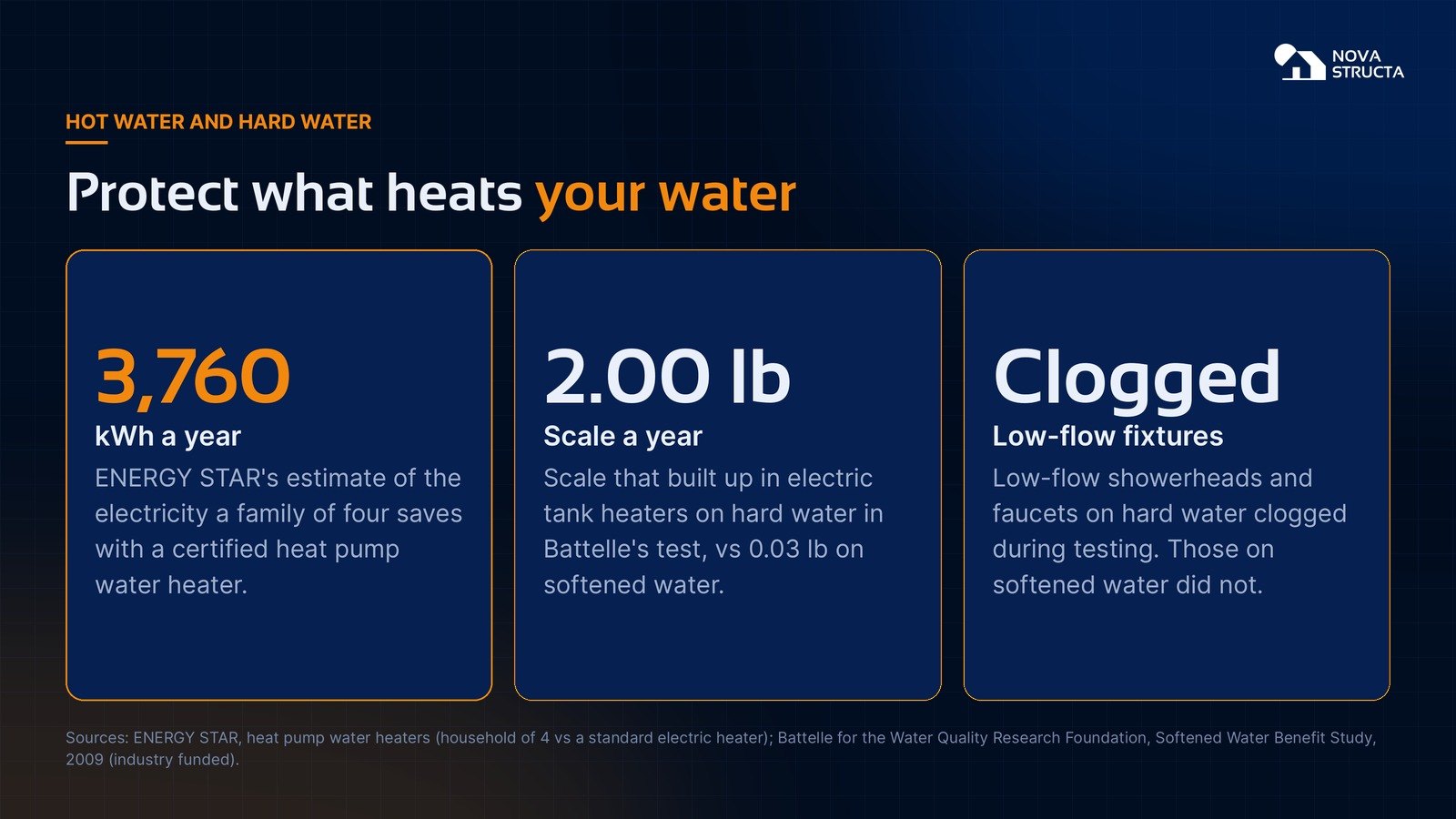
Water heating is one of the bigger electricity uses in an all-electric home, and a heat pump water heater is the most efficient electric option. ENERGY STAR estimates a family of four that switches from a standard electric water heater to a certified heat pump model saves about 3,760 kWh a year [17]. That is ENERGY STAR's estimate, not a promise; your result depends on use and setup.
The water heater we install is the Rheem ProTerra, in 50 and 80 gallon sizes. It runs on the same 30 amp circuit a typical electric tank uses. For how it compares with tank and tankless options, see tank vs. tankless water heaters in Florida.
6. Why does water treatment protect value?
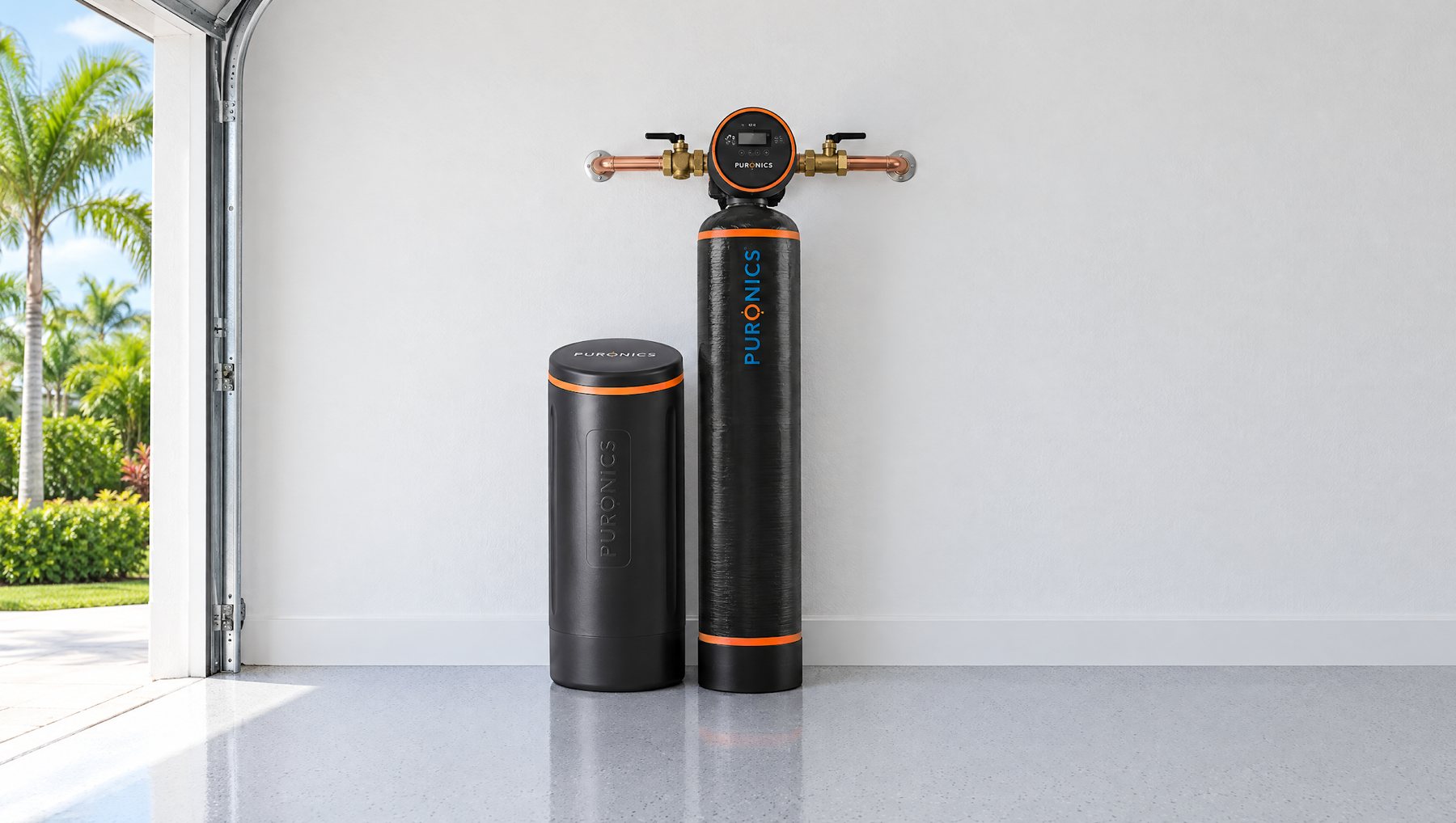
Much of Florida has hard water, and scale is hard on anything that heats or sprays it. In a 2009 laboratory study by Battelle for the Water Quality Research Foundation (an industry-funded group), electric tank water heaters on hard water built up about 2.00 lb of scale a year, compared with 0.03 lb on softened water. Low-flow showerheads and faucets on hard water clogged during testing, while those on softened water did not [18]. The study also expected heating elements on hard water to wear out sooner [18].
Protecting a new water heater, fixtures and appliances is the value here, along with better-tasting water. The systems we offer are the Puronics Defender iGen 3.20 whole-home softener and the Micromax 8500 under-sink reverse osmosis system. To check your own water first, see our Florida water quality guide and do you really need whole-home water filtration.
7. Do smart controls add value?
Smart controls are the smallest upgrade on this list and the easiest to justify. ENERGY STAR certified smart thermostats save about 8% on heating and cooling bills on average, and savings can be higher depending on climate, comfort settings and occupancy [15]. Buyers notice too: in Zillow's listing study, homes that mentioned programmable thermostats sold up to 6 days faster than expected, and those mentioning smart lights about 3.6 days faster [16].
Smart controls also tie the other upgrades together, so you can see what the solar, battery, HVAC and water heater are doing from one place. See smart home automation.
What do home listings show?
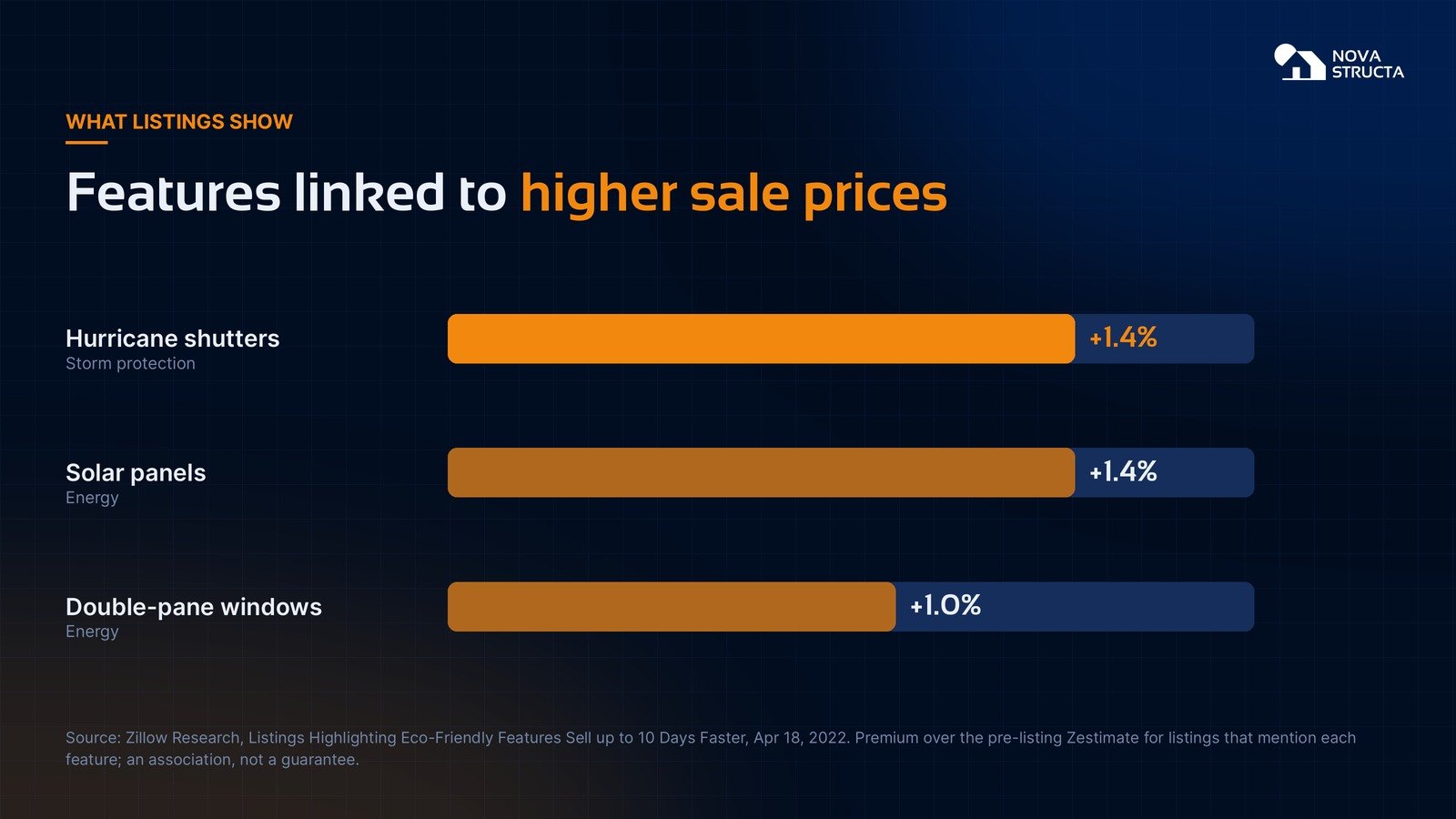
Zillow analyzed 3.1 million home sales from 2020 and 2021 and compared each sale price with the home's pre-listing estimate. Listings that mentioned hurricane or storm shutters sold for 1.4% more than expected, solar panels 1.4% more and double-pane windows 1.0% more [16]. Separately, Zillow reports that 86% of recent buyers say it is very important for a home to have at least one climate-resilient feature [13].
Opening protection (impact windows, doors and a reinforced garage door) is not one of our services, but it belongs on any Florida resilience plan. It is one of the wind mitigation features that earns insurance credits [4], and the My Safe Florida Home program can help eligible homeowners pay for it [6].
How do you keep the value when you sell?
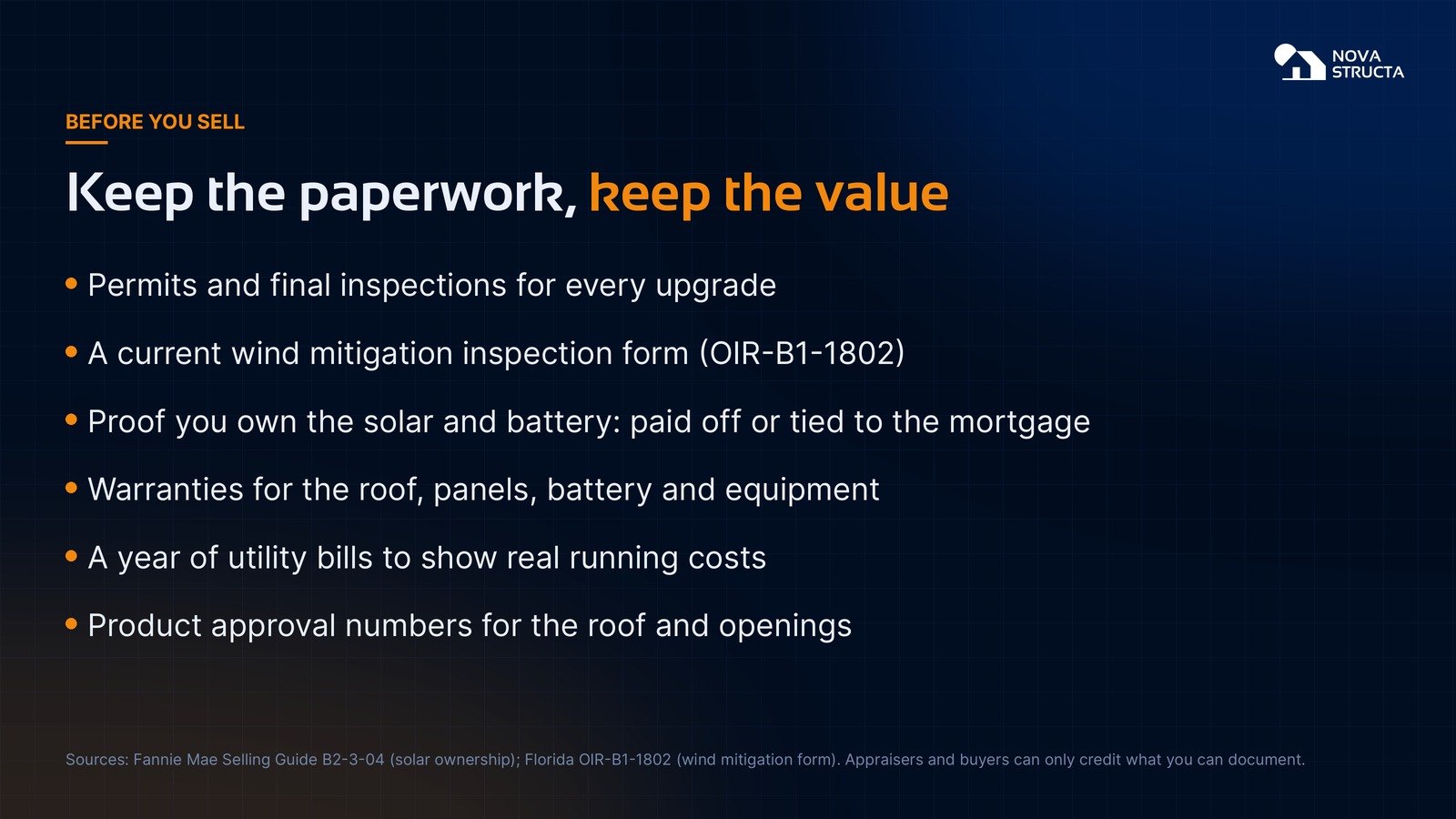
An upgrade only counts at sale if a buyer, an appraiser and an insurer can verify it. Keep these together:
- Permits and final inspections for every upgrade.
- A current wind mitigation inspection on the state form [5].
- Proof that you own the solar and battery: paid in cash, paid off or tied to the mortgage [9].
- Warranties for the roof, panels, battery and equipment, and whether they transfer to a new owner.
- A year of utility bills, so buyers can see real running costs.
- Product approval numbers for the roof and openings.
The bottom line
The best upgrades for a Florida home earn their keep in more than one way. A stronger roof protects insurability and qualifies for wind credits [3] [4]. Owned solar has a record of higher sale prices [7] [8] without raising your assessed value [10]. A battery keeps the lights on in a season when outages are getting harder to ignore [12]. And efficient HVAC, a heat pump water heater, water treatment and smart controls lower what it costs to live in the home every month [15] [17] [18]. Very few upgrades return their full cost at sale [1] [2], so choose the ones that pay you back while you live there.
Results vary by home, market and installation. If you would like help deciding which upgrades fit your home and in what order, book a free assessment. Installations are performed by independent Florida licensed contractor(s).
Sources
- National Association of Realtors Research Group, 2025 Remodeling Impact Report, April 2025. nar.realtor (PDF)
- Remodeling 2025 Cost vs. Value Report, national averages. © 2025 Zonda Media, a Delaware Corporation. Complete data from the Remodeling 2025 Cost vs. Value Report can be downloaded at www.costvsvalue.com.
- Florida Statutes, Section 627.7011(5), Homeowners' policies (2025). flsenate.gov
- Florida Statutes, Section 627.0629, Residential property insurance; rate filings (2025). flsenate.gov
- Florida Office of Insurance Regulation, Uniform Mitigation Verification Inspection Form, OIR-B1-1802 (Rev. 04/26). floir.gov (PDF)
- Florida Department of Financial Services, My Safe Florida Home program. mysafeflhome.com
- Zillow Research, "Homes With Solar Panels Sell for 4.1% More," 2019. zillow.com
- B. Hoen et al., Lawrence Berkeley National Laboratory, "Selling Into the Sun: Price Premium Analysis of a Multi-State Dataset of Solar Homes," January 2015. lbl.gov
- Fannie Mae Selling Guide, B2-3-04, Special Property Eligibility Considerations (properties with solar panels). fanniemae.com
- Florida Statutes, Section 193.624, Assessment of renewable energy source devices (2025). flsenate.gov
- Florida Statutes, Section 212.08(7)(hh), sales tax exemption for solar energy systems (2025). flsenate.gov
- U.S. Energy Information Administration, Today in Energy, "Hurricanes in 2024 led to the most hours without power in the United States in 10 years," December 1, 2025. eia.gov
- Zillow, "New technology, old-world style: Zillow reveals 2025's home trends," November 11, 2024. zillow.mediaroom.com
- Air-Conditioning, Heating, and Refrigeration Institute, Residential Central Air Conditioners (2023 regional standards). ahrinet.org
- ENERGY STAR, Smart Thermostats, and Smart Thermostats FAQ. energystar.gov; FAQ
- J. Tucker, Zillow Research, "Listings Highlighting Eco-Friendly Features Sell up to 10 Days Faster," April 18, 2022. zillow.com
- ENERGY STAR, Heat Pump Water Heaters: Benefits and Savings. energystar.gov
- Battelle Memorial Institute for the Water Quality Research Foundation, Softened Water Benefit Study, executive summary, 2009. wqrf.org (PDF)
- I. Giammanco, E. Newby and H. Pogorzelski, Insurance Institute for Business & Home Safety, "Observations of Building Performance in Southwest Florida During Hurricane Ian (2022), Part I: Roof Cover Damage Assessment," 2023. ibhs.org
Savings and utility-bill examples shown are illustrative only, are not guaranteed, and may not reflect typical results. Actual savings depend on your energy usage, system size, roof and site conditions, financing terms, utility rates, net-metering rules, and other factors specific to your home.