General
Stop Renting Your Power: What It Really Means to Own Your Energy in Florida (2026)
What does it mean to own your energy instead of renting it?
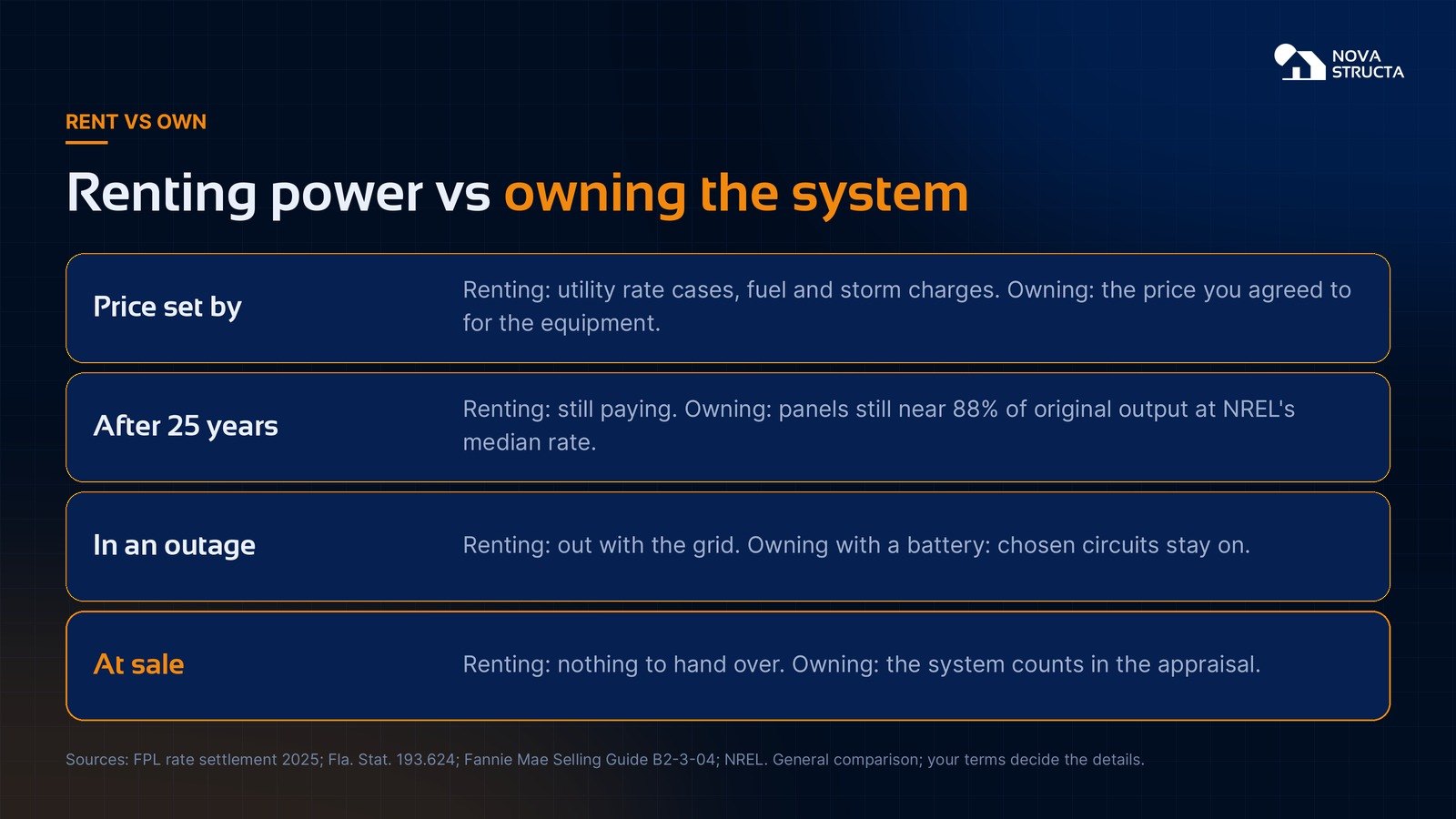
Renting your power means buying every kilowatt-hour from the utility at whatever the next rate case sets. Owning it means the equipment that makes, stores or saves power is yours. In Florida, solar leases are allowed but power purchase agreements are not, and only owned systems count in an appraisal.
"Stop renting, start owning" is a popular solar pitch. It is also half true. You can own the equipment that makes, stores and saves your power. You cannot own the grid connection, and some of the ways solar is sold in the U.S. leave the panels on your roof owned by someone else.
This guide sorts out what you are renting today, what you can actually own, how ownership works under Florida law, and the fine print federal regulators have flagged in solar financing. Every claim links to a source. It is general information, not financial, legal or tax advice.
What are you renting today?
When you buy all your power from the utility, you pay for three things you never own: the energy itself, the poles, wires and plants that deliver it, and the profit the utility is allowed to earn on them. The price is set for you in rate cases before the Florida Public Service Commission, plus fuel and storm charges that reset along the way. For a line-by-line breakdown, see Florida electric bills explained.
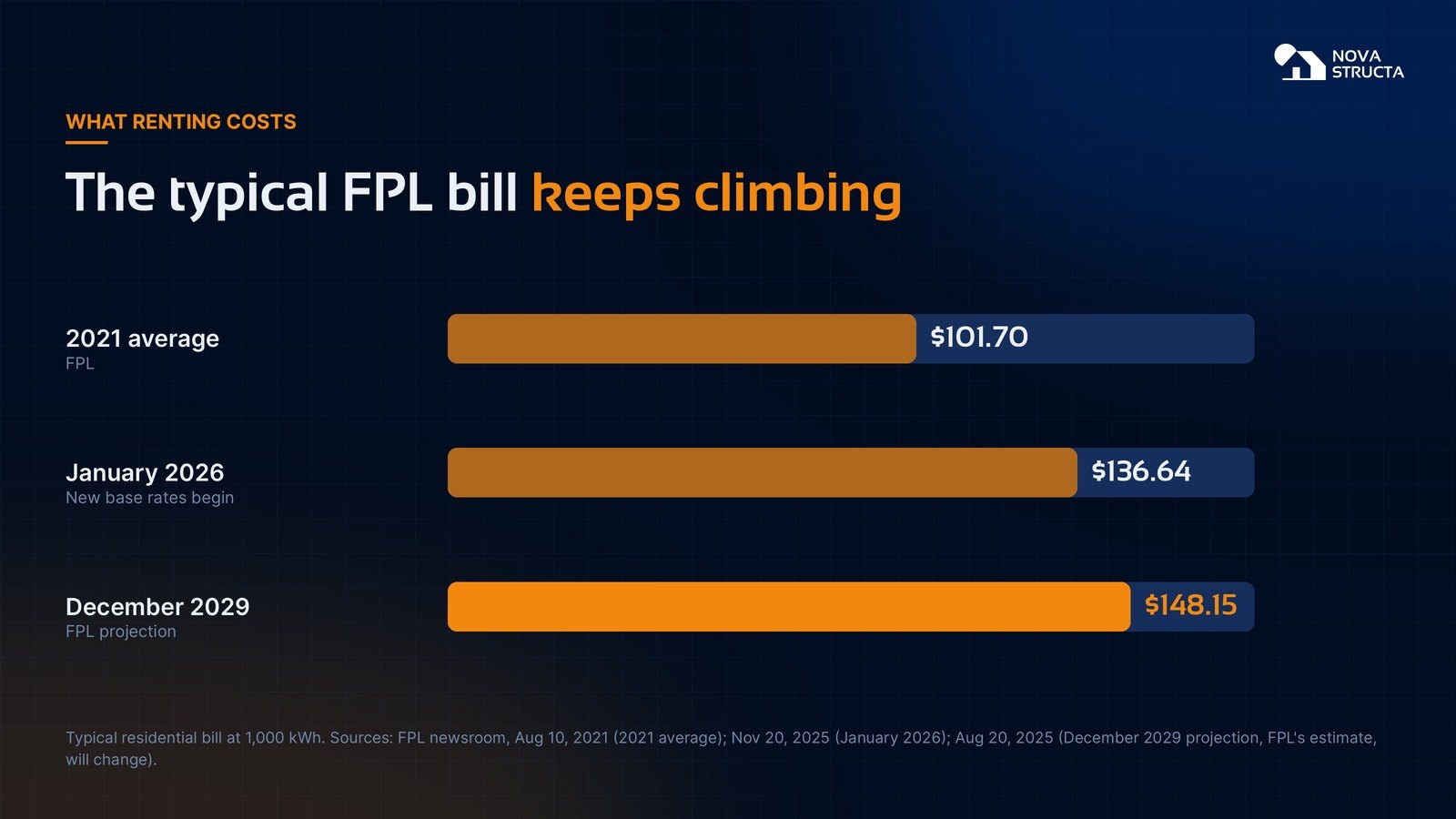
FPL's typical 1,000 kWh residential bill averaged $101.70 in 2021 [1]. It was $136.64 in January 2026, when new base rates began [2], and FPL projects $148.15 by December 2029 [3]. Add up FPL's projected typical bills for January 2026, 2027 and 2028, and hold 2028's level for 2029, and a typical customer is on track to pay more than $6,800 over the four-year rate plan [2] [3]. That is our arithmetic on FPL's numbers; your bill depends on your usage. None of that buys anything you keep.
For the full rate story, see FPL rate hikes 2021 to 2029.
What part of your bill can you never own?
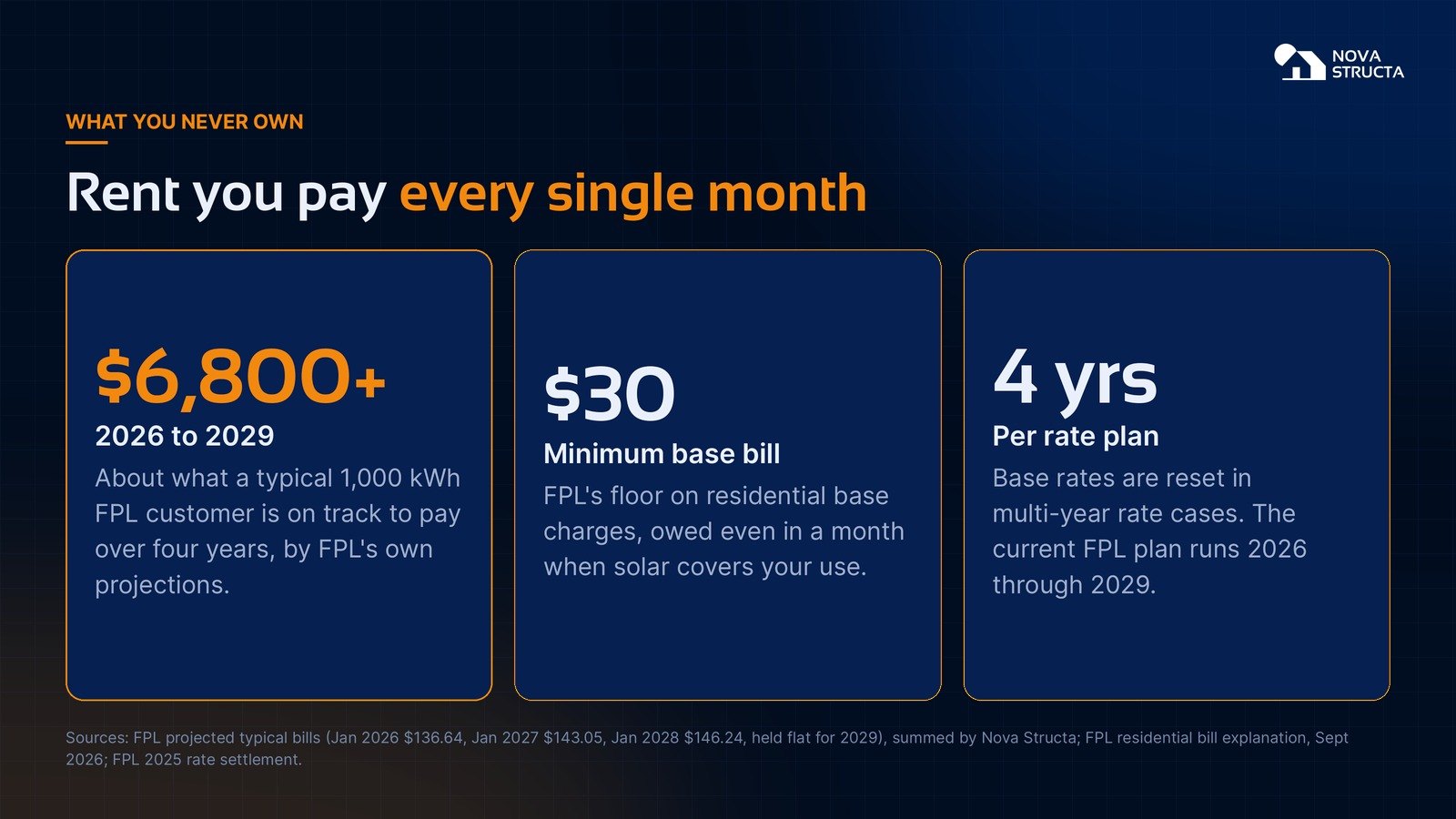
Honesty first: even a home with solar and a battery stays connected to the grid, and the connection costs money. FPL charges a fixed monthly base charge of $10.52, and it applies a $30 minimum base bill to residential accounts whose base charges would otherwise fall below that [4]. So a solar home does not take its FPL bill to zero. What it can shrink is the part of the bill tied to the kilowatt-hours you buy.
What can you actually own?
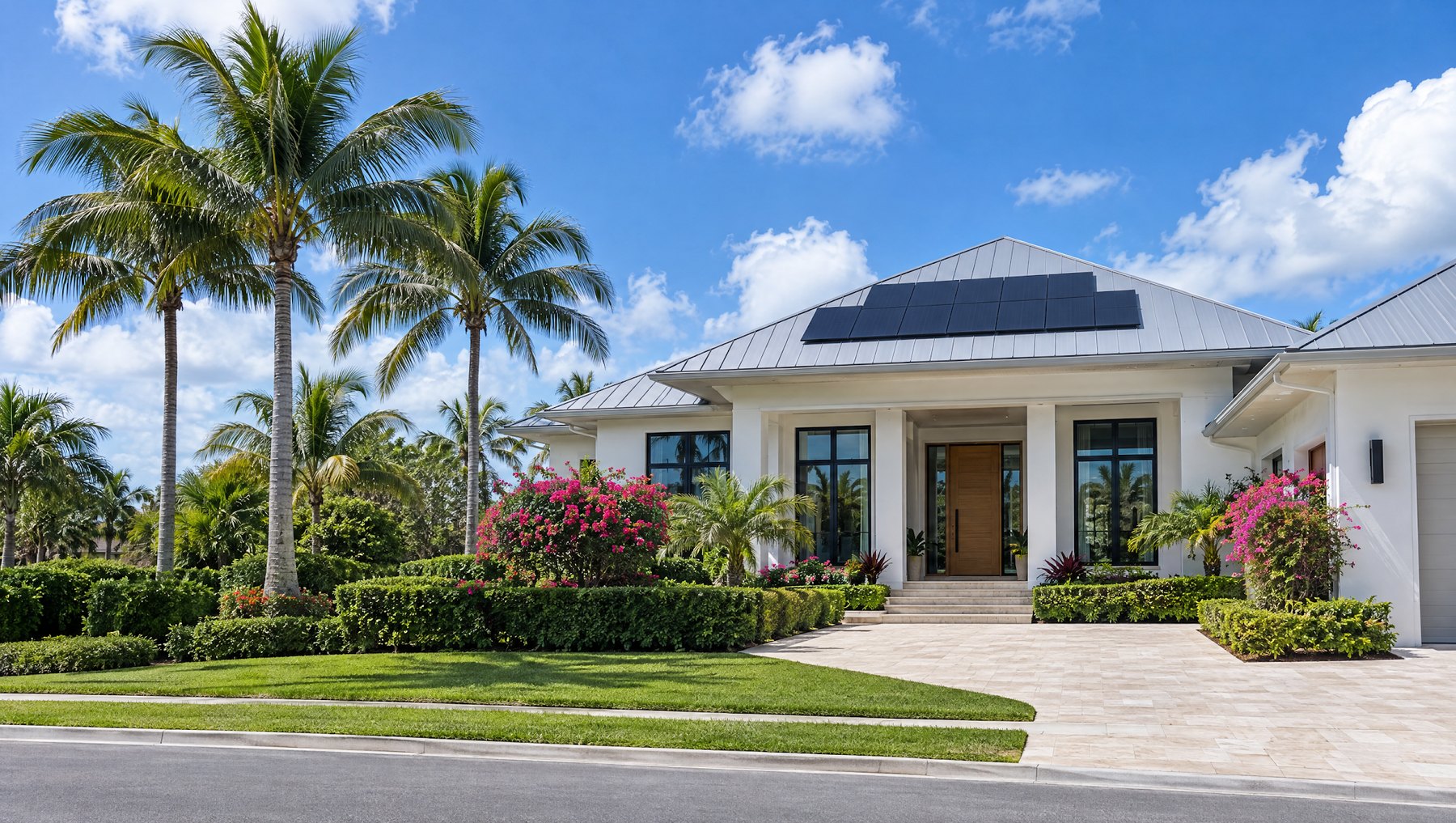
Three kinds of equipment let you replace rented energy with your own:
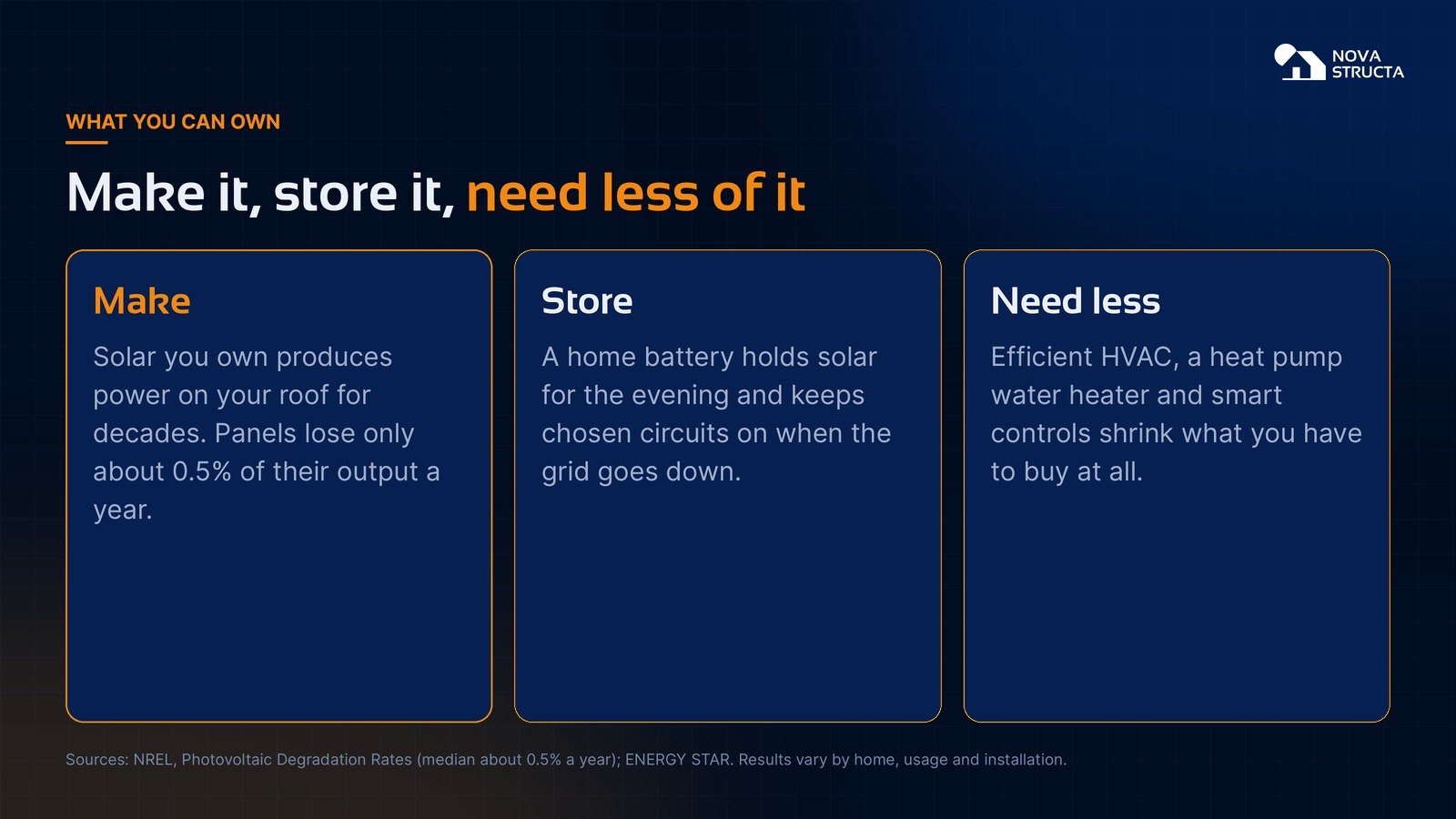
- Make it. Solar panels produce power for decades. Across nearly 2,000 measurements reviewed by the National Renewable Energy Laboratory, panels lost a median of about 0.5% of their output a year [12], so a panel is still making roughly 88% of its original output after 25 years. Florida's net metering rule lets you use that power on site and get credit for what you send back [7].
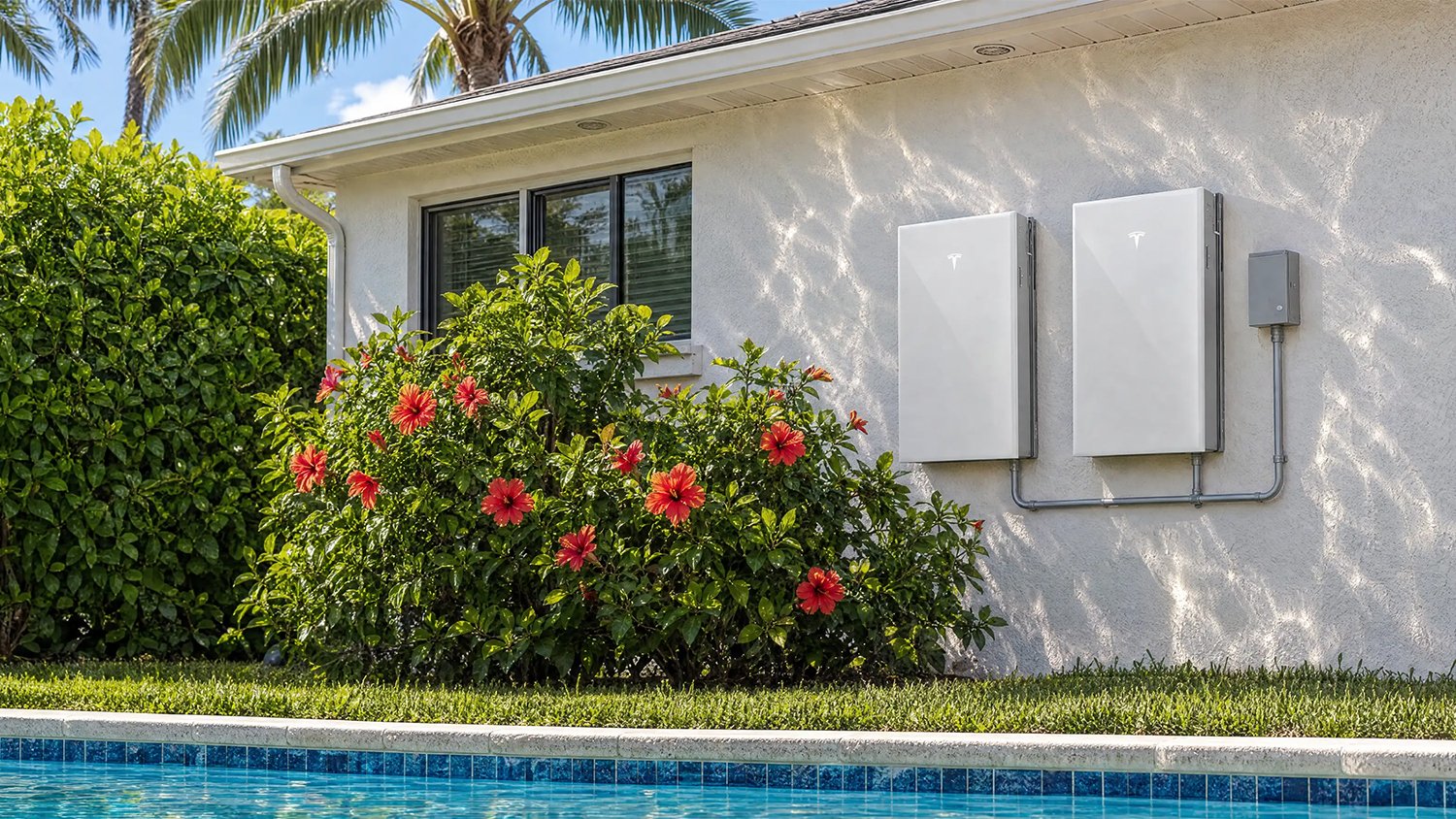
- Store it. A home battery holds solar for the evening and keeps chosen circuits on when the grid goes down. In 2024, U.S. customers averaged 11 hours without power, nearly twice the decade before [14]. See how Powerwalls work during a hurricane.
- Need less of it. Efficient HVAC, a heat pump water heater and smart controls shrink the energy you have to buy or make at all. See 7 upgrades that add value to a Florida home.
Who owns the panels? Cash, loan, lease or PPA
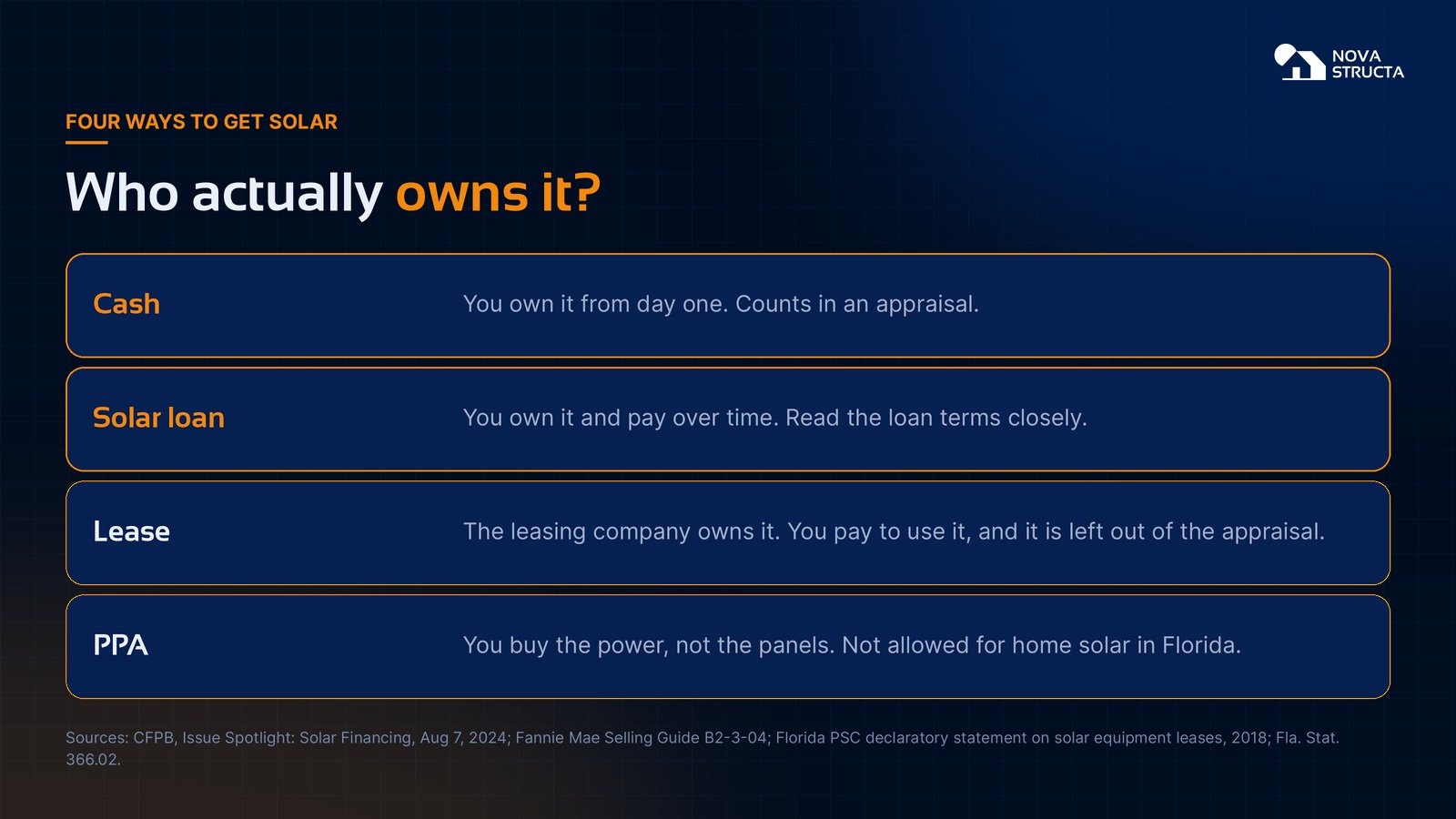
"Going solar" can mean four different arrangements, and only two of them mean owning:
| Option | Who owns it | What to know |
|---|---|---|
| Cash | You | You own it from day one, and it counts in an appraisal [9] |
| Solar loan | You | You own it and pay over time. Read the loan terms closely [8] |
| Lease | Lessor | You pay to use panels someone else owns. Leases often run 15 to 20 years, payments may rise each year, and the lessor removes the panels at the end [8] |
| PPA | Seller | You pay per kWh for the power the panels make. Not allowed for home solar in Florida [5] [6] |
In other words, a lease swaps one rental for another. You stop renting some of your power from the utility and start renting the equipment from a leasing company. That can still make sense for some households, but it is not ownership.
What does Florida law say about leases and PPAs?
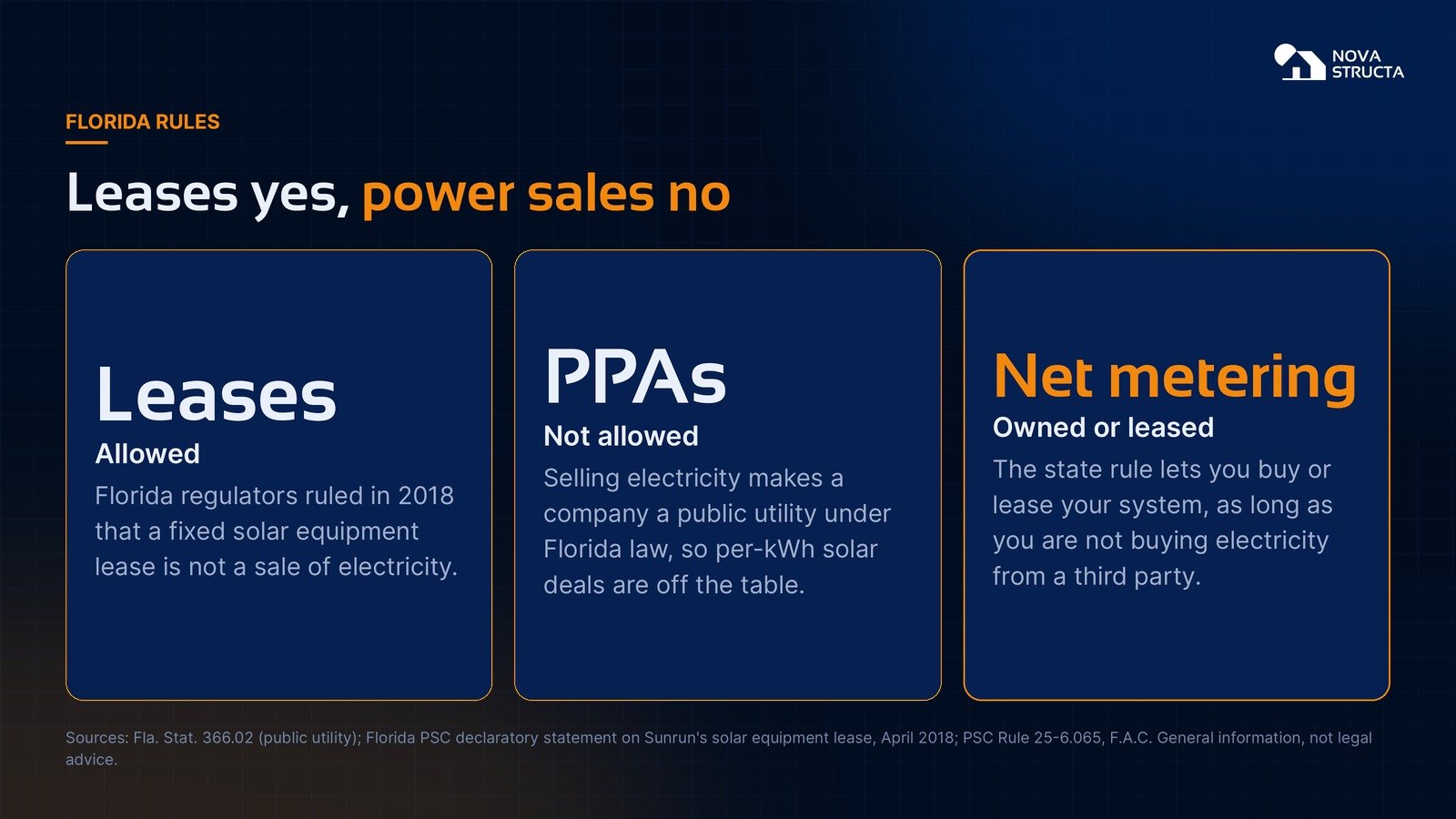
Three rules that shape the choice in Florida.
PPAs are off the table. Under Florida law, a company that supplies electricity to the public is a public utility [5], which is why per-kWh solar power purchase agreements for homes are not allowed here [6].
Leases are allowed. In 2018 the Florida Public Service Commission ruled that a fixed residential solar equipment lease is not a sale of electricity, so it does not make the leasing company a utility [6].
Net metering works for owned or leased systems. The state rule lets you buy, lease or contract for maintenance of your system with a third party, as long as you are not buying electricity from that third party [7].
What fine print did federal regulators find?
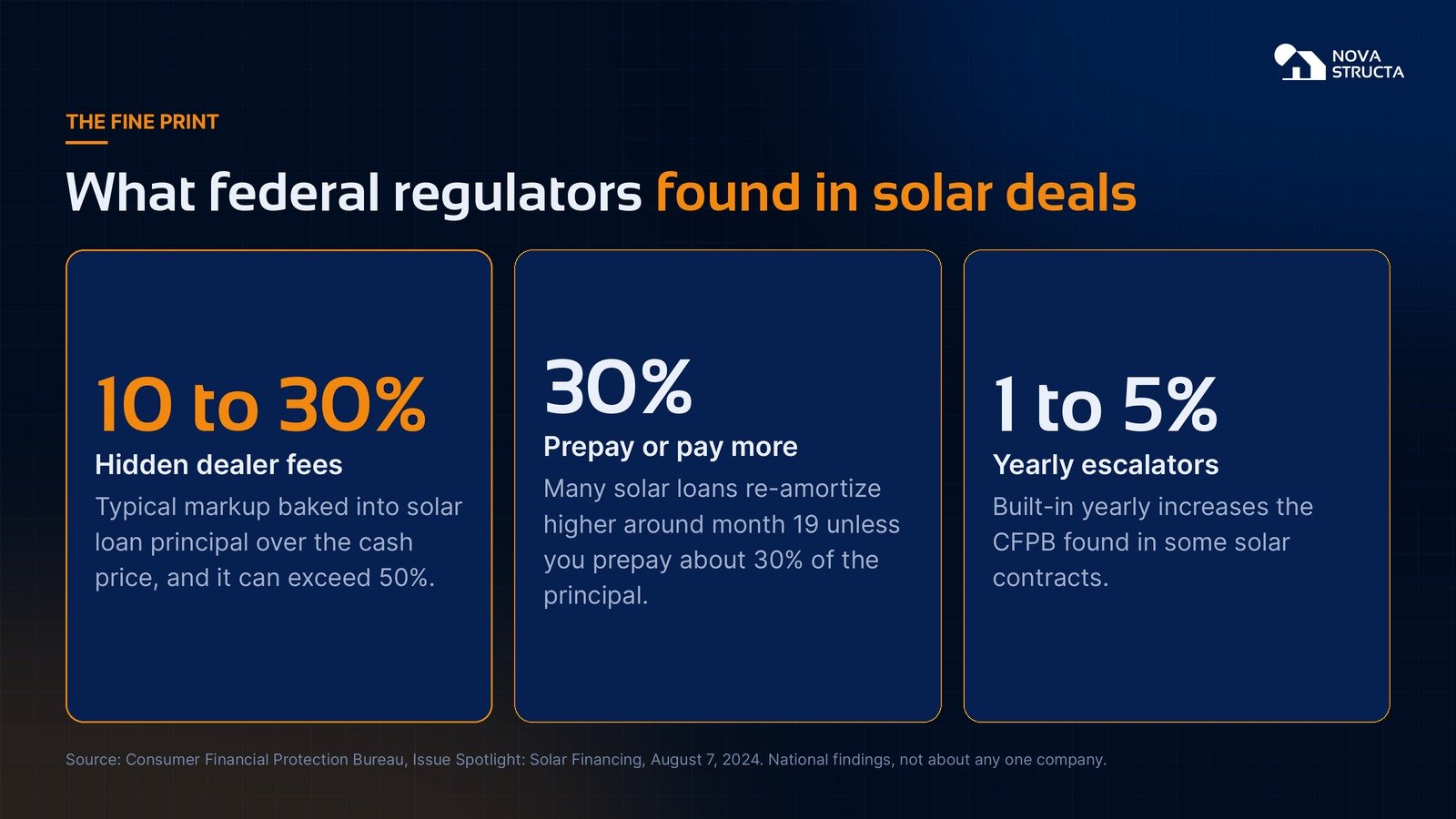
In August 2024, the Consumer Financial Protection Bureau published a report on solar financing [8]. Its findings are national, not specific to Florida or to any company, but they are worth knowing before you sign anything:
- Hidden dealer fees. Some solar-specific loans add fees that raise the loan principal above the cash price, typically by 10% to 30% and sometimes more than 50%. Those fees are often not shown in the stated interest rate [8].
- Payments that jump. Many solar loans re-amortize to a higher monthly payment, often around the 19th month, unless the borrower prepays a large share of the principal, typically 30% [8].
- Escalators. Some contracts build in yearly price increases of 1% to 5% [8].
- Performance is not promised. Some loan agreements say what you owe does not depend on how well the system performs [8].
The 2026 catch: the credit those loans counted on is gone
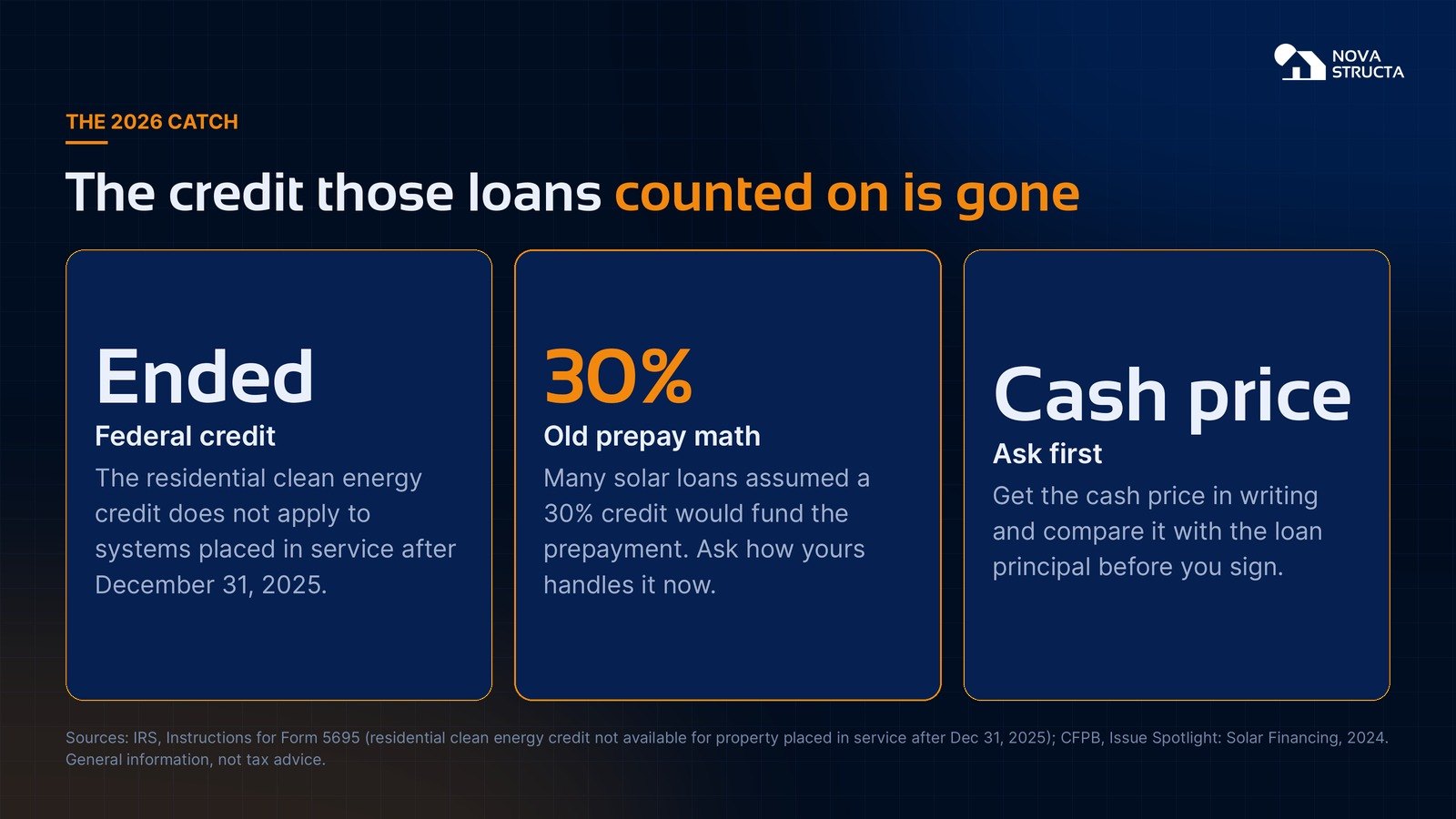
That 30% prepayment was built around the federal residential clean energy credit, which the CFPB described as the presumptive source of that money [8]. The credit does not apply to systems placed in service after December 31, 2025 [11]. If a loan offered to you in 2026 still assumes a large prepayment around month 18 or 19, ask where that money is supposed to come from, and what the payment becomes if you do not make it.
Does owning matter when you sell?
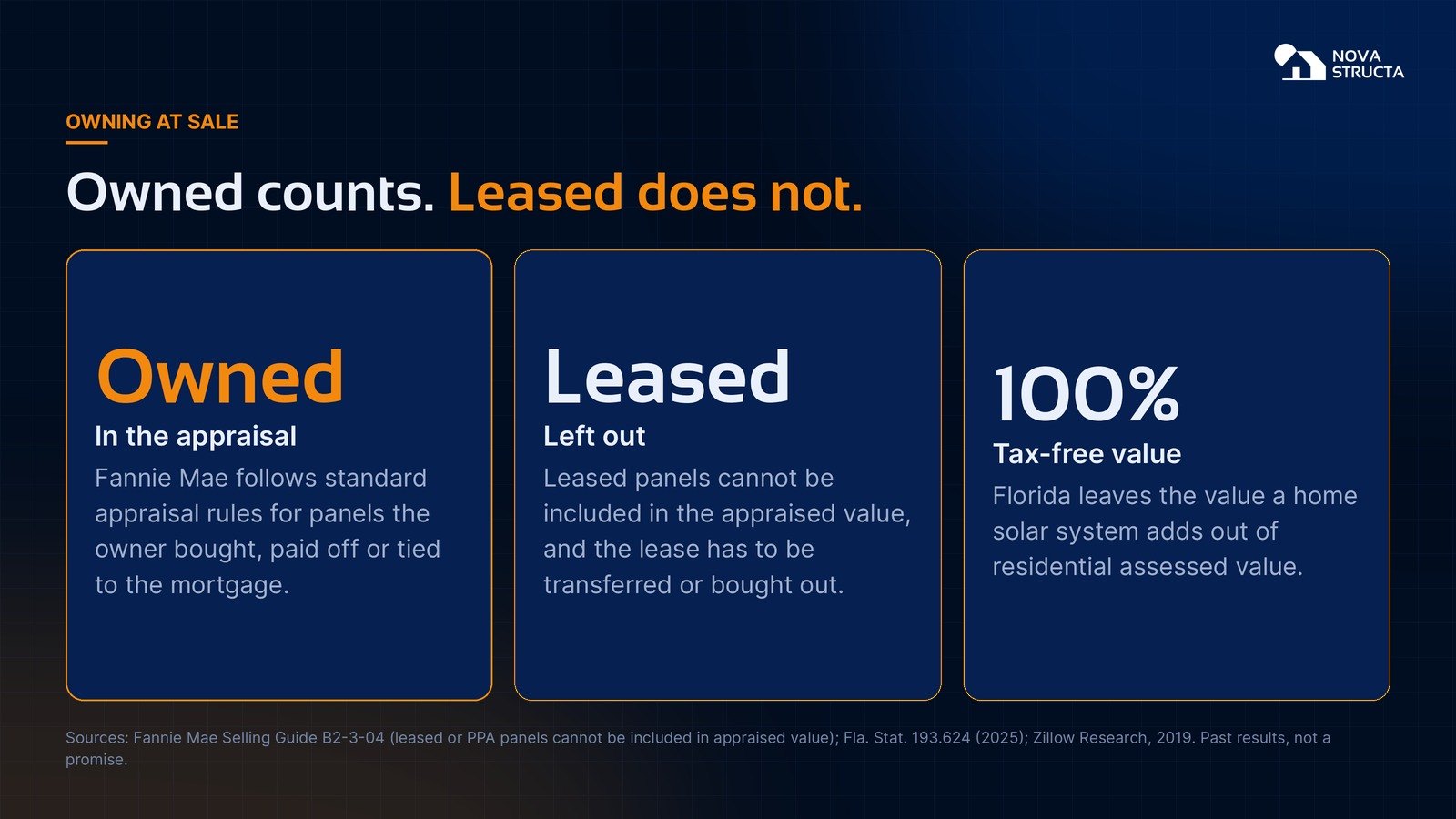
Yes, and this is where ownership shows up in dollars. Under Fannie Mae's rules, panels that are leased or covered by a power purchase agreement cannot be included in a home's appraised value. Owned panels, whether bought with cash, paid off or secured by the existing mortgage, follow the standard appraisal requirements [9]. Zillow's national study found homes with solar sold for 4.1% more on average than comparable homes without it [13].
Florida adds a tax advantage for owners: for residential property, the value a solar system adds may not be counted when your assessed value is set [10].
Questions to ask before you sign
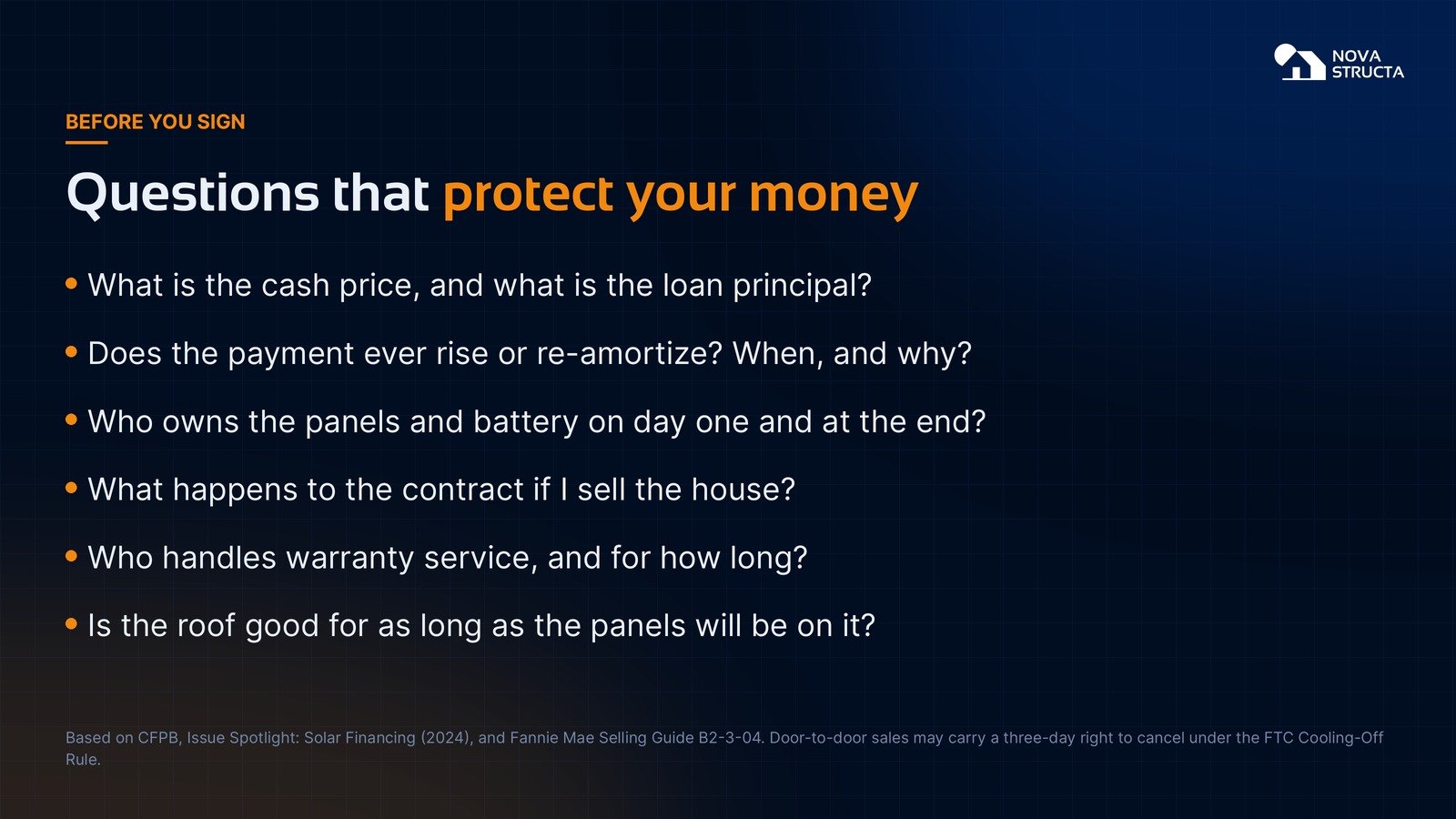
- What is the cash price, and what is the loan principal? If they differ, why [8]?
- Does the payment ever rise or re-amortize? When, and what triggers it [8]?
- Who owns the panels and battery on day one, and who owns them at the end?
- What happens to the contract, and to any lien or filing, if I sell the house [9]?
- Who handles warranty service on the panels, inverter and battery, and for how long?
- Does my roof have enough life left to outlast the panels? See the best roofing materials for Florida homes.
- Was this sold door to door? Federal rules may give you three days to cancel certain sales made at your home [8].
The bottom line
You cannot own the grid, and you will keep paying something for the connection [4]. But the part of your bill tied to the energy you buy is a rental with a price set by rate cases [2] [3], and you can replace much of it with equipment you own: panels that last for decades [12], a battery for outages [14] and efficient systems that need less. In Florida, the way you pay decides whether you actually own it. Cash and loans own; leases rent; PPAs are not allowed [5] [6]. Read the loan terms as closely as the panel specs [8].
Results vary by home, usage, financing terms and installation. If you would like to see cash, loan and battery options side by side for your home, book a free assessment, or start with is solar worth it in Florida in 2026. Installations are performed by independent Florida licensed contractor(s).
Sources
- Florida Power & Light, "FPL reaches comprehensive four-year rate settlement agreement," August 10, 2021. newsroom.fpl.com
- Florida Power & Light, "Florida regulators approve FPL rate agreement that keeps customer bills low, meets needs of growing state," November 20, 2025. newsroom.fpl.com
- Florida Power & Light, "FPL rate settlement reduces request by nearly a third, limits average annual bill increases to 2%, maintains consumer protections," August 20, 2025. newsroom.fpl.com
- Florida Power & Light, "Understanding your bill: residential customers," typical 1,000 kWh bill for September 2026. fpl.com
- Florida Statutes, Section 366.02, Definitions (public utility) (2025). flsenate.gov
- J. F. Weaver, pv magazine USA, "Florida allows Sunrun solar power leases despite 3rd-party ban," April 23, 2018, on the Florida Public Service Commission's declaratory statement. pv-magazine-usa.com
- Florida Public Service Commission, Rule 25-6.065, F.A.C., Interconnection and Net Metering of Customer-Owned Renewable Generation. fpl.com (PDF)
- Consumer Financial Protection Bureau, Office of Markets, "Issue Spotlight: Solar Financing," August 7, 2024. consumerfinance.gov
- Fannie Mae Selling Guide, B2-3-04, Special Property Eligibility Considerations (properties with solar panels). fanniemae.com
- Florida Statutes, Section 193.624, Assessment of renewable energy source devices (2025). flsenate.gov
- Internal Revenue Service, Instructions for Form 5695, Residential Energy Credits. irs.gov
- D. Jordan and S. Kurtz, National Renewable Energy Laboratory, "Photovoltaic Degradation Rates: An Analytical Review." nrel.gov (PDF)
- Zillow Research, "Homes With Solar Panels Sell for 4.1% More," 2019. zillow.com
- U.S. Energy Information Administration, Today in Energy, "Hurricanes in 2024 led to the most hours without power in the United States in 10 years," December 1, 2025. eia.gov
Savings and utility-bill examples shown are illustrative only, are not guaranteed, and may not reflect typical results. Actual savings depend on your energy usage, system size, roof and site conditions, financing terms, utility rates, net-metering rules, and other factors specific to your home.