What should I do before selling my home in Florida?
Gather the paperwork before you stage the house. In Florida, the energy and storm features are what buyers, lenders and insurers ask about first: who owns the solar, whether the battery transfers, how old the roof is, how old the AC is, and what you know about flooding. Since October 1, 2025, Florida sellers must answer an expanded flood disclosure at or before signing a contract [1], and any PACE balance must be disclosed in writing too [2]. Have the answers in one folder and the sale moves faster.
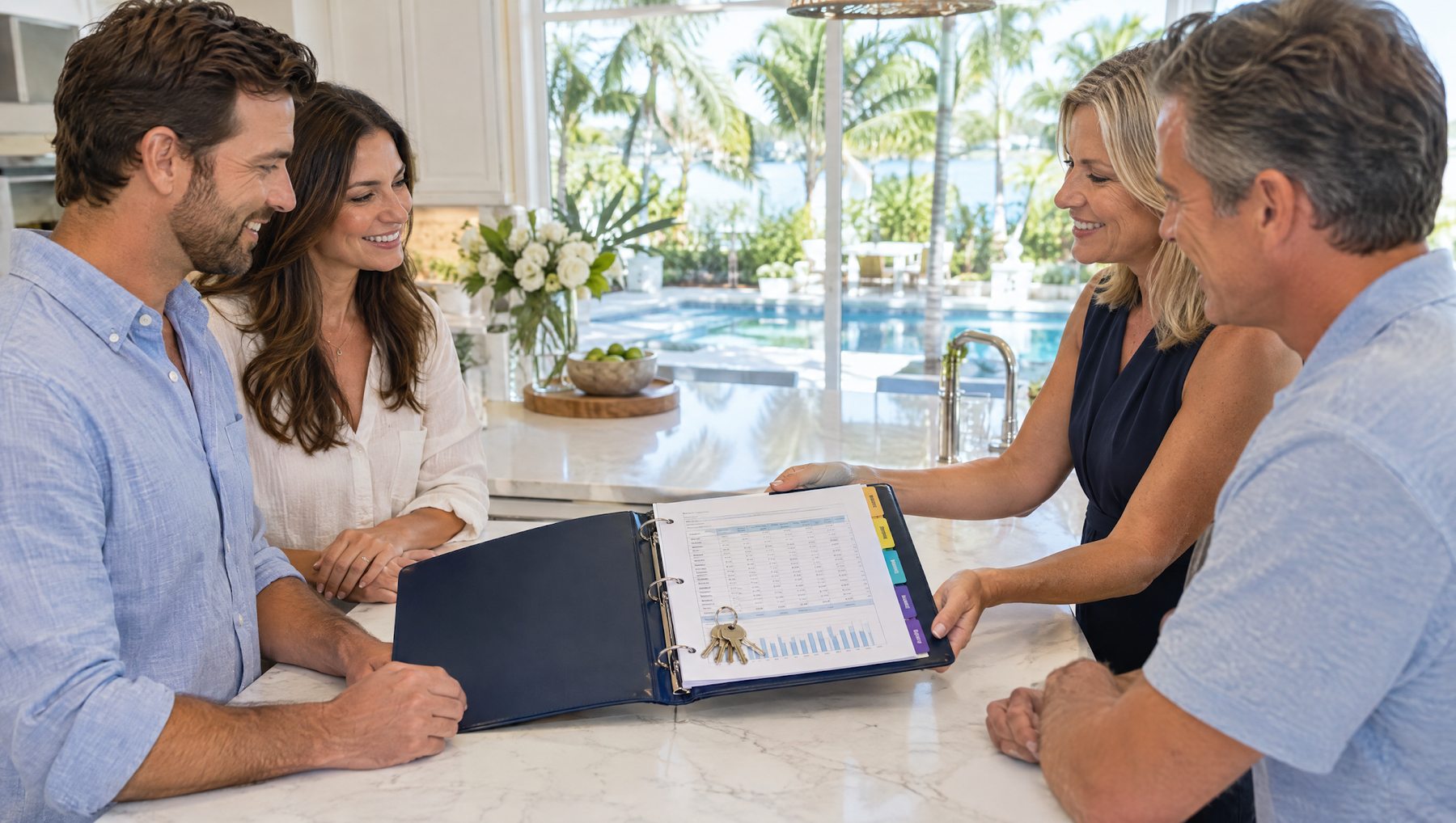
Build your listing folder
Check off what you already have. The folder is what you hand your agent, the buyer's inspector and the buyer's insurance agent.
of 8 ready
Tap what you already have. Your progress shows here.
A good start. Work through the rest before you list. The solar papers, flood answers and PACE check are the ones that can hold up a closing.
Almost there. Fill the last gaps now, while there is time. A missing roof permit or warranty is much easier to find before a buyer's inspector asks.
Listing-ready. Put it all in one folder or a shared drive for your agent, so buyers and their inspectors can see the numbers for themselves.
General guidance, not legal or tax advice. Ask your agent and a Florida real estate attorney about your sale.
What buyers see: tap to compare
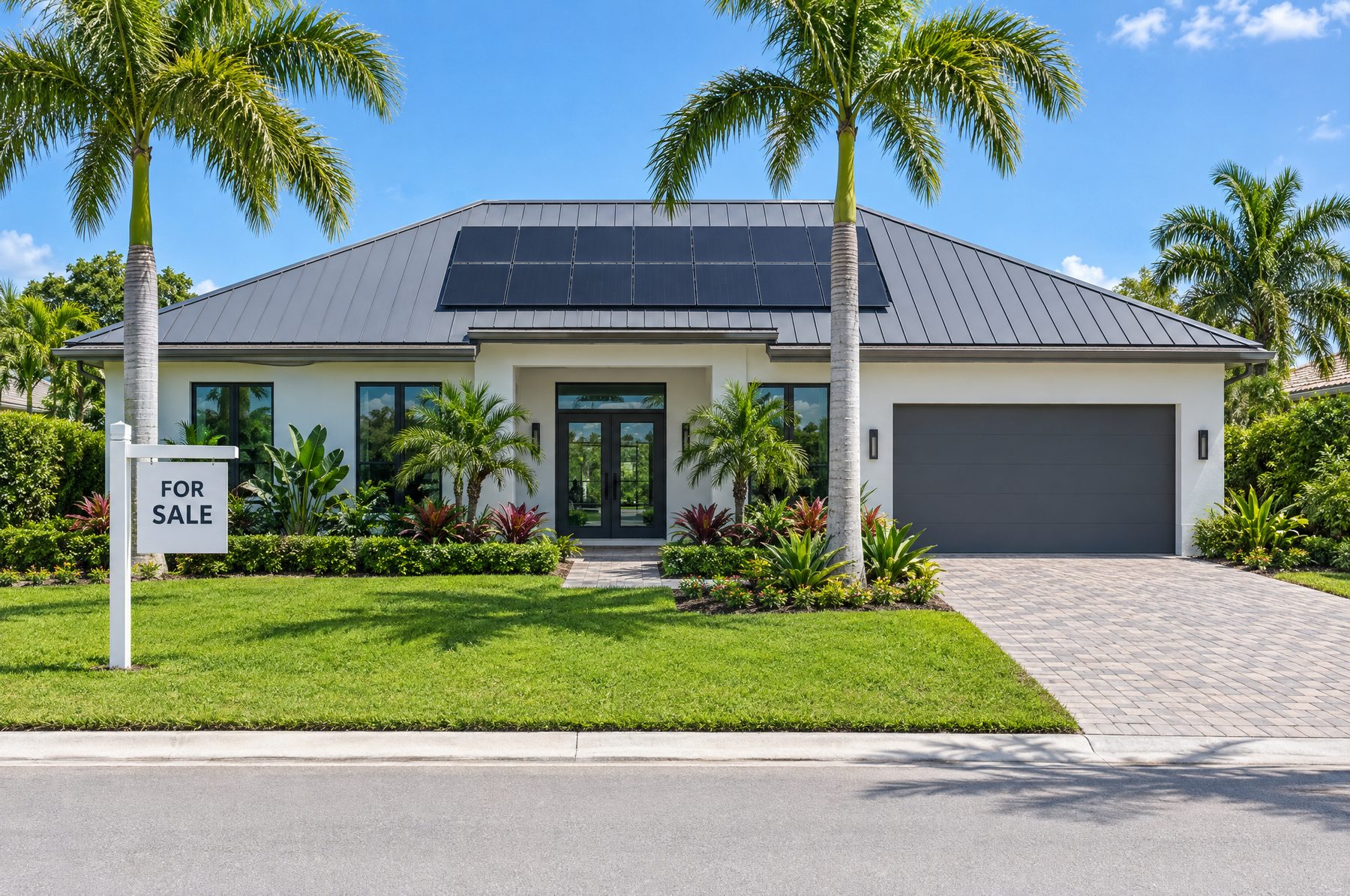
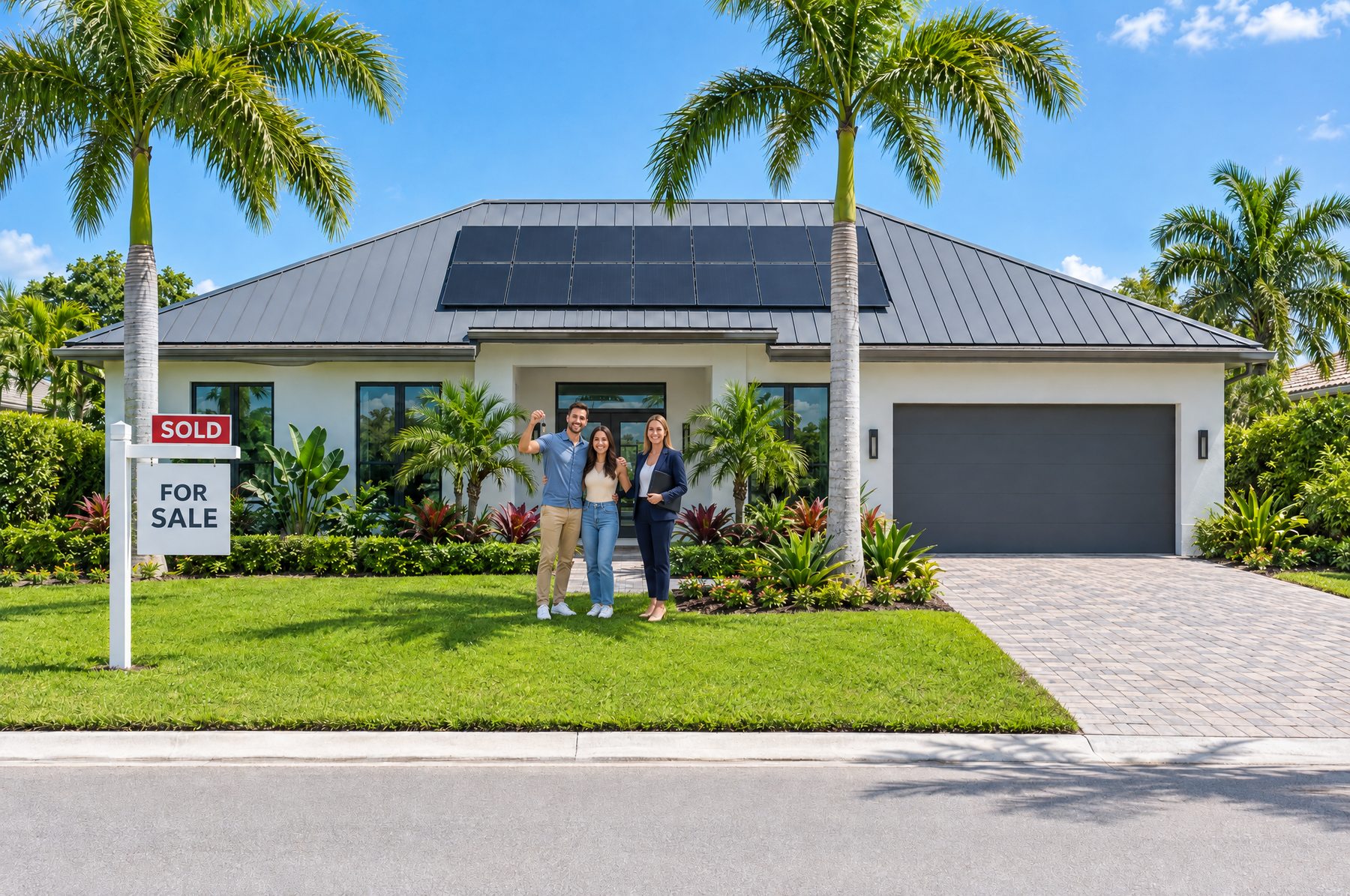

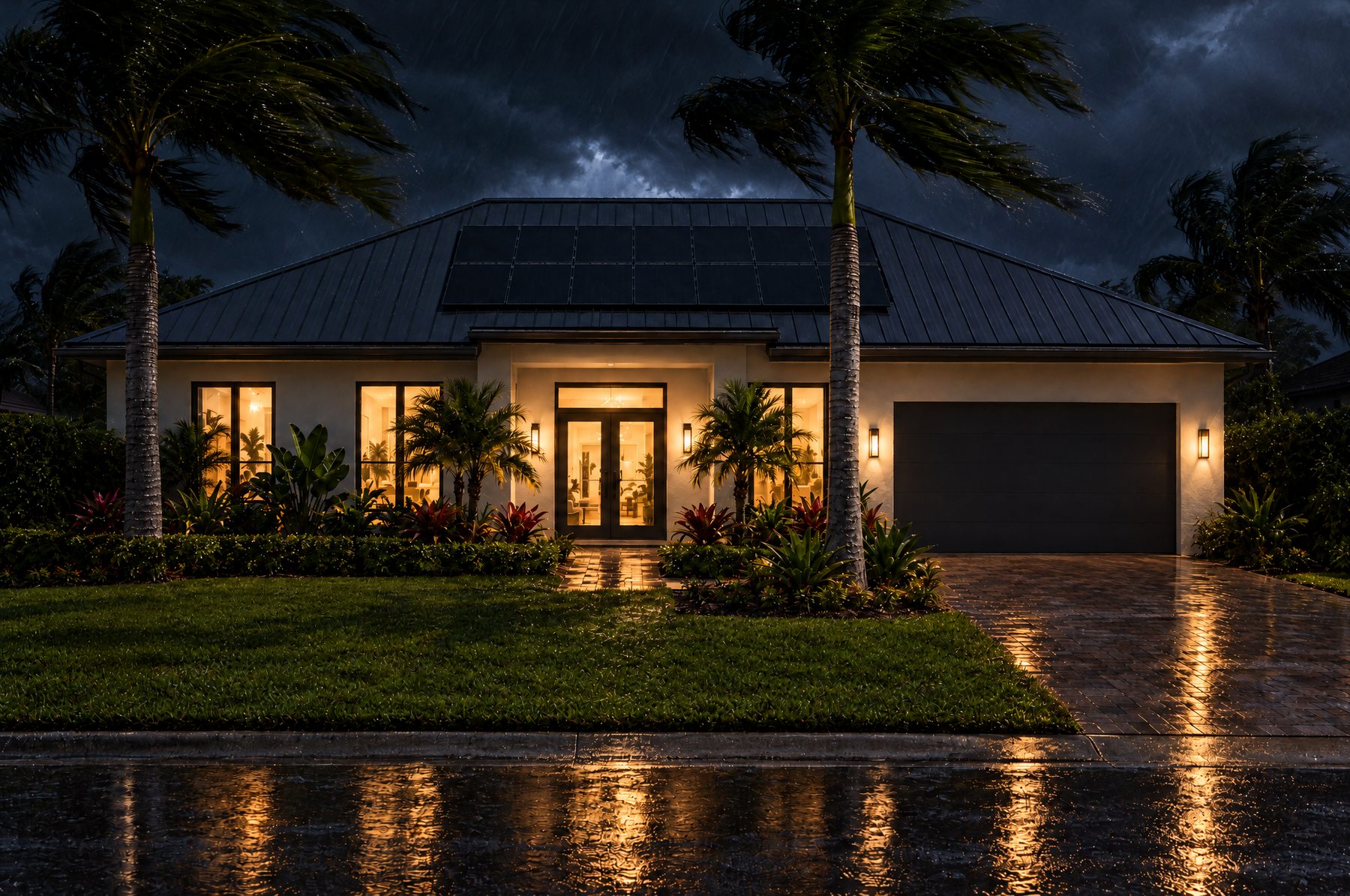 The listing photoClosing dayTheir first eveningTheir first storm
The listing photo. Solar on the roof is a feature buyers notice. Whether it adds to the appraisal depends on who owns it: panels you own can count, leased or PPA panels can't [4].
Closing day. No surprises at the title desk: the solar agreement or loan handled, the battery ready to move to the buyer, and every disclosure signed on time.
Their first evening. The sign is gone and the house is theirs. The folder you handed over, a year of electric bills and the system warranties, is what lets them settle in without guessing.
Their first storm. The question every Florida buyer asks: "What happens when the power goes out?" In Zillow's data, whole-home battery mentions grew faster than any other listing feature, and 86% of recent buyers called at least one climate-resilient feature very important [9].
Same home, same camera: listed, sold, lived in. Photos are illustrations.
Selling a home with solar: who owns the panels matters
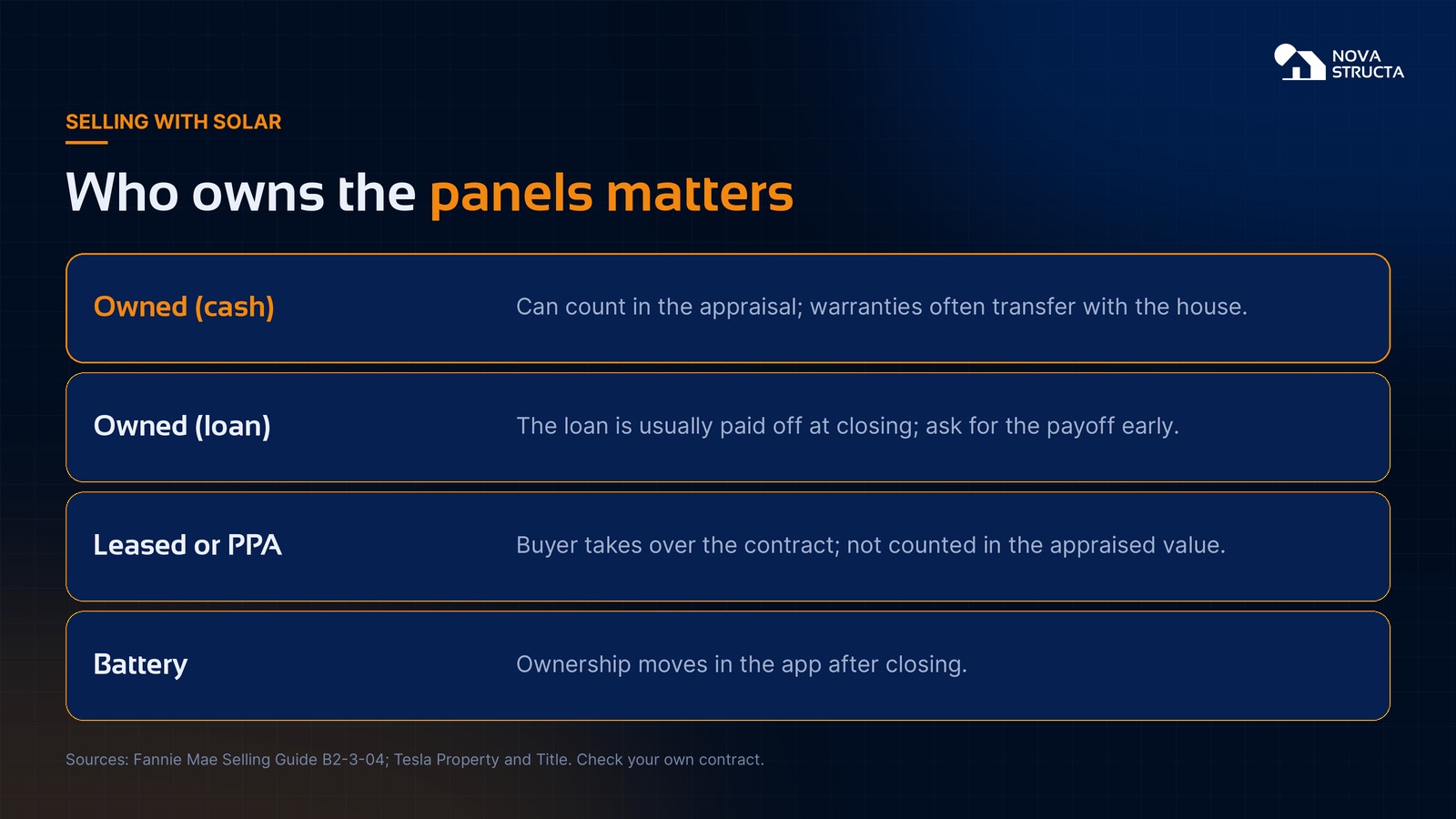
| Owned (cash) | Owned with a loan | Lease or PPA | |
|---|---|---|---|
| Appraisal | Can be included under standard rules [4] | Can be included once it's yours [4] | Can't be counted in appraised value [4] |
| At closing | Nothing to transfer; give the buyer the warranties | The loan is usually paid off; a financing filing may need to be released [5] | The buyer takes over the contract, often after a credit check [5] |
| Do this first | Find the warranties and install permit | Ask the lender for a payoff letter early | Call the solar company before you list [5] |
A few more things that help with solar:
- Tell the provider before you list if the system is leased, under a PPA or financed through the installer. Tesla, for example, asks sellers to contact its Property and Title team before listing, and says most of its agreements transfer to the new owner [5].
- Know the lease terms. Solar leases typically run 15 to 20 years and payments can rise each year [14], so the buyer will want to see the remaining term and payment.
- Batteries move after closing. For a Powerwall, ownership moves to the buyer in the app or through Tesla once the sale is complete [6]. Leave the gateway and equipment labels easy to photograph.
- The buyer keeps a Florida tax benefit. Solar on a Florida home can't be counted in its assessed value for property tax [12].
- Call your utility. The electric account and net metering are in your name, so make sure the buyer knows to set up service and solar credits in theirs.
The Florida paperwork to have ready
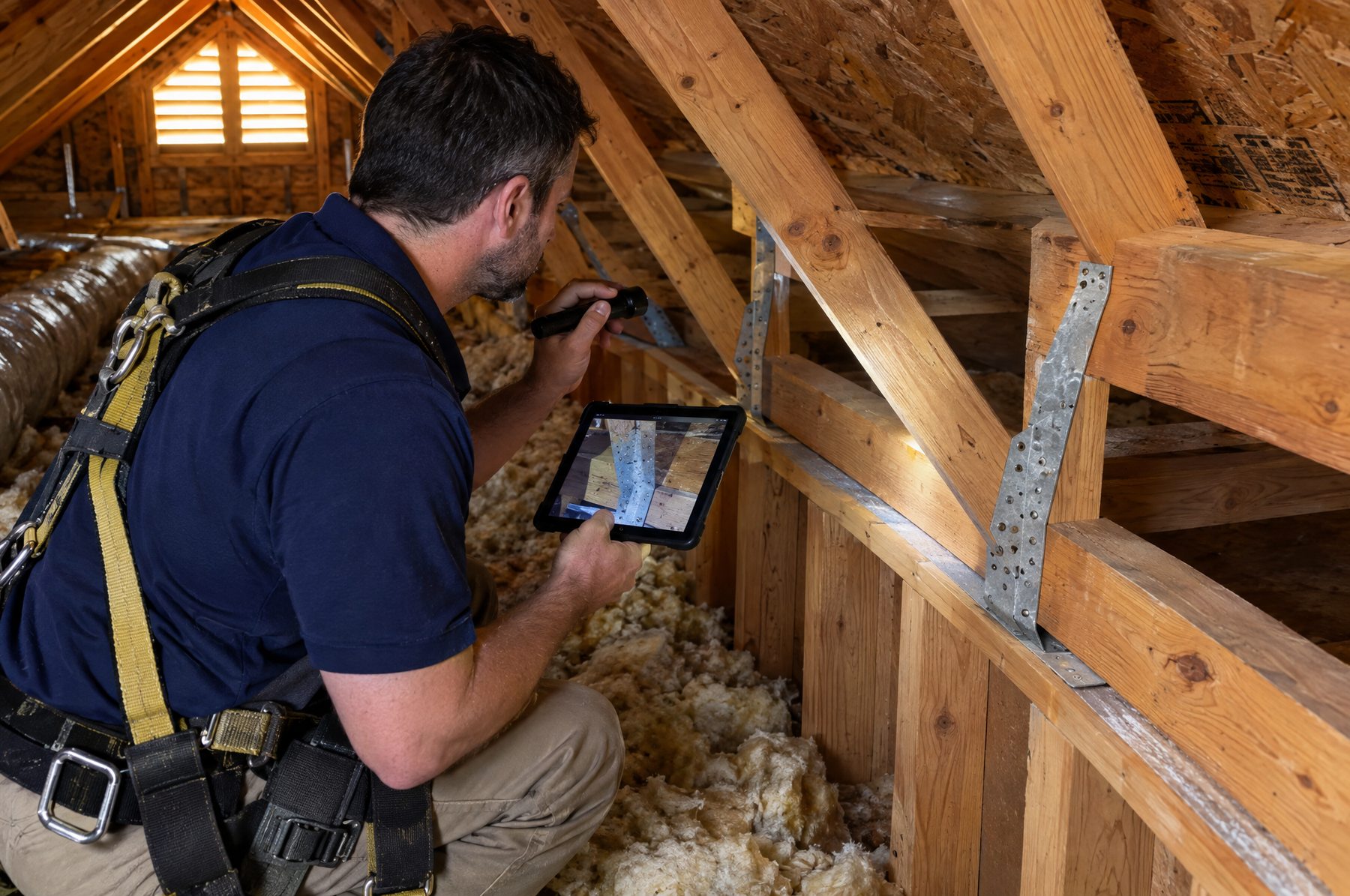
- The flood disclosure. Florida law requires a seller of residential property to complete a flood disclosure at or before signing the contract. It asks whether you know of flood damage during your ownership, whether you filed a flood claim, and whether you received assistance for flood damage from any source [1].
- Any PACE balance. PACE assessments are collected with property taxes and are a lien on the home, and a buyer's lender may require the full balance paid off [2]. If there is an unpaid balance, Florida requires a written disclosure to the buyer at or before signing [2].
- Known problems. Florida courts require sellers to disclose known facts that materially affect a home's value and aren't readily observable to the buyer [3]. A past roof leak or a failed AC belongs in the conversation, not the surprise column.
- A wind mitigation report. Florida insurers must offer discounts for features like roof-to-wall connections and opening protection [11], and the report on the state form lets a buyer's agent price that in.
- The roof's age. Florida insurers can't refuse to write a policy solely because a roof is under 15 years old [10], so the permit or invoice with the install year is worth finding now.
- The AC record. ENERGY STAR flags AC systems over 10 years old as worth considering for replacement [13], so buyers will ask. A recent service report and the install date answer it.
Fix, disclose or just document?
Not every upgrade is worth doing right before a sale. A simple way to sort it:
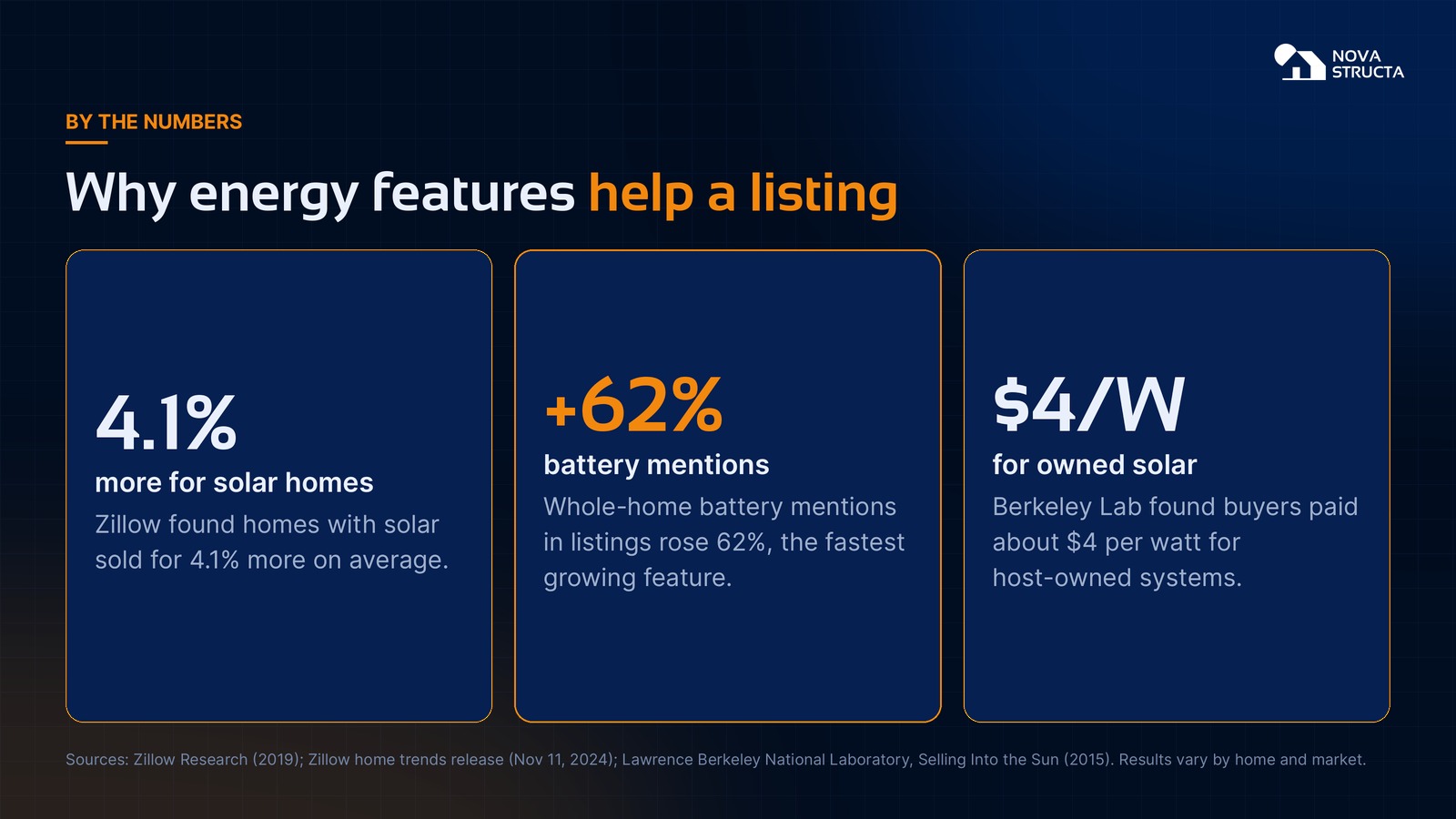
- Document what you already have. Owned solar, a battery, a newer roof, impact windows, a heat pump water heater, water treatment. Buyers paid about $4 per watt for host-owned solar in Lawrence Berkeley National Laboratory's study [8], but only if they can see what they are buying.
- Fix what will stop a sale. Active roof leaks, an AC that can't keep up, anything an inspector or insurer will flag.
- Disclose what you know. Past flood damage, a PACE balance, known problems. Florida requires it [1] [2] [3], and it heads off disputes after closing.
For a deeper look at what adds value, see 7 upgrades that add value to a Florida home.
Quick answers
Do I have to disclose flooding when I sell a house in Florida?
Yes. Florida law requires a seller of residential property to complete a flood disclosure at or before the contract is signed, covering known flood damage during your ownership, flood insurance claims and flood assistance [1].
Does solar increase a home's value in Florida?
It can. Zillow found homes with solar sold for 4.1% more on average [7], and a Berkeley Lab study that included Florida found buyers paid about $4 per watt for owned systems [8]. Leased or PPA systems can't be counted in the appraised value [4].
Can I sell a house with leased solar panels?
Yes. The buyer usually takes over the lease, often after a credit review. Tell the solar company before you list so the transfer doesn't delay closing [5].
What happens to a PACE loan when I sell?
The PACE assessment stays with the property as a lien, and a buyer's lender may require the balance paid off. Florida requires a written PACE disclosure to the buyer before signing [2].
Does my Tesla Powerwall transfer to the buyer?
Yes. Ownership is transferred in the Tesla app or through Tesla after the sale closes [6].
What is a wind mitigation inspection?
An inspection on Florida's state form that documents wind-resistant features like roof-to-wall connections and opening protection, which insurers must offer discounts for [11].
The bottom line
In Florida, a buyer is also buying an insurance policy, an electric bill and a hurricane plan. Answer those questions on paper before the first showing: the solar papers, the battery transfer, the roof and wind mitigation report, the AC record, the flood disclosure and any PACE balance.
If you would like help reviewing your roof, solar, battery, AC and water systems before you list, book a free assessment or see solar systems and roofing.
Results vary by home, market, buyer and lender. Examples and visuals are illustrative only. This article is general information, not legal, tax or real estate advice. Nova Structa coordinates consultations, project review, and customer support, but does not perform installation work. Installations are performed by independent Florida licensed contractor(s). Tesla products may be installed by independent Tesla Certified Installer(s), where applicable. Tesla and Powerwall are trademarks of Tesla, Inc. Zillow and Fannie Mae are trademarks of their owners. References are for identification only and do not imply sponsorship, endorsement, certification, partnership, or affiliation.
Sources
- Florida Statutes, Section 689.302, Disclosure of flood risks to prospective purchaser (2025; amended by ch. 2025-166). flsenate.gov
- Florida Statutes, Section 163.081, residential PACE financing: (4)(a) disclosures (lien collected with property taxes; lender may require payoff on sale) and (8) sale of residential property (2025). flsenate.gov
- The Florida Bar Journal, "The Return of the Pink Panther or Johnson v. Davis, Redux" (on Johnson v. Davis, 480 So. 2d 625 (Fla. 1985), the seller's duty to disclose). floridabar.org
- Fannie Mae, Selling Guide B2-3-04, Special Property Eligibility Considerations (solar panels: leased or PPA panels excluded from appraised value). fanniemae.com
- Tesla Support, Property and Title (selling a home with a Tesla solar system; transfers, buyer qualification, UCC-1 filing). tesla.com
- Tesla Support, Transferring Ownership of Your Powerwall. tesla.com
- Zillow Research, "Homes With Solar Panels Sell for 4.1% More" (2019). zillow.com
- Lawrence Berkeley National Laboratory, "Selling Into the Sun: Price Premium Analysis of a Multi-State Dataset of Solar Homes" (2015). lbl.gov
- Zillow, 2025 home trends release, November 11, 2024 (whole-home battery listing mentions up 62%; 86% of recent buyers call at least one climate-resilient feature very important). zillow.mediaroom.com
- Florida Statutes, Section 627.7011(5), roof age and coverage (2025). flsenate.gov
- Florida Statutes, Section 627.0629, wind mitigation discounts (2025), and Florida OIR form OIR-B1-1802, Uniform Mitigation Verification Inspection. flsenate.gov
- Florida Statutes, Section 193.624, Assessment of renewable energy source devices (2025). flsenate.gov
- ENERGY STAR, "When is it time to replace?" energystar.gov
- Consumer Financial Protection Bureau, "Issue Spotlight: Solar Financing," August 7, 2024. consumerfinance.gov
Savings and utility-bill examples shown are illustrative only, are not guaranteed, and may not reflect typical results. Actual savings depend on your energy usage, system size, roof and site conditions, financing terms, utility rates, net-metering rules, and other factors specific to your home.