
Smart Homes
The 5 Smart Home Devices Every Florida Homeowner Should Have (2026)
What smart home devices should every homeowner have?
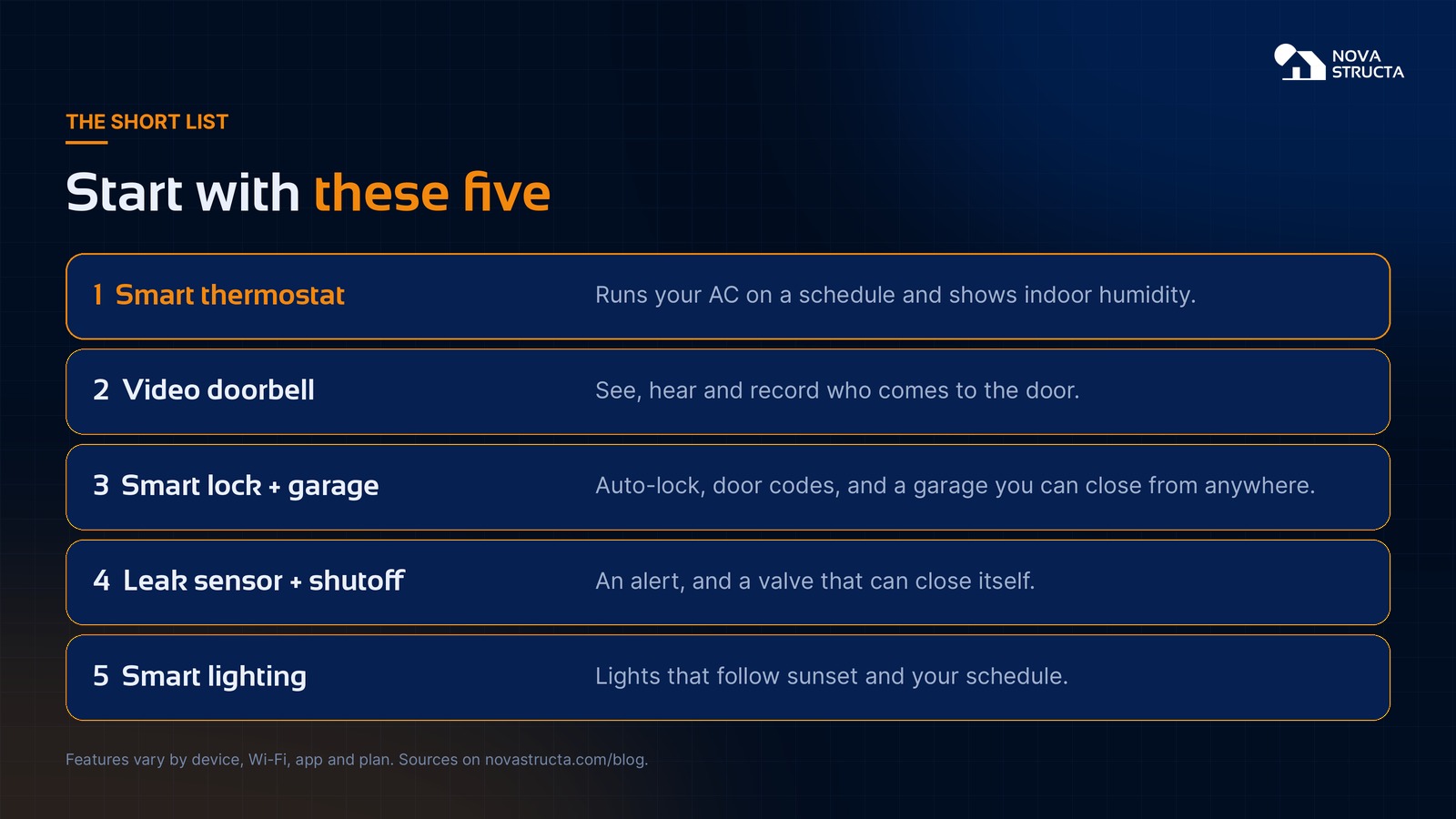
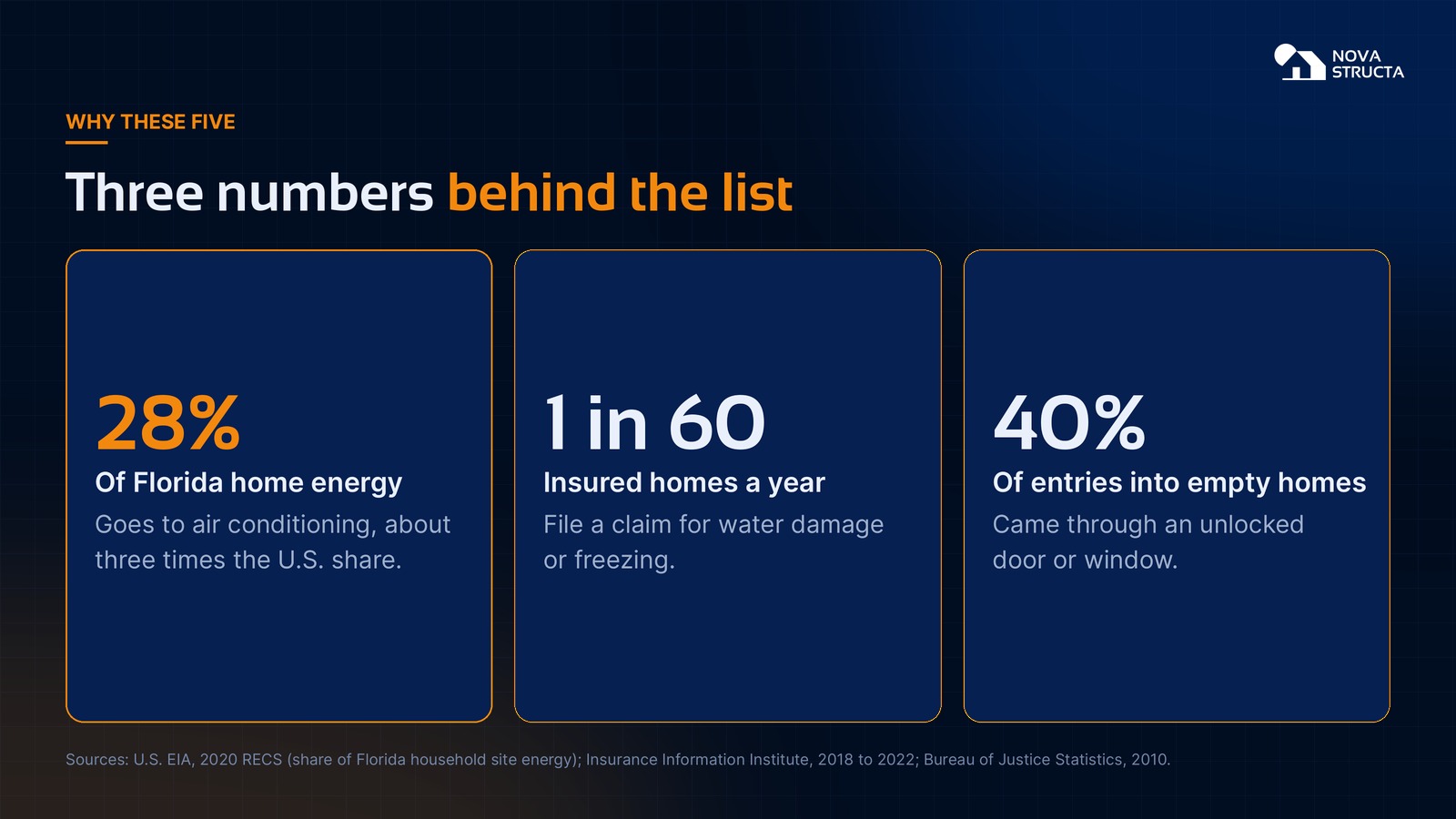
Start with five: a smart thermostat, a video doorbell, a smart lock with a garage controller, a leak sensor with an automatic shutoff valve, and smart lighting. Together they cover where a Florida home loses the most. Air conditioning is about 28% of the energy a Florida household uses [1]. About 1 in 60 insured homes files a water damage or freezing claim each year [6]. And 40% of entries into empty homes came through an unlocked door or window [5].
You do not need to automate the whole house at once. Get these five right, on Wi-Fi you trust and apps that work together, and add from there.
Where should you start?
01What bothers you most about the house?
02How is the house used?
03Do you have solar or a home battery?
04Do you want it to ride through hurricane season?
Answer the four questions to see where you land.
Start with the thermostat. In Florida the AC is the biggest single energy use in the house [1], so a schedule that eases off while nobody is home is the first place to look.
Start with the video doorbell and a smart lock. See who is there, talk to them from anywhere, and know the door locked itself behind you.
Start with leak sensors and an automatic shutoff valve. A sensor tells you there is water. A shutoff valve on the main line can stop it while you are still on the road.
Start with the shutoff valve, then check its power. Ask whether your battery backs up the circuit and the Wi-Fi the valve depends on, so it can still close in an outage.
Pair the thermostat with your solar app. Running the AC harder while the panels are producing, and easing off after sunset, uses more of your own power. See how to read your solar monitoring app.
Use a keypad lock with separate codes. Give each guest or worker their own code, set it to expire, and see in the app when it was used.
Plan for the outage. Wi-Fi devices go quiet when the power or internet drops. Battery-powered locks keep working, and a home battery can keep Wi-Fi and chosen circuits on. See how solar and a battery share the load.
1. A smart thermostat
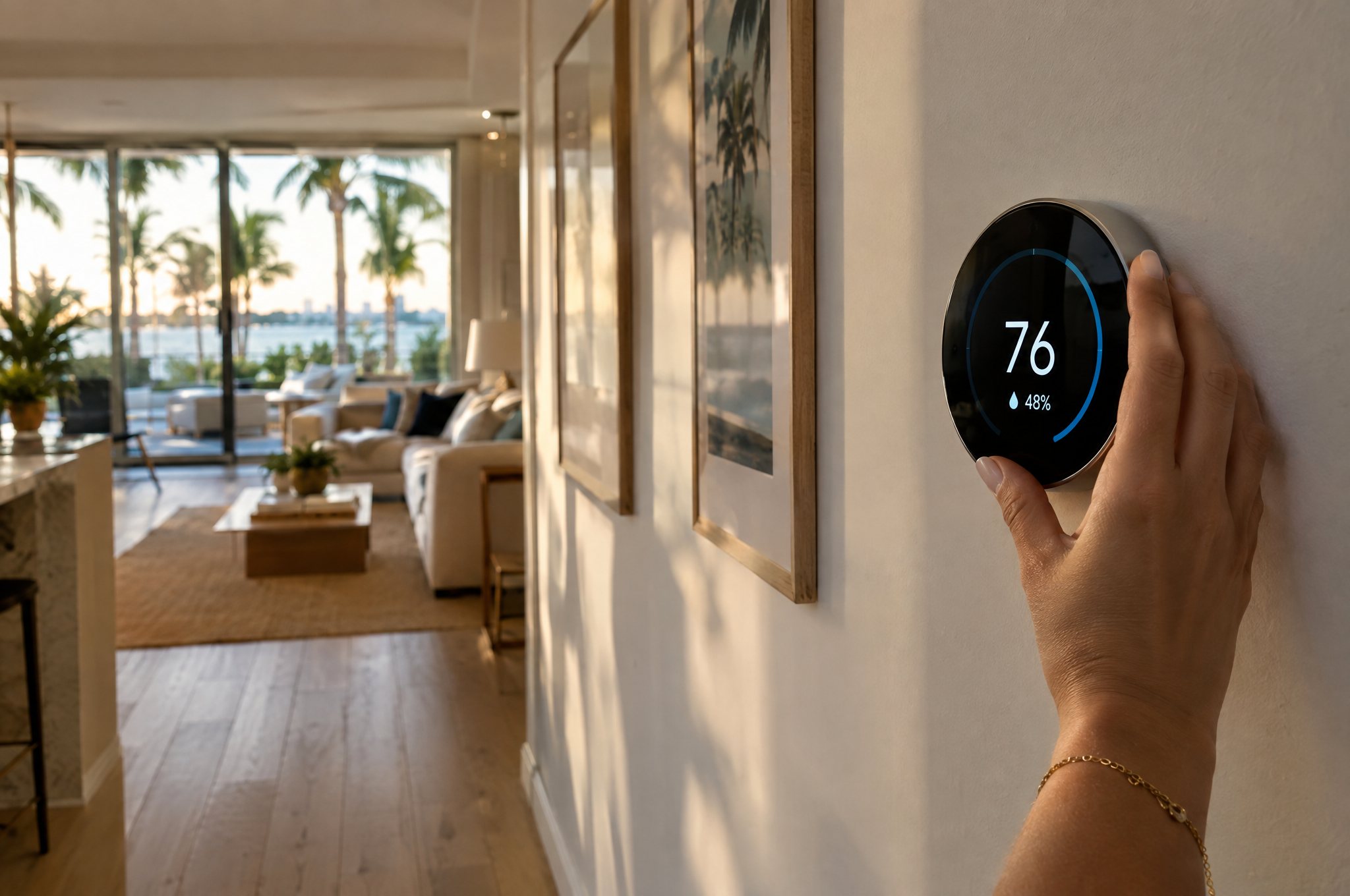
In most states, heating is the big bill. In Florida it is cooling: air conditioning is about 28% of household energy here, roughly three times the national share [1]. A smart thermostat runs the AC on a schedule, adjusts from your phone, and can ease off when nobody is home.
ENERGY STAR certifies smart thermostats on real-world field data and estimates a certified model can reduce yearly heating and cooling bills by more than 8% [2]. Results depend on your house, your habits and your AC.
What to look for in Florida:
- A humidity reading. EPA recommends keeping indoor humidity below 60% to keep mold in check [3]. A thermostat that shows it tells you when the AC is cooling but not drying.
- ENERGY STAR certification, so the savings claim is tested rather than advertised [2].
- A schedule you will actually keep. Setting it once and forgetting it is the point.
- Compatibility with your system. Variable-speed and heat pump systems often need specific wiring or the manufacturer's own control. Check before you buy.
What it cannot do: fix an AC that is the wrong size or ducts that leak. If rooms run hot or the house feels clammy, see what size AC you need.
2. A video doorbell
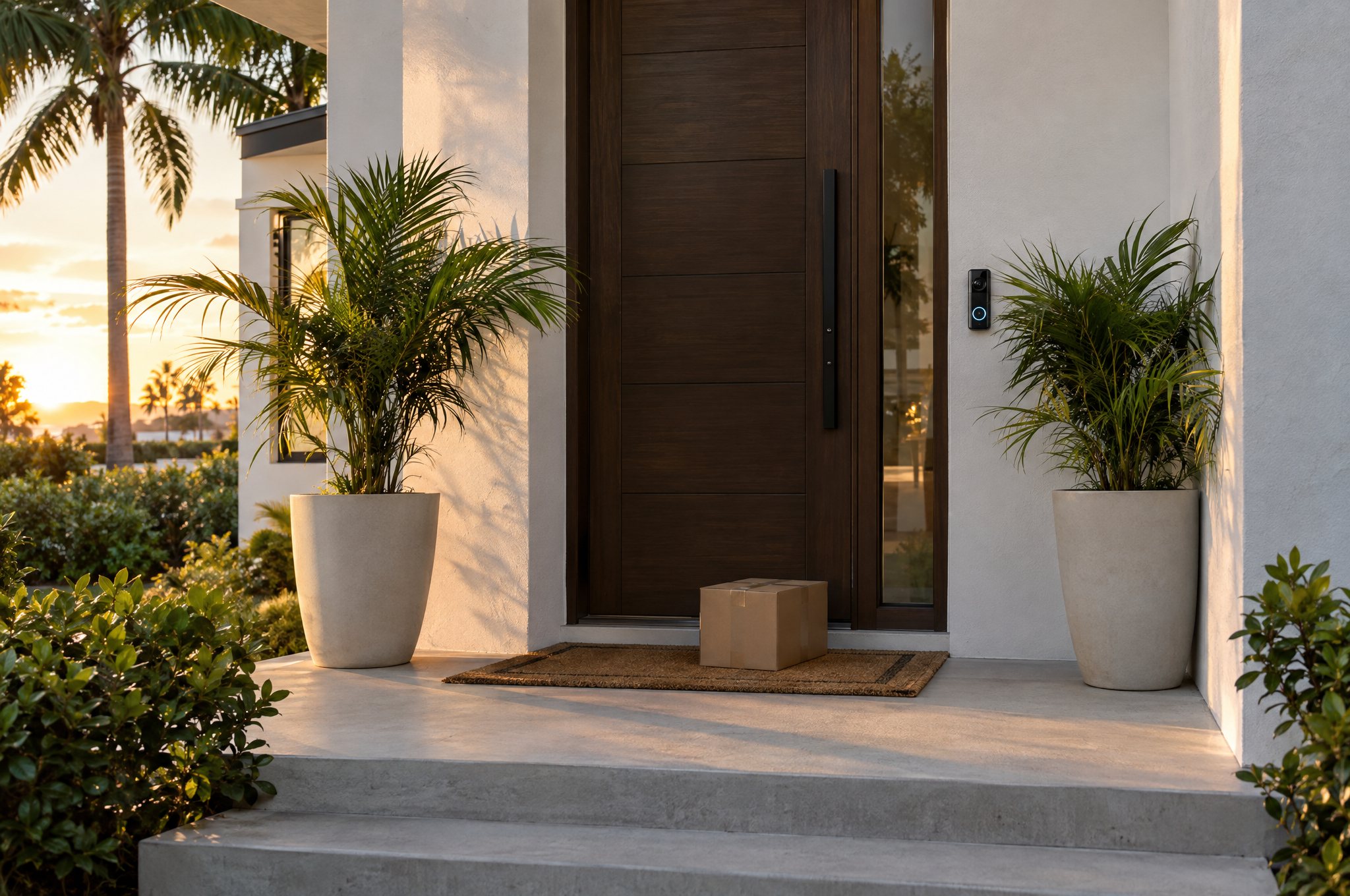
A video doorbell lets you see, hear and talk to whoever is at the door from anywhere, and records motion and rings. With an estimated 58 million packages stolen in the U.S. in 2024 [4], it is often the first device people add.
What to look for:
- Head-to-toe view, so a package on the mat is in frame.
- How video is saved. Many doorbells keep clips in the cloud on a monthly plan; some save locally. Know which before you buy.
- Wired or battery. Wired doorbells use the existing chime wiring and never need charging.
Florida rule: many doorbells also record sound. Florida's law on recording conversations generally requires the consent of everyone in the conversation [10], so check the audio setting before you leave it on. Our smart home security guide covers cameras, monitoring and Florida's rules in depth.
3. A smart lock and a garage controller
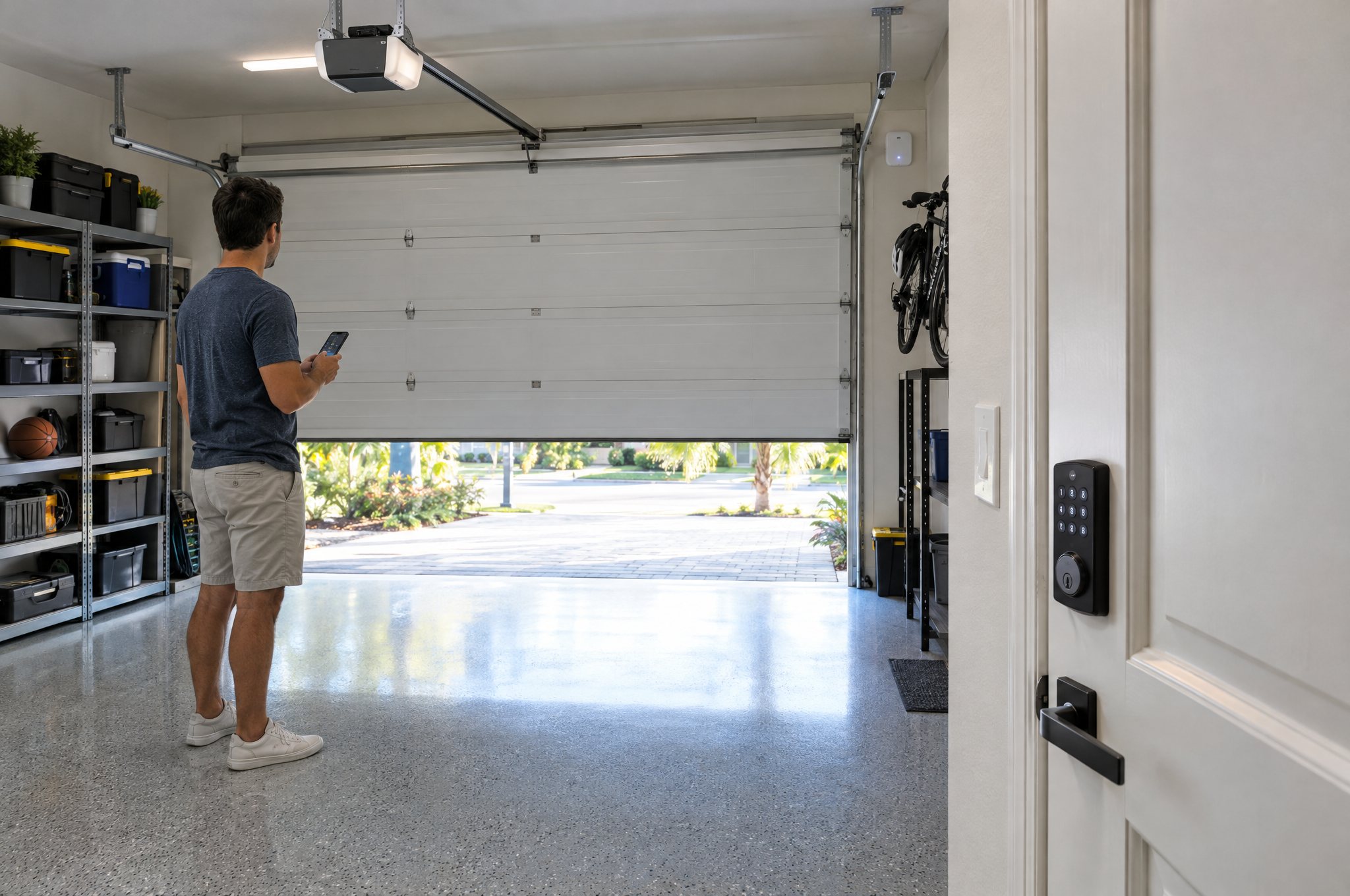
In federal burglary data, 40% of unlawful entries into empty homes were made through an unlocked door or window [5]. A smart lock can lock itself a set time after the door closes, and lets you check and lock it from your phone. A garage controller does the same for the biggest door in the house.
What to look for:
- Auto-lock and an alert when a door is left unlocked or the garage is left open.
- Separate keypad codes for family, guests and workers, each one easy to delete.
- A physical backup. A key or battery jump terminal for the day the batteries die.
- One app for both. The Matter smart home standard added support for door locks early and for garage doors and other closures in November 2025 [8], which makes it easier to control them together.
4. A leak sensor and an automatic shutoff valve
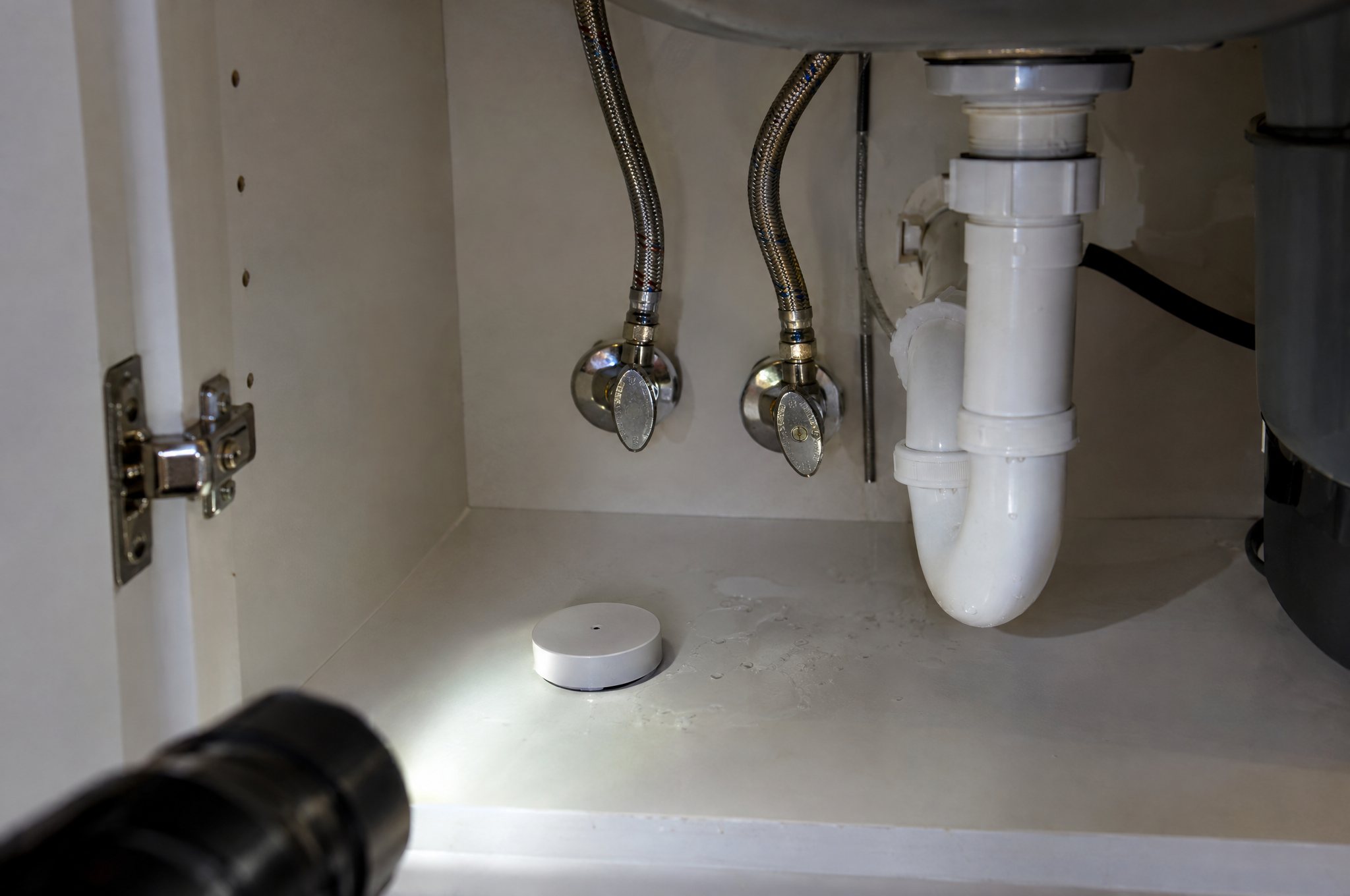
Water damage and freezing account for a claim in about 1 in 60 insured homes a year, and the average claim ran about $15,749 from 2018 to 2022 [6]. In Florida, the usual culprits are a supply line under a sink, a water heater, an ice maker or an AC drain.
There are two pieces:
- Leak sensors sit on the floor where water shows up first and send an alert to your phone.
- An automatic shutoff valve goes on the main water line and can close itself when a sensor trips, so the leak stops even if you are away.
What to look for: sensors under every sink, behind the washer, by the water heater and under the AC air handler; a valve that you can also close from the app; and a manual handle that still works without power.
What it cannot do: prevent the leak. It limits how long it runs. Ask your insurer whether it offers any credit for water protection devices; that is up to the insurer, not the device.
5. Smart lighting
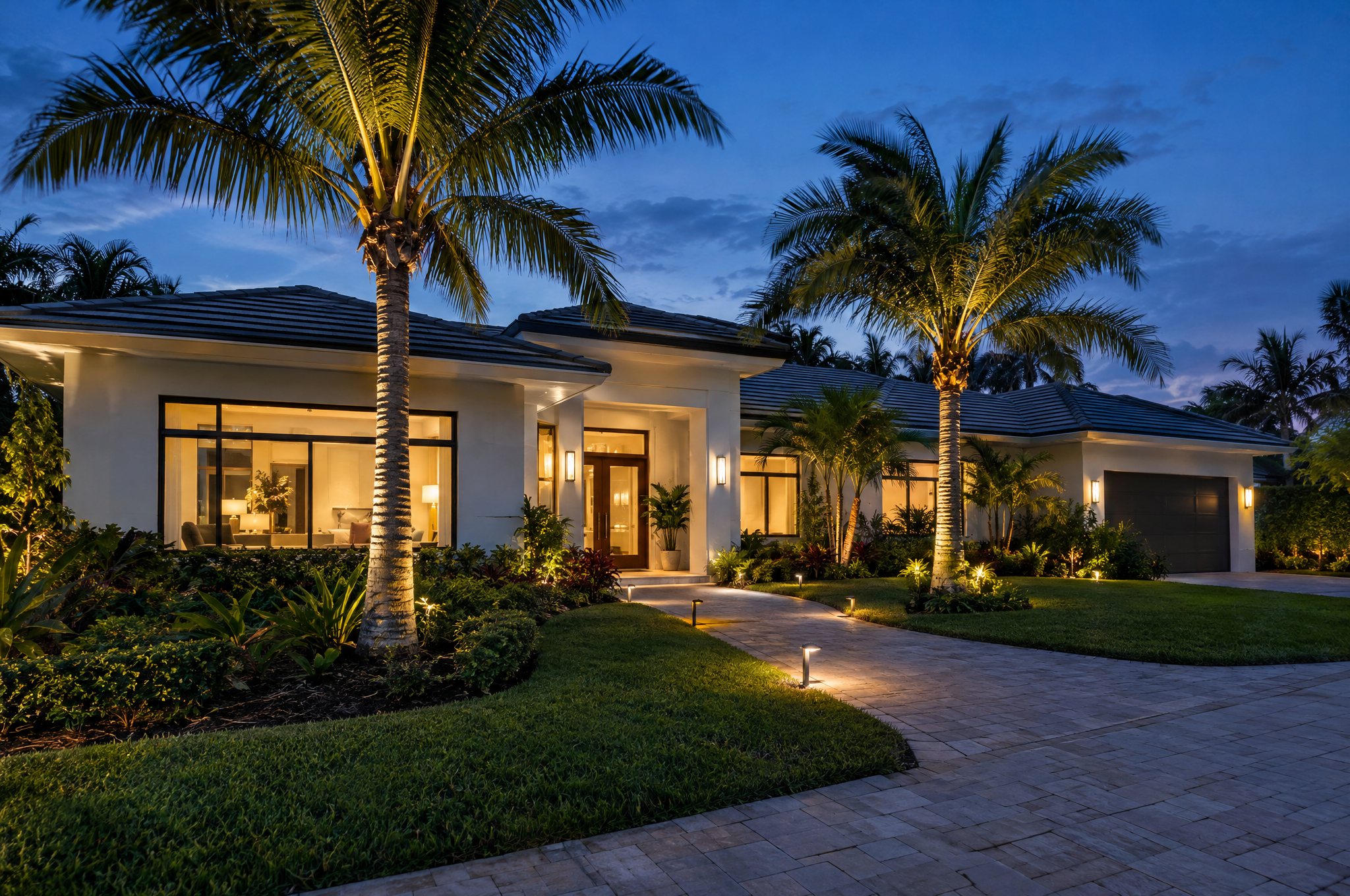
Smart switches and bulbs can follow sunset, a schedule or a motion sensor, inside and out. In federal data, 72% of household burglaries happened when nobody was home [5], which is why lights that come on by themselves are a simple deterrent. Pair them with LEDs, which use at least 75% less energy than incandescent bulbs and last up to 25 times longer [7].
What to look for:
- Smart switches over smart bulbs for rooms everyone uses, so the wall switch still works.
- Sunset schedules for the entry, the driveway and the landscape lights.
- Scenes: one tap for Away, Arriving and Goodnight.
Then tie them together
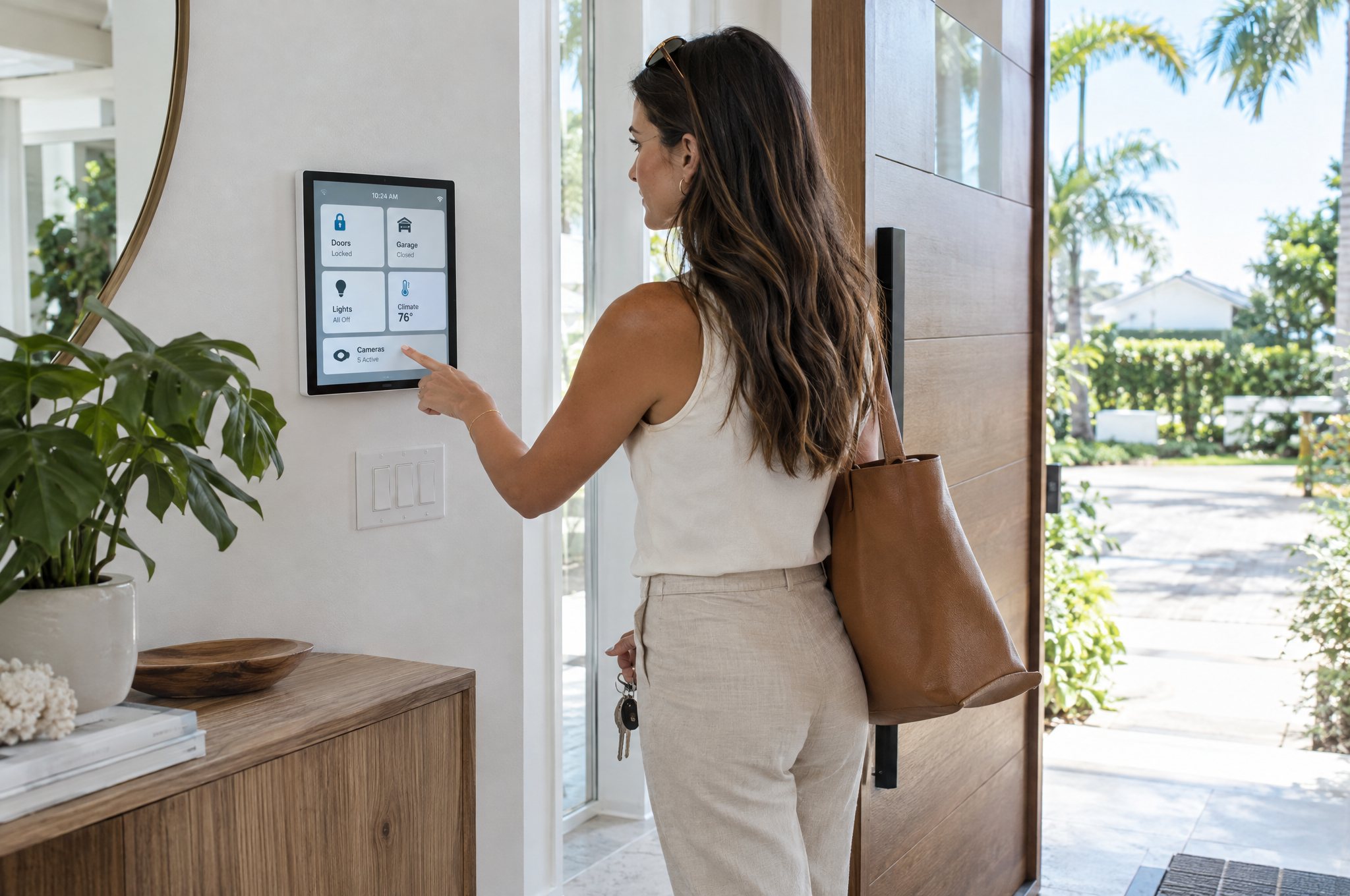
Five devices in five apps is not a smart home. A hub, a wall panel or one app that runs them together is what turns five devices into one routine: leave, and the door locks, the garage closes, the lights set themselves and the thermostat eases off. Check that each device works with the same app or with Matter [8] before you buy. Our Smart Home & Automation page shows how the pieces fit in one house.
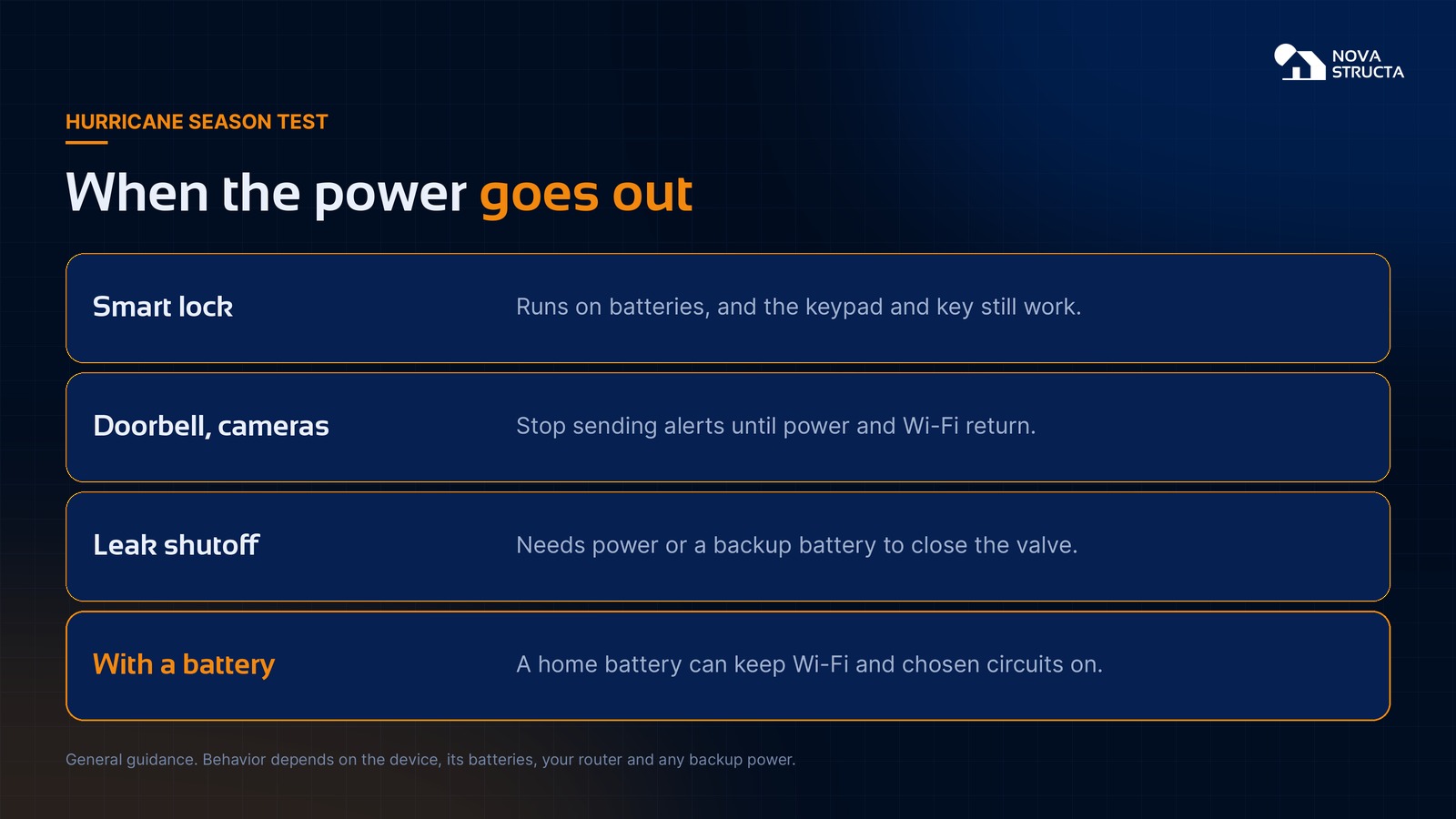
What happens when the power or internet goes out?
| Device | Without power or internet | Backup |
|---|---|---|
| Smart thermostat | The AC is off with the power anyway. With power but no internet, most keep running their schedule from the wall. | Buttons on the unit |
| Video doorbell | No alerts or live view until power and Wi-Fi return | Battery models and local storage keep recording on some devices |
| Smart lock | Runs on its own batteries; the keypad and key still work | Physical key or jump terminal |
| Garage controller | The opener needs power; the controller needs Wi-Fi | Manual release on the opener |
| Leak shutoff | Needs power or its backup battery to close the valve | Manual handle on the valve |
| Smart lighting | Off with the power. Without internet, many keep their schedules locally. | The wall switch |
A home battery can keep Wi-Fi, the router and chosen circuits running through an outage. See how solar and a battery share the load.
Five checks before you buy any smart device
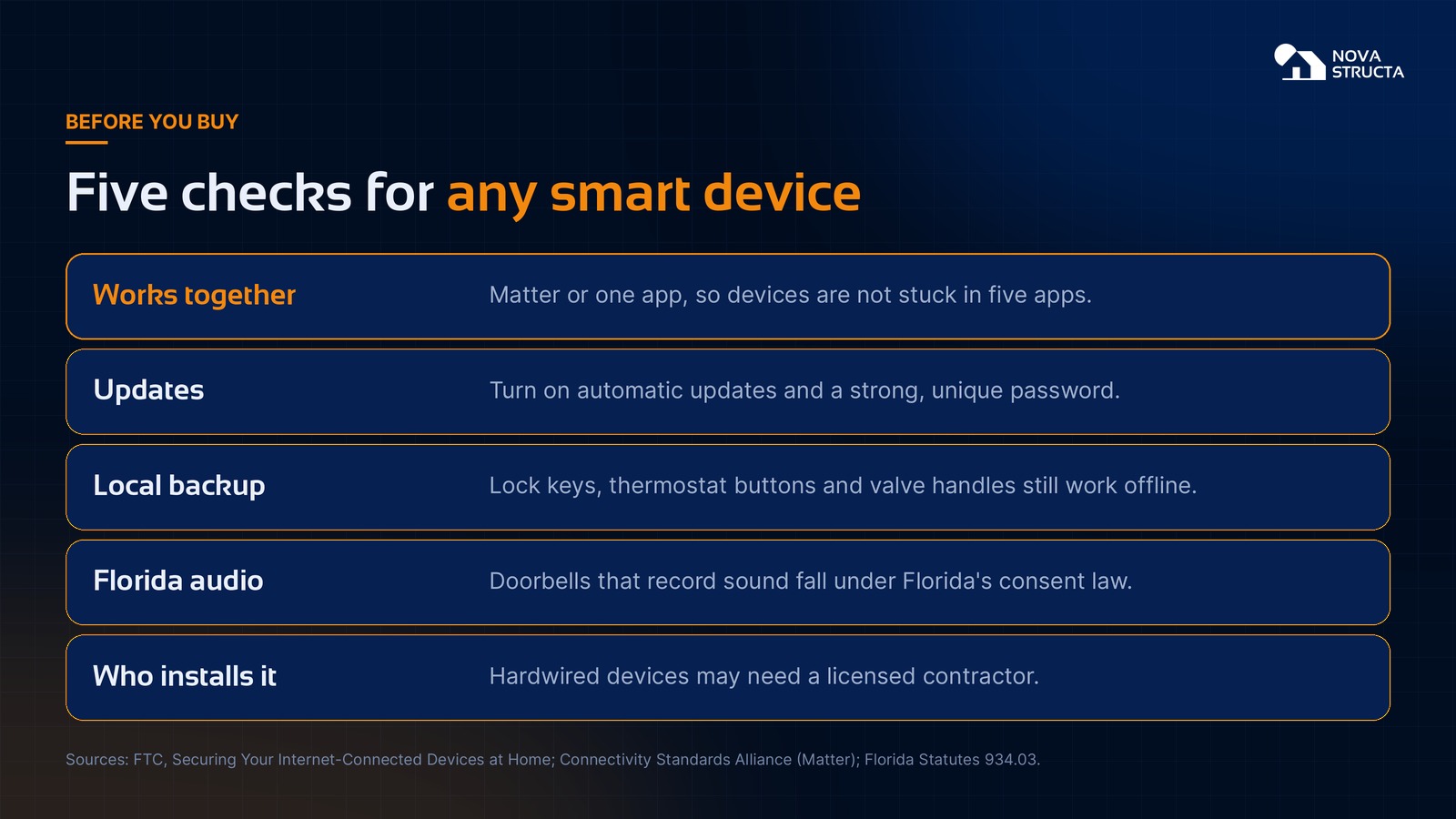
- Does it work with what you have? One app or Matter, so you are not juggling five [8].
- Can you secure it? The FTC recommends changing default passwords, turning on automatic updates and using two-factor sign-in where it is offered [9].
- Does it still work offline? A key for the lock, buttons on the thermostat, a handle on the valve.
- Does it record sound? Check Florida's recording law before you turn audio on [10].
- Who installs it? Plug-in devices are DIY. Hardwired thermostats, switches, doorbells and shutoff valves may need a licensed electrician or plumber.
Quick answers
What is the first smart home device I should buy?
In Florida, a smart thermostat is a strong first pick because air conditioning is the biggest share of household energy [1]. If security is the bigger worry, start with a video doorbell and a smart lock.
Do smart thermostats really save money?
ENERGY STAR estimates a certified smart thermostat can cut yearly heating and cooling bills by more than 8%, based on field data [2]. Your results depend on your house, your AC and how you use it.
Are water leak detectors worth it?
Water damage or freezing leads to a claim in about 1 in 60 insured homes a year [6]. Sensors alert you; an automatic shutoff valve can stop the water while you are away.
Do smart home devices work without Wi-Fi?
Some features do. Smart locks keep working on batteries, and many thermostats and lighting systems keep their schedules locally. Alerts, live video and remote control need power and an internet connection.
What is Matter?
Matter is an industry standard that lets smart home devices from different brands work together. In November 2025 it added support for cameras and for closures such as garage doors [8].
Can I record audio on my doorbell camera in Florida?
Florida's law generally requires the consent of everyone in a conversation to record it [10]. Check your doorbell's audio settings, and talk to an attorney if you are unsure.
The bottom line
Start with five: a smart thermostat for the AC, a video doorbell, a smart lock with a garage controller, a leak sensor with a shutoff valve, and smart lighting. Choose devices that work together, keep a manual backup for each one, and plan for the day the power goes out.
If you would like it planned as one system, see Smart Home & Automation or book a free assessment.
Results vary by home, equipment, usage and installation. Features, alerts and app access depend on the device, Wi-Fi and internet connection, subscriptions and provider terms. Nothing here guarantees security, savings or an insurance discount. Examples and visuals are illustrative only. Nova Structa coordinates consultations, project review, and customer support, but does not perform installation work. Installations are performed by independent Florida licensed contractor(s). ENERGY STAR is a registered trademark of the U.S. Environmental Protection Agency. Matter is a trademark of the Connectivity Standards Alliance. References are for identification only and do not imply sponsorship, endorsement, certification, partnership, or affiliation.
Sources
- U.S. Energy Information Administration, Today in Energy, state-level Residential Energy Consumption Survey results (air conditioning was 28% of household site energy in Florida vs. about 9% nationally; 96% of Florida households use AC). eia.gov
- ENERGY STAR, Smart Thermostat Marketing Toolkit, 2023 to 2024 (certified smart thermostats can reduce annual heating and cooling bills by more than 8%, based on field data). energystar.gov (PDF)
- U.S. Environmental Protection Agency, "A Brief Guide to Mold, Moisture and Your Home." epa.gov
- USPS Office of Inspector General, "Package Theft in the United States," RISC-WP-25-002, May 15, 2025. uspsoig.gov (PDF)
- S. Catalano, Bureau of Justice Statistics, "Victimization During Household Burglary," September 2010, NCJ 227379. bjs.ojp.gov (PDF)
- Insurance Information Institute, "Facts + Statistics: Homeowners and renters insurance" (about 1 in 60 insured homes has a water damage or freezing claim each year; average claim severity $15,749, 2018 to 2022, ISO data). iii.org
- U.S. Department of Energy, Energy Saver, "LED Lighting." energy.gov
- Connectivity Standards Alliance, "Matter 1.5 introduces cameras, closures and enhanced energy management capabilities," November 2025. csa-iot.org
- Federal Trade Commission, "Securing Your Internet-Connected Devices at Home." consumer.ftc.gov
- Florida Statutes, Section 934.03, Interception and disclosure of wire, oral, or electronic communications (2025). flsenate.gov
Savings and utility-bill examples shown are illustrative only, are not guaranteed, and may not reflect typical results. Actual savings depend on your energy usage, system size, roof and site conditions, financing terms, utility rates, net-metering rules, and other factors specific to your home.