
Smart Homes
How Smart Homes Improve Security Without Expensive Monitoring Contracts (Florida, 2026)
How does a smart home improve security?
Smart cameras, locks, sensors and lights make a home harder to approach unseen and send every alert straight to your phone. You can watch it yourself for a few dollars a month or add professional monitoring later, without a multi-year contract. No system can guarantee security, so pick devices for how burglaries really happen.
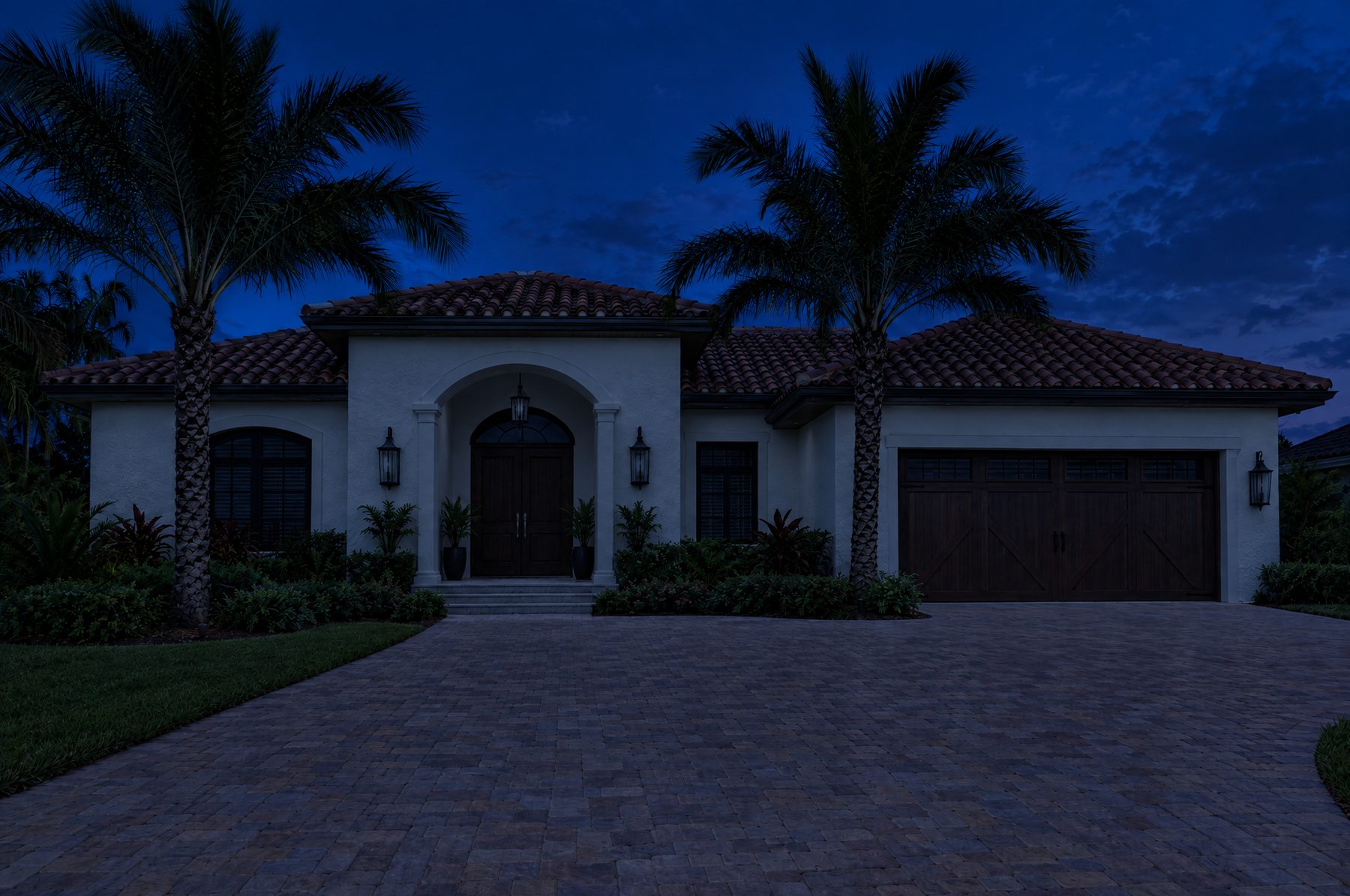 Motion detected: front walk. Lights on.
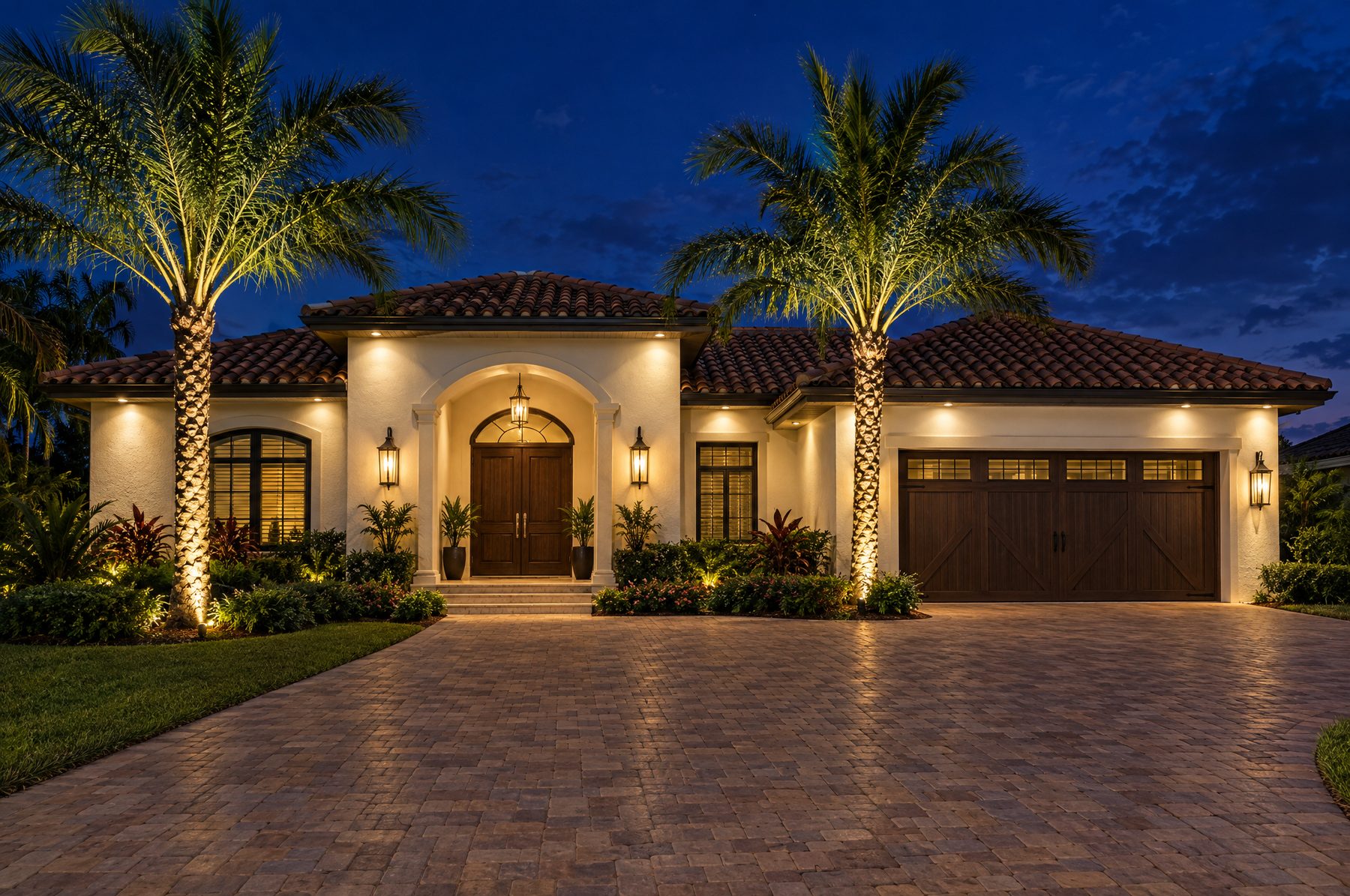
For decades, home security meant one thing: an alarm panel, a monitoring center, and a contract that ran for years. That still exists, and for some households it is the right call. But cameras, smart locks and sensors now report straight to your phone, and many work with a low monthly plan or none at all.
This guide walks through what the data says about how burglaries happen, follows one Florida home through a day of alerts, and opens up each device so you can see what it does, what it cannot do and what it costs to run. Every claim links to a source. It is general information, not legal, insurance or security advice for your home.
How do burglaries really happen?
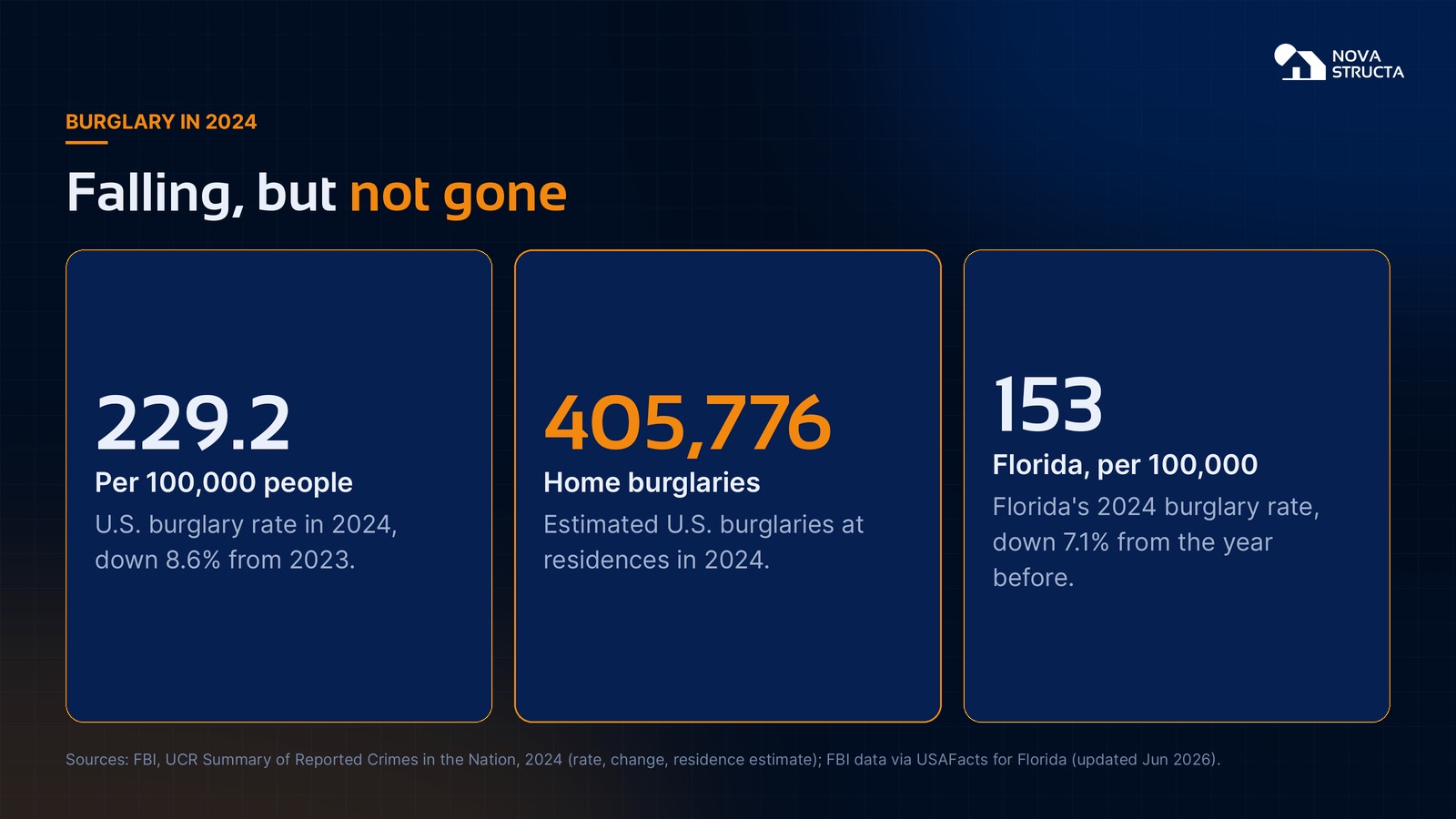
The good news first. The U.S. burglary rate fell to 229.2 per 100,000 people in 2024, down 8.6% from 2023, and it has fallen nearly every year since 2005, when it was 738.9 [1]. The FBI estimates 405,776 burglaries at residences in 2024 [1]. Florida's rate was 153 per 100,000, down 7.1% [2].
Falling is not gone. In the federal crime victim survey, households reported about 1.6 million burglary and trespassing victimizations in 2024, and only about 41% were reported to police [4].
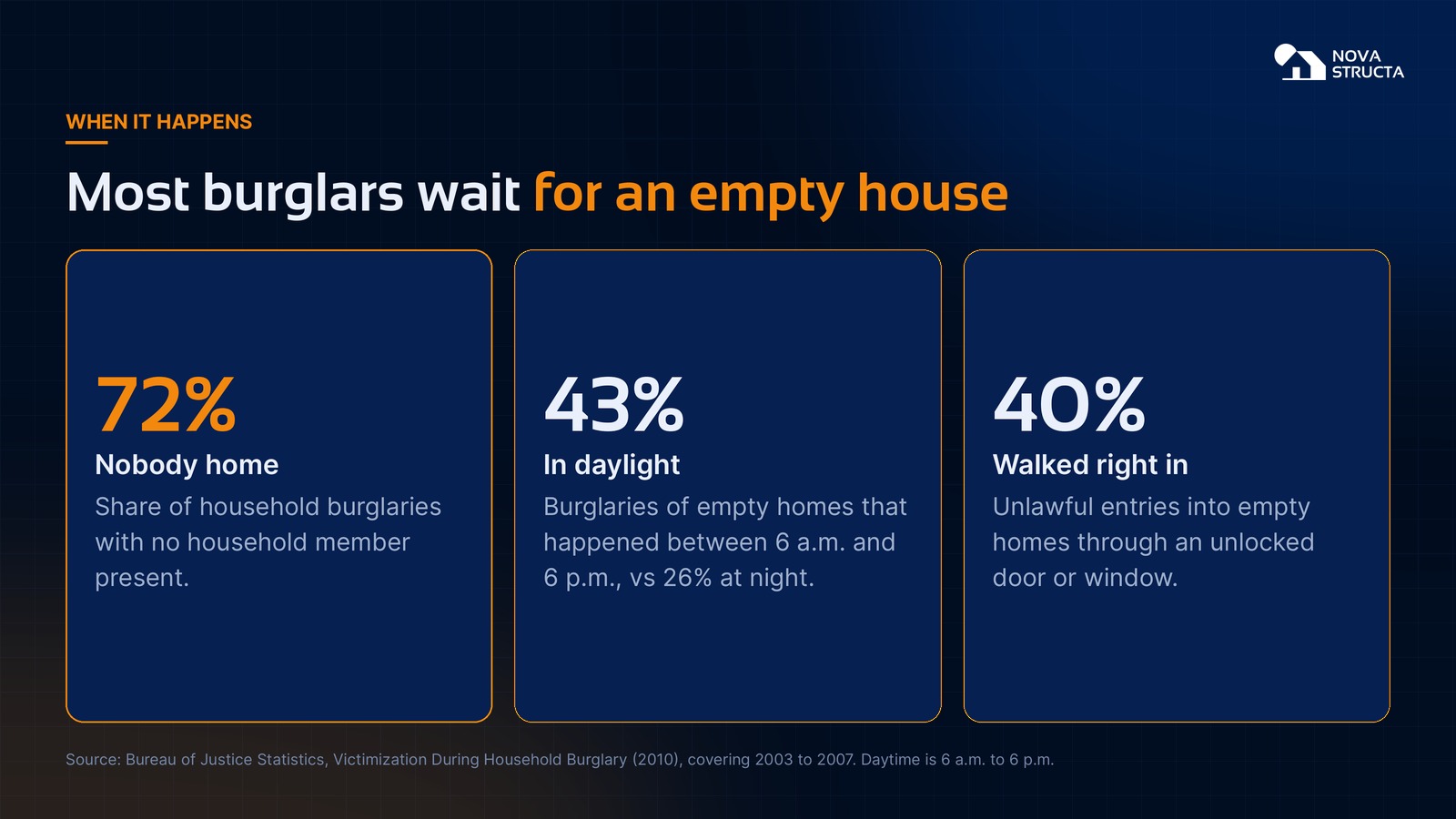
The pattern behind those numbers matters more than the totals. In the most detailed federal study of household burglary, about 72% happened when no household member was present [3]. When nobody was home, burglaries were more likely in daylight, 43% between 6 a.m. and 6 p.m. versus 26% at night [3]. And in 40% of unlawful entries into empty homes, the offender came in through an unlocked door or window [3].
So the threat most homes face is not a break-in at midnight. It is an empty house on a weekday, often with a door someone forgot to lock. That is exactly the gap smart devices are built to close: they tell you what is happening while you are away, and they can lock the door you forgot.
What do burglars say stops them?
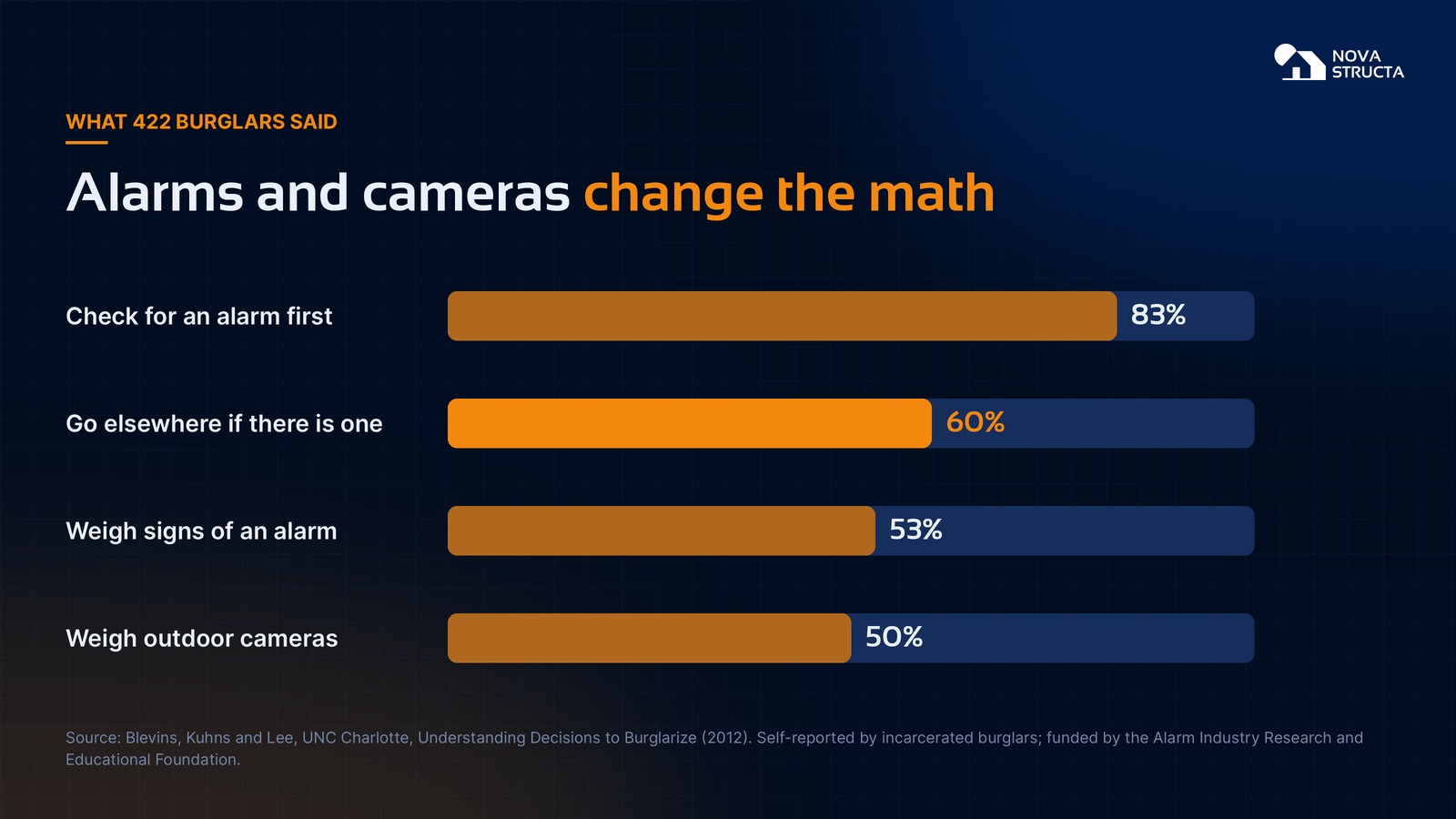
Researchers at UNC Charlotte surveyed 422 incarcerated burglars in North Carolina, Kentucky and Ohio [5]:
- About 83% said they would try to find out whether a home had an alarm before breaking in [5].
- About 60% said an alarm would make them look for another target altogether [5].
- Half said they would stop an attempt in progress if they discovered an alarm [5].
- Signs of an alarm (53%) and outdoor cameras (50%) were among the things most of them weighed [5].
Two honest caveats. These are answers from people who were caught, and the study was funded by the Alarm Industry Research and Educational Foundation [5]. Still, the direction is clear: being seen, and being heard, makes a home a worse target.
A day in a smart home, alert by alert
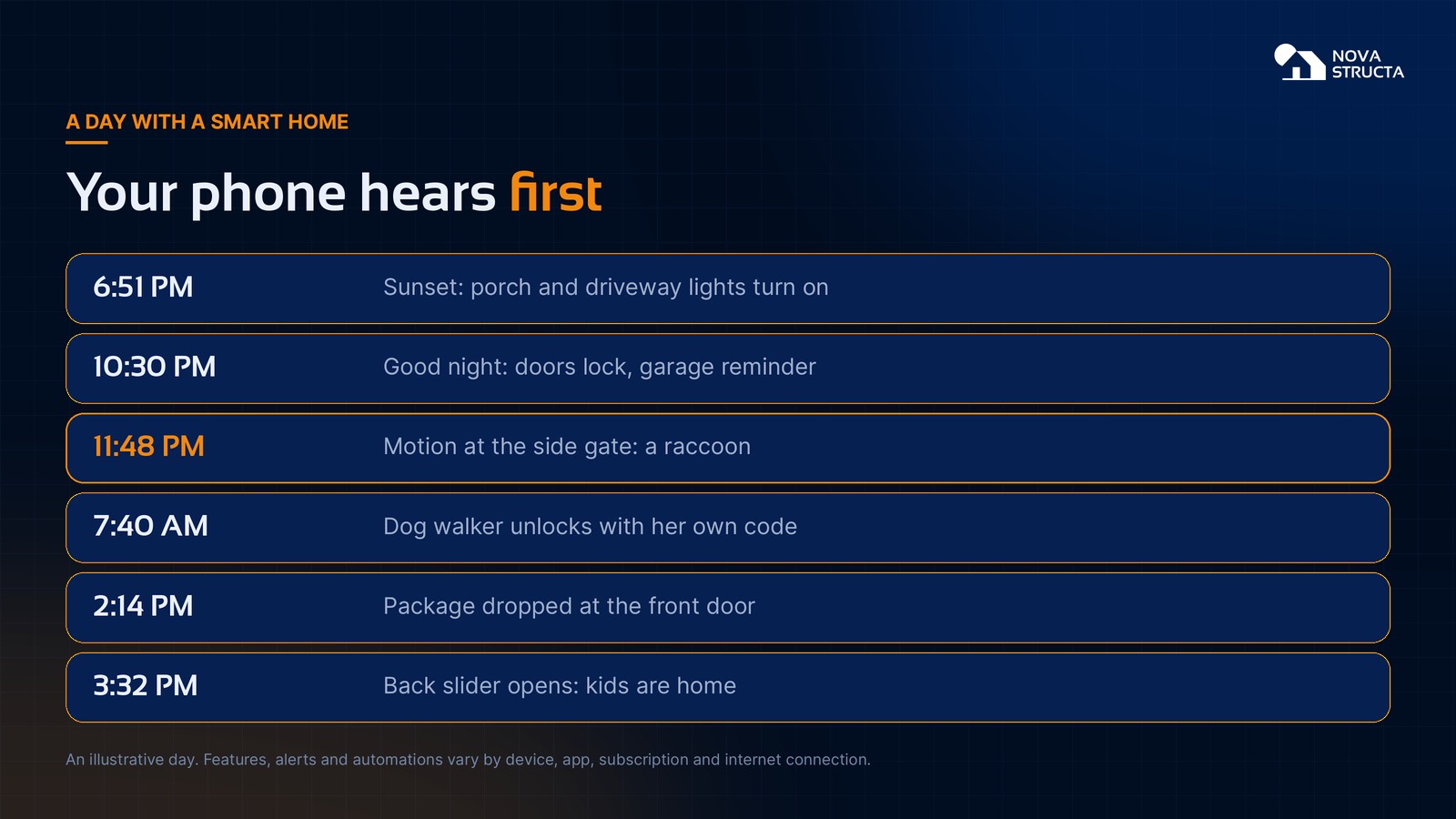
Here is what a well set up Florida home might send to your phone in one ordinary day. The times are made up. The features are real, though each depends on the devices and plan you choose.
6:51 PM
Lights tied to sunset, not a fixed clock, come on at the right time all year. Add motion so the walk and side yard brighten when someone steps in.
10:30 PM
One tap runs a scene: lock every smart lock, check the contact sensors and flag anything left open. This is the alert that catches the unlocked door behind 40% of empty-home entries [3].
11:48 PM
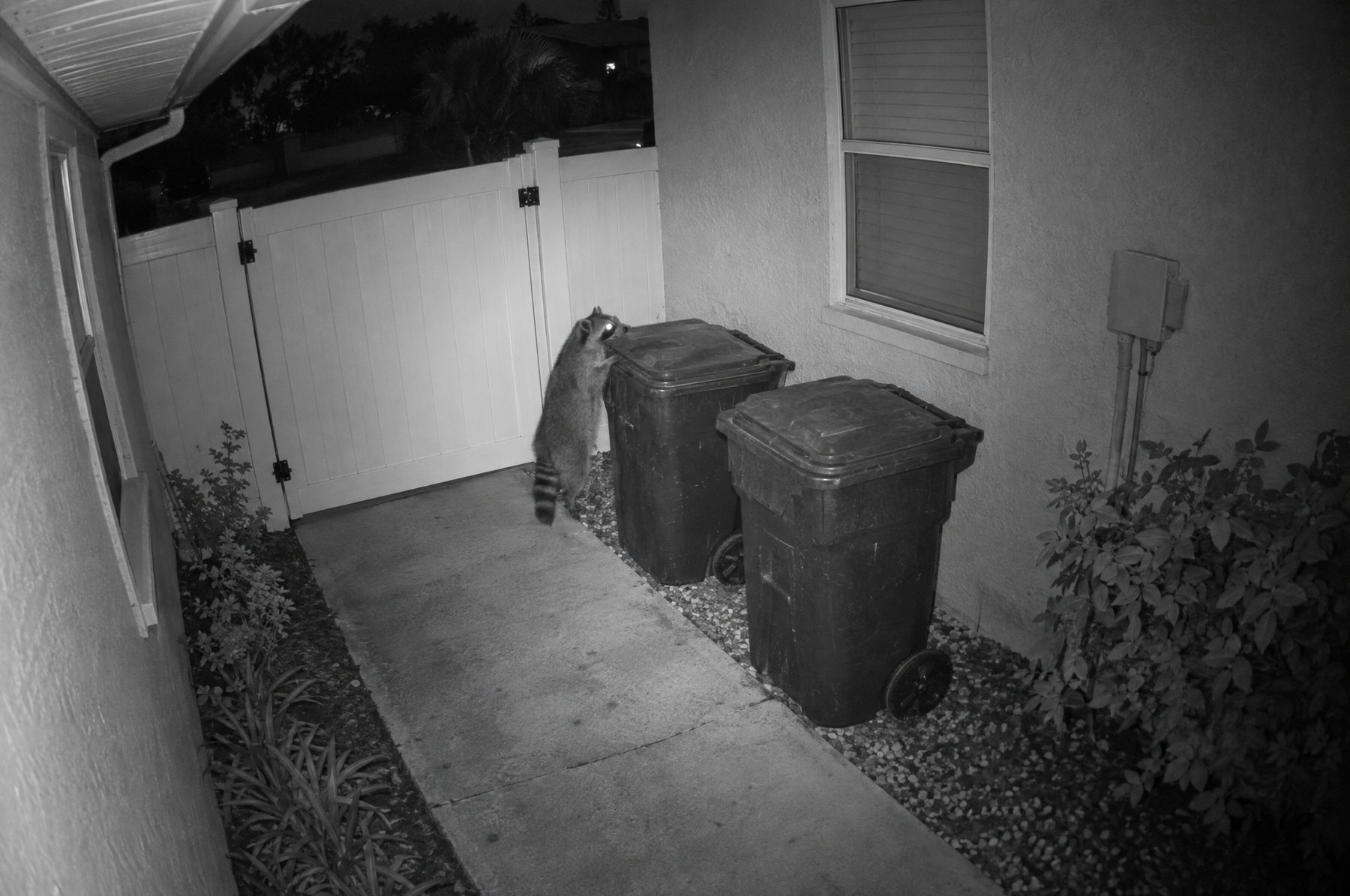 Side gate11:48 PMLIVE
In Florida, most night motion is wildlife. Cameras that can tell a person from an animal, and let you choose which alerts wake you up, are the difference between a system you trust and one you mute.
7:40 AM
Give each person their own code, limit it to certain hours, and delete it when the job ends. No hidden key under the mat.
2:14 PM
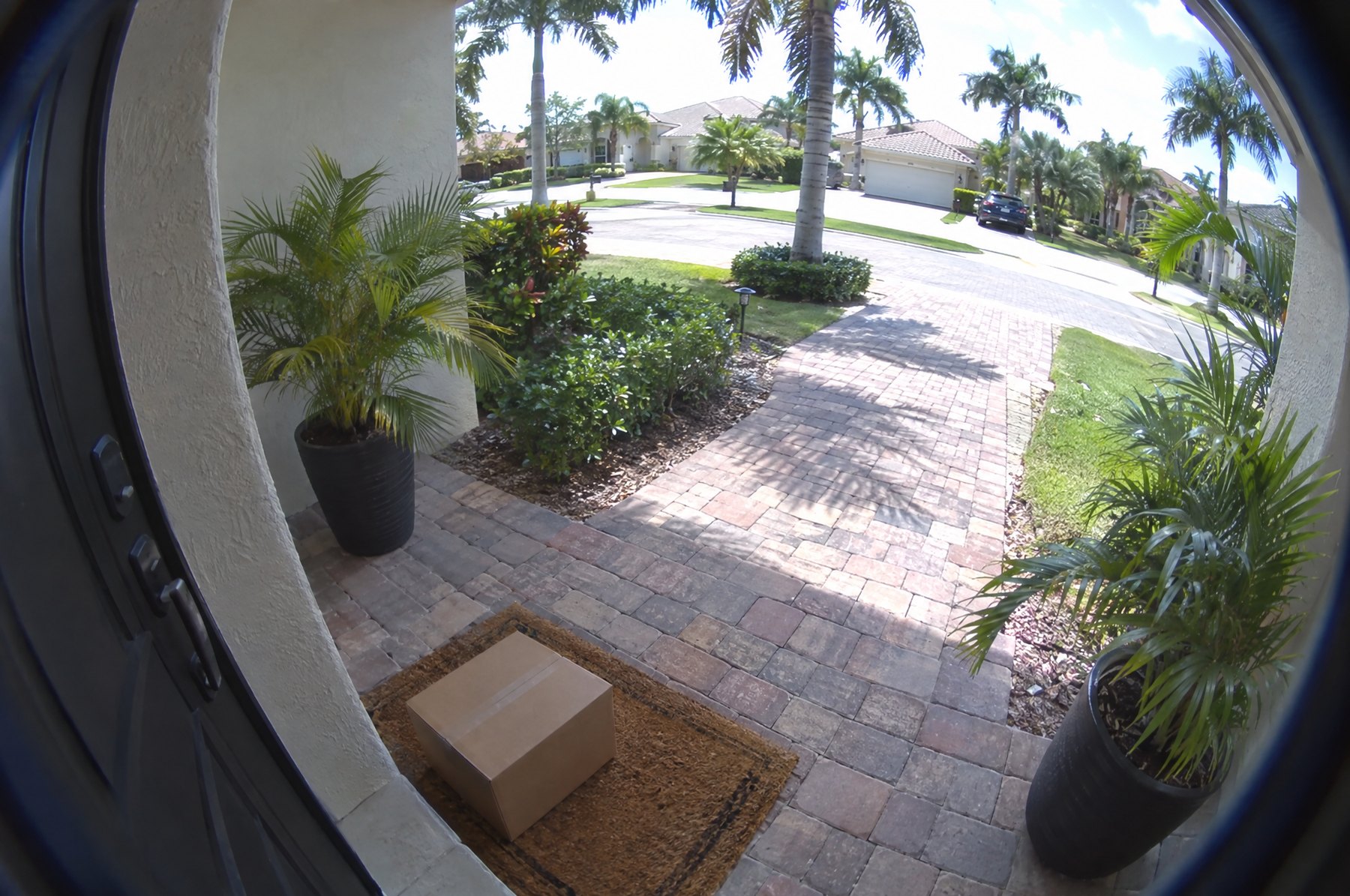 Front door2:14 PMLIVE
The USPS Office of Inspector General put package theft at 58 million or more packages in 2024, while noting there is no single authoritative source and that surveys vary [20]. A porch camera will not stop every thief, but it tells you the moment a box lands so you can bring it in or ask a neighbor.
3:32 PM
A contact sensor costs little and answers the question every working parent asks at 3:30. If that alert ever comes when nobody should be home, you know right away.
Open each device: what it does, and what it cannot
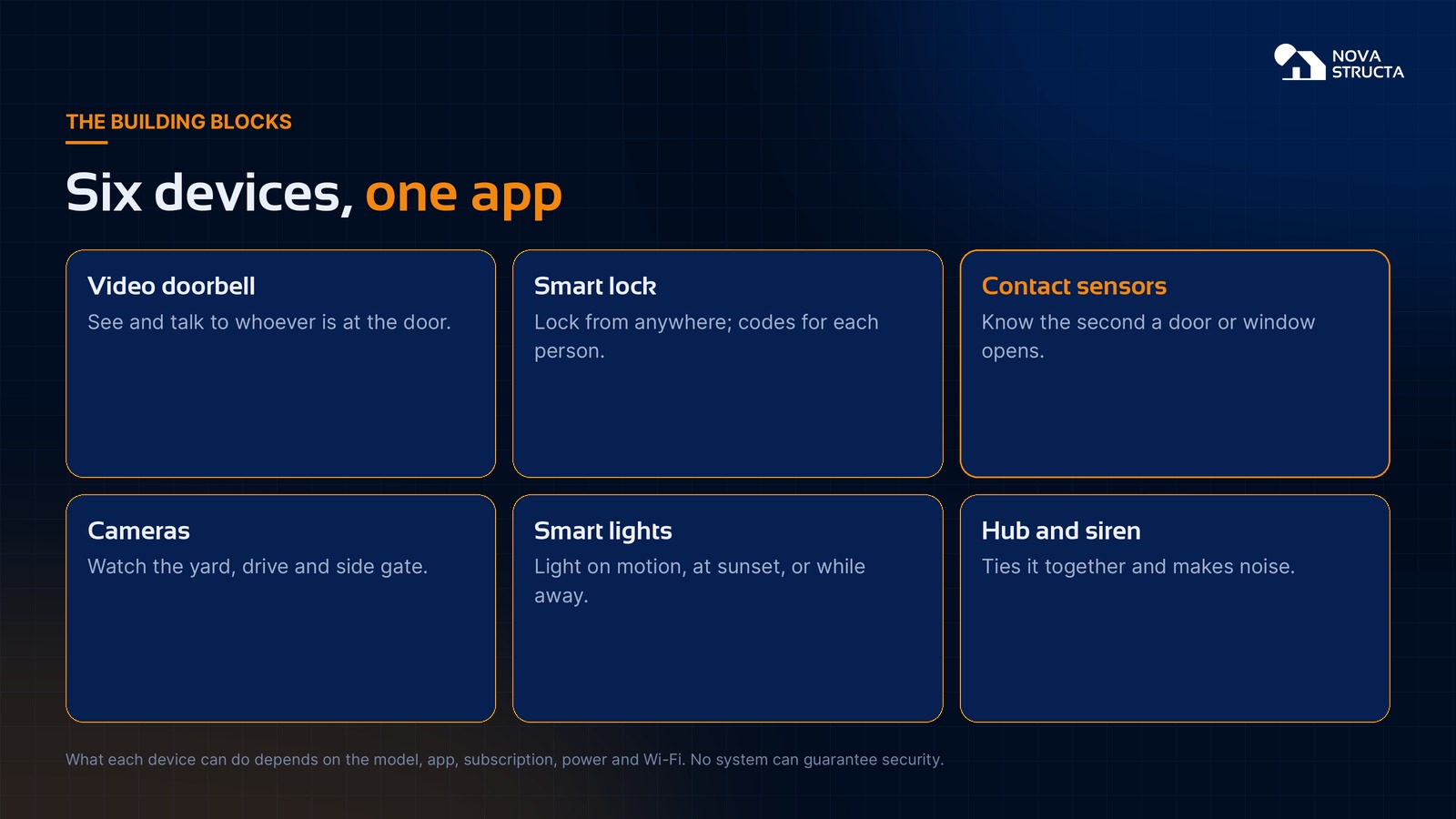
Tap a device to open it.
Video doorbellSee and talk to whoever is at the door
What it does. Streams video of the porch, lets you talk to visitors from anywhere, and records motion and rings.
What it cannot do. It cannot see the side yard or the back slider, and saved video usually needs a cloud plan. Ring's single-device plan is listed at $4.99 a month [6].
Florida tip. Many doorbells record audio too. Read the Florida rules section before you leave it on.
Smart lockLock from anywhere, a code for each person
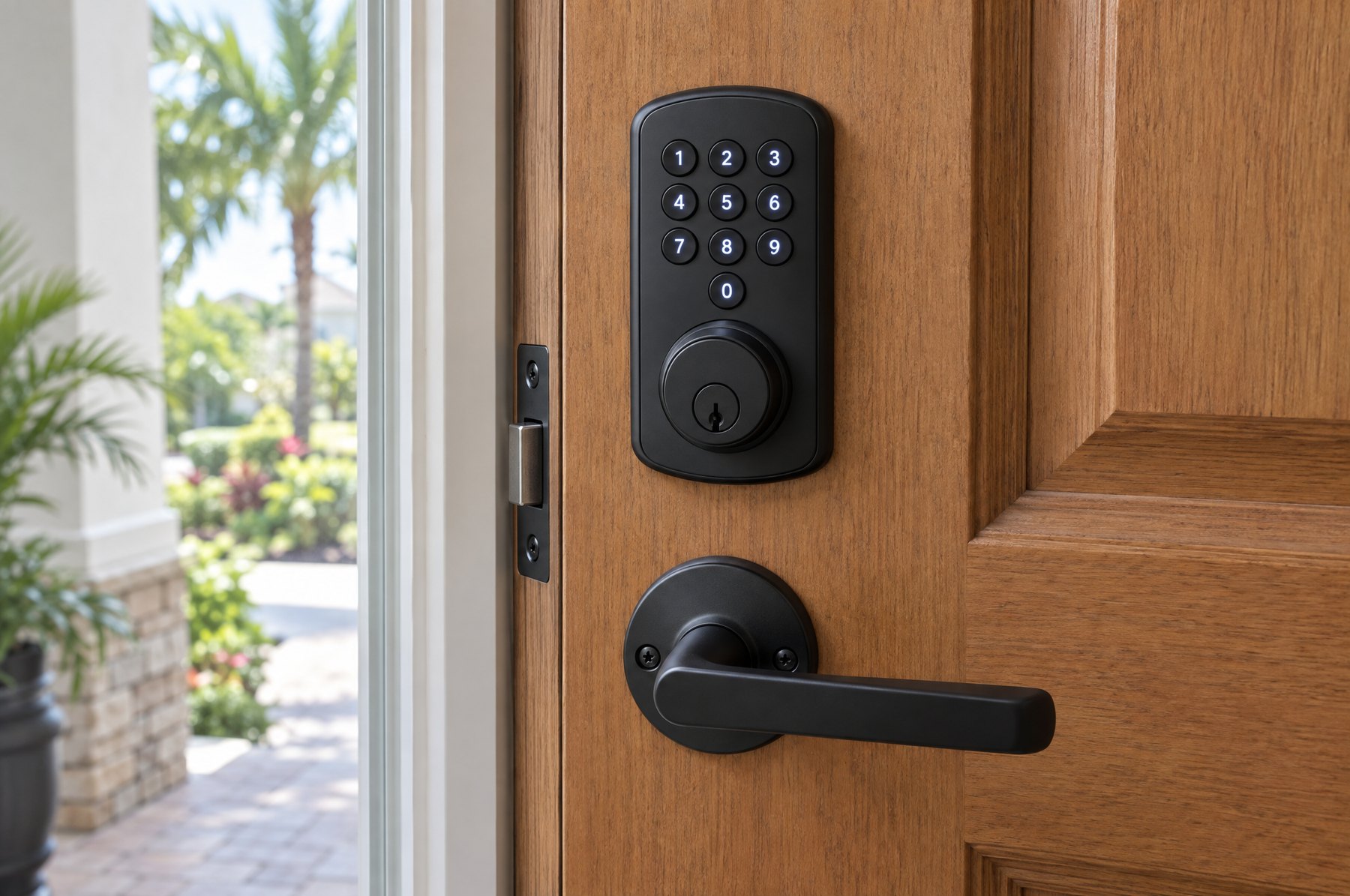
What it does. Locks and unlocks from your phone, auto-locks after a set time, and logs who came and went.
What it cannot do. It is only as strong as the deadbolt and the door frame. Look for a grade under ANSI/BHMA A156.40, the residential deadbolt standard. Its tests include loading the door against the bolt with 1,350 pounds of force [16].
Florida tip. Salt air is hard on hardware. Near the coast, ask about finishes rated for it.
Door and window sensorsKnow the second something opens
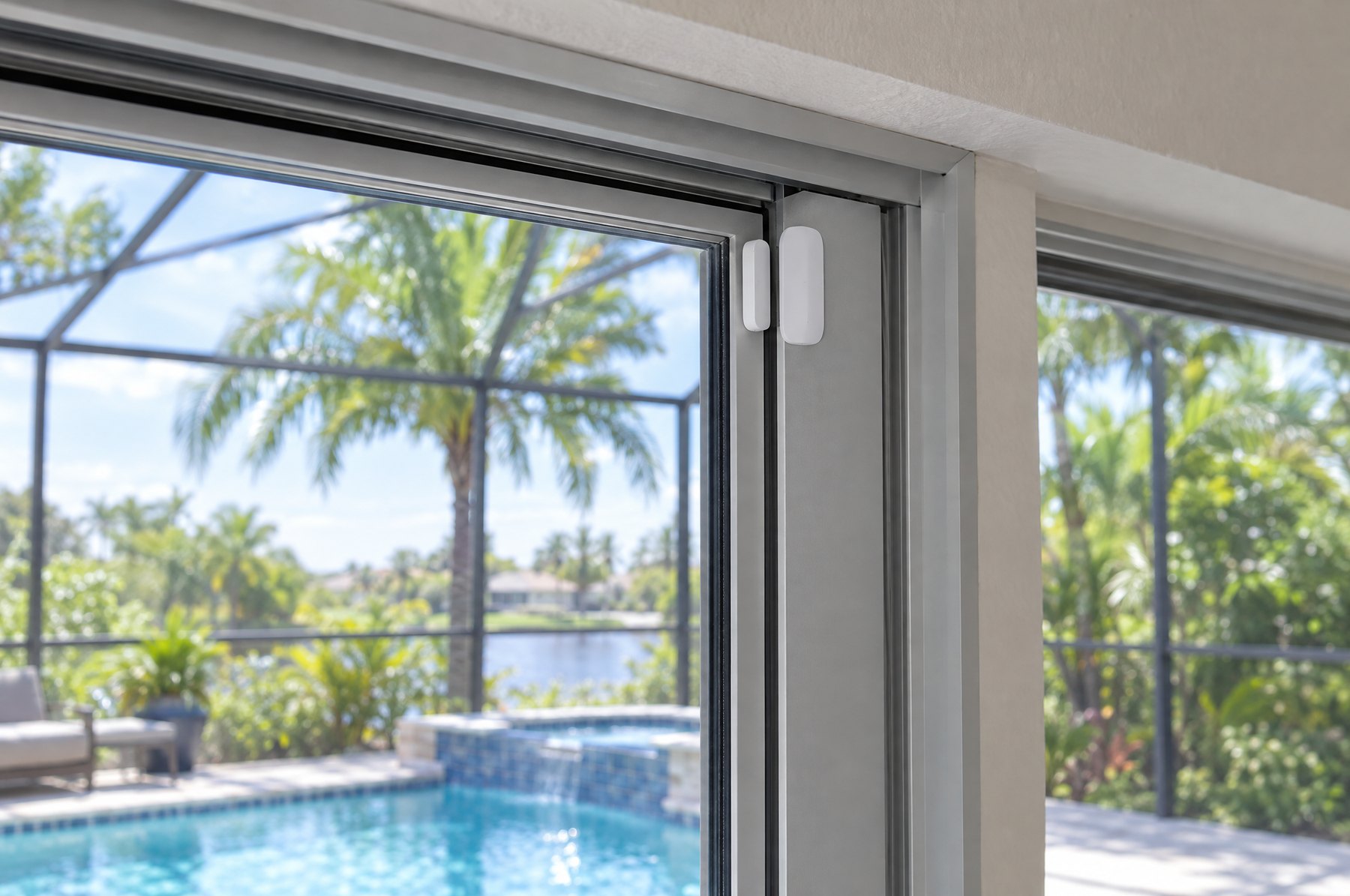
What it does. A two-piece magnet sensor reports when a door, window or slider opens, and can trigger a siren, lights or an alert.
What it cannot do. It only knows open or closed. It does not see who opened it.
Florida tip. Put one on every slider to the lanai. They are a common way in and easy to leave unlocked.
Outdoor camerasWatch the yard, drive and side gate
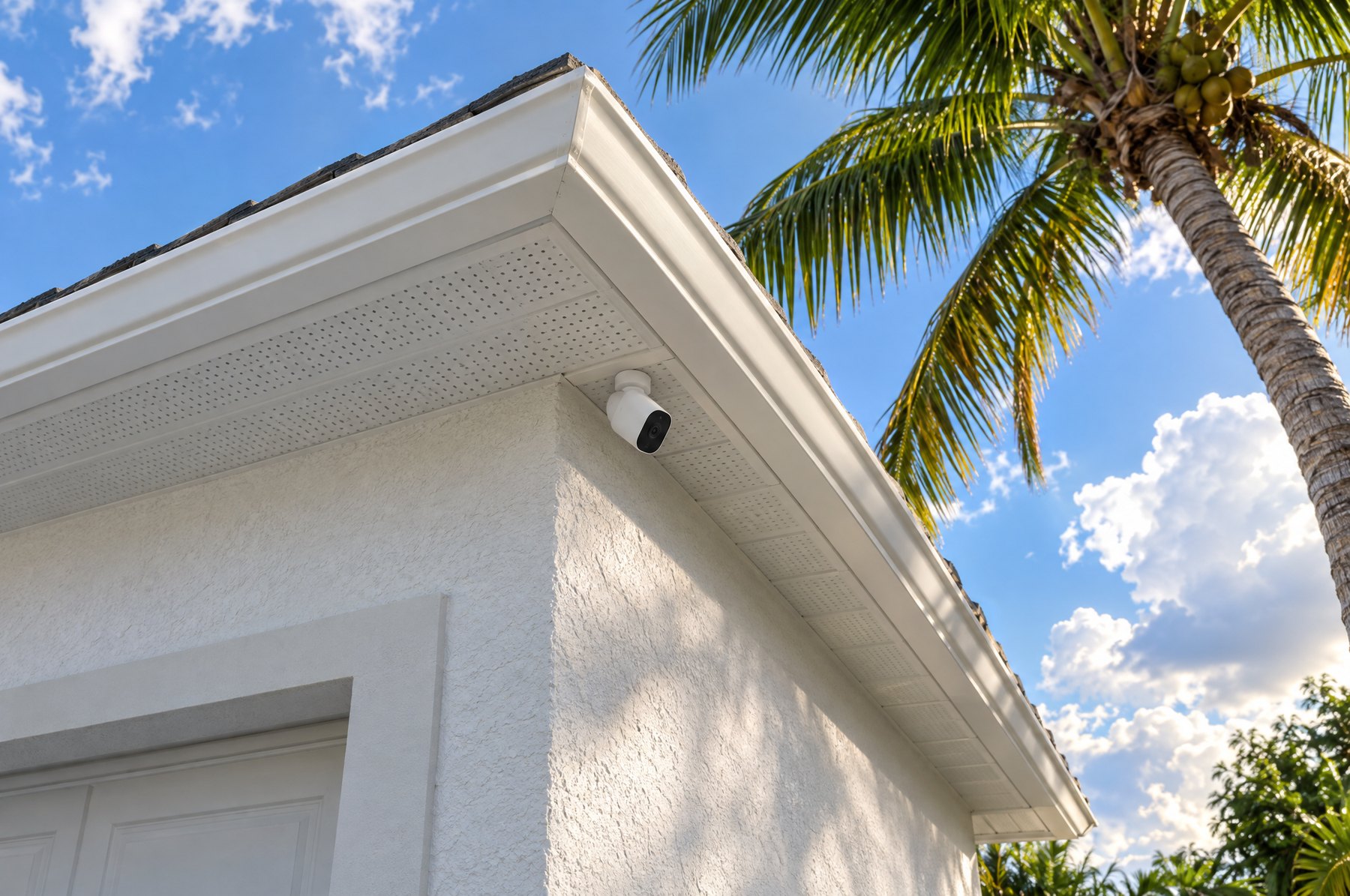
What it does. Records motion, sees in the dark with infrared, and lets you check in live.
What it cannot do. Most Wi-Fi cameras need a working connection to send alerts and video [9], and cloud history usually needs a plan. A camera under a soffit stays dry and out of reach.
Florida tip. Mount where afternoon sun will not shine straight into the lens, and away from sprinklers.
Smart lightingLight on motion, at sunset, or while away
What it does. Turns on at sunset, on motion or on a schedule that looks lived in while you travel.
What it cannot do. It cannot call anyone. It works best paired with a camera or sensor that can.
Florida tip. Snowbird season is when a lived-in schedule earns its keep.
Hub, siren and backupTies it together and makes noise
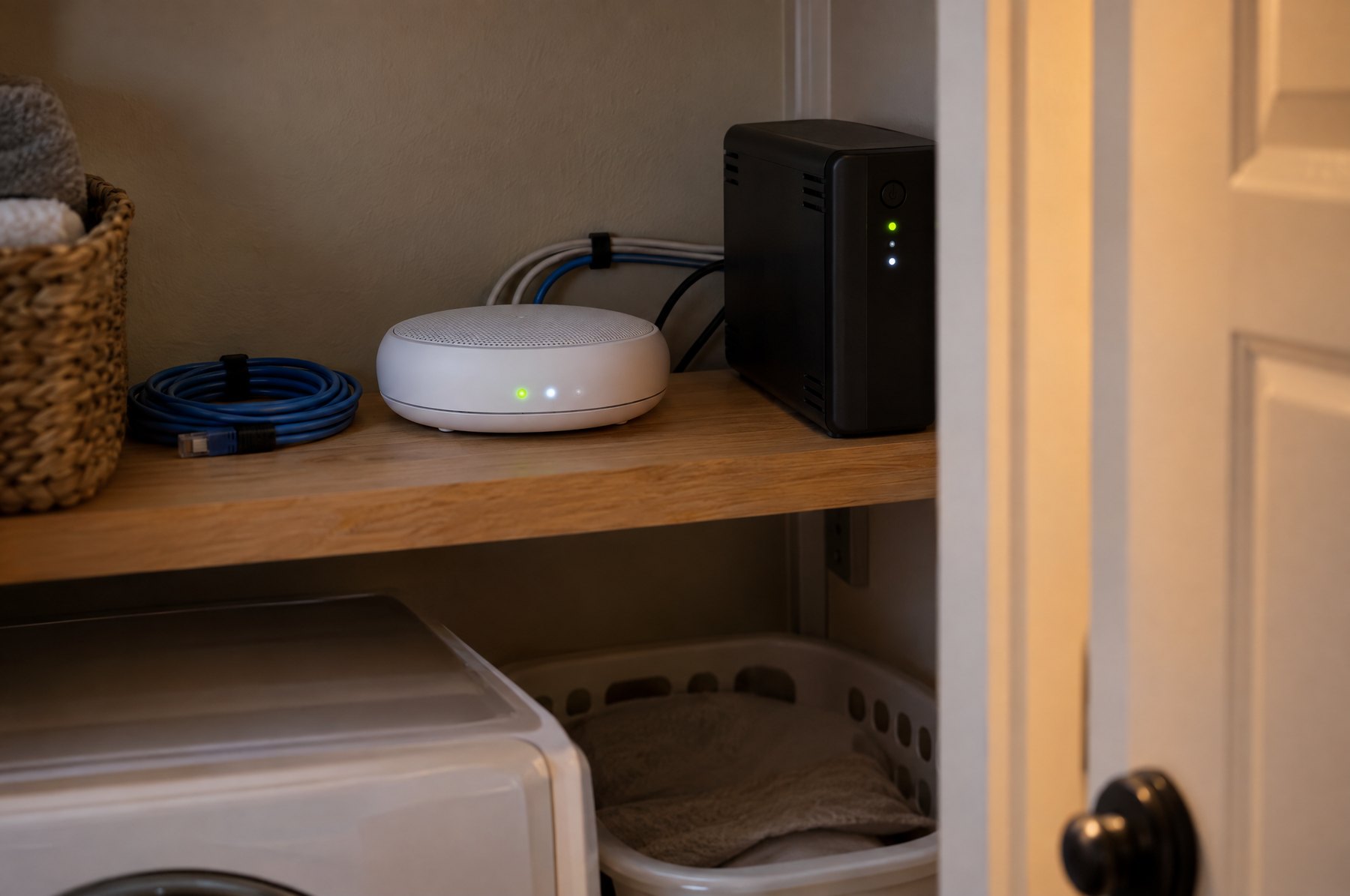
What it does. Connects sensors and locks, sounds a siren, and in some systems keeps working on battery and cellular when the power or internet drops [21].
What it cannot do. Cellular backup usually needs a paid plan [21], and the base station battery lasts hours, not days.
Florida tip. Put the router and modem on a small battery backup so cameras stay online when the power blinks.
What does monitoring really cost?
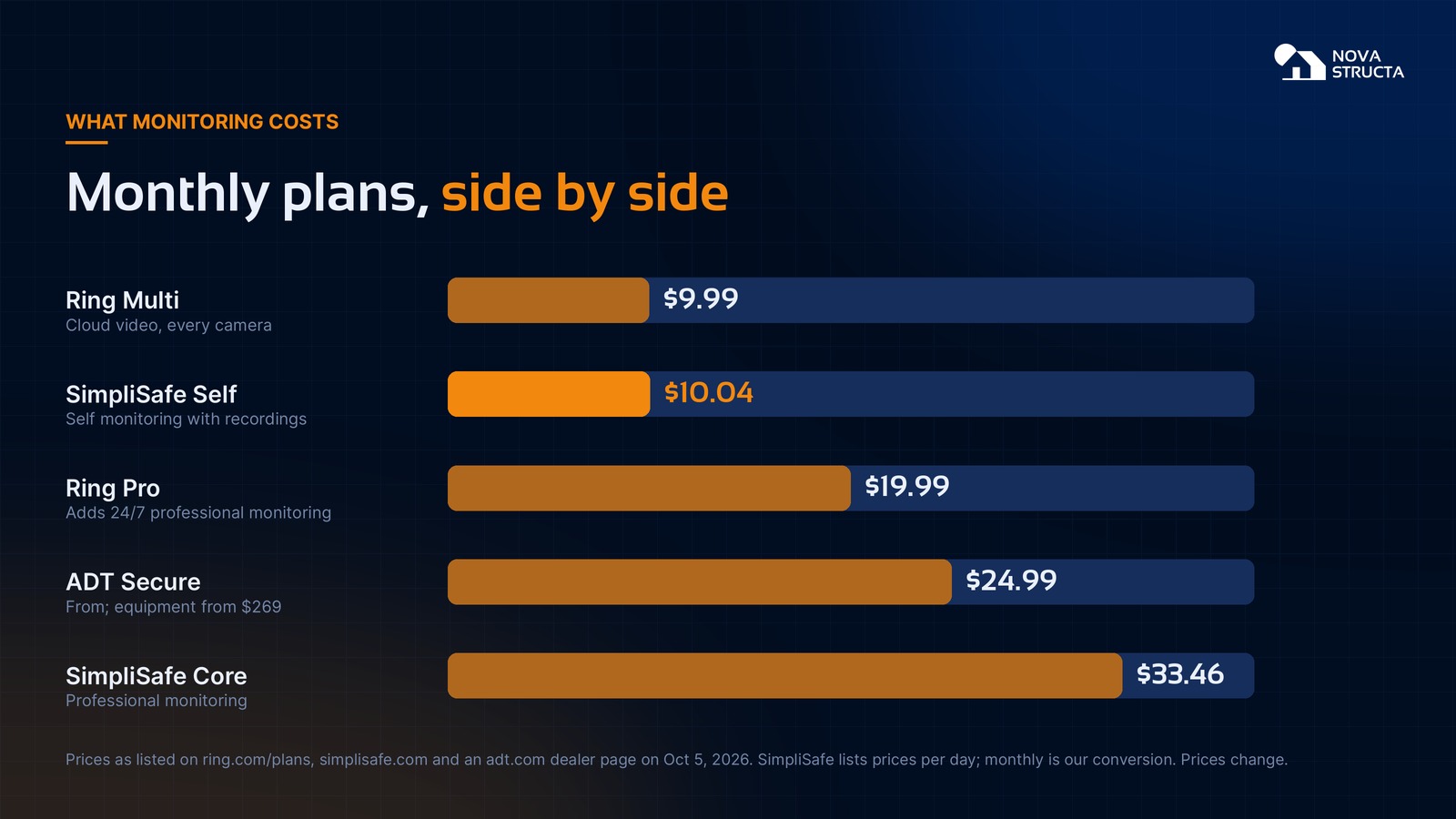
Here are published prices from three of the best known names, as listed on October 5, 2026. Prices and plan names change often, so check before you buy.
| Plan | Listed price | What it adds |
|---|---|---|
| Ring Solo | $4.99/mo | Cloud video for one device [6] |
| Ring Multi | $9.99/mo | Cloud video for every device at one home [6] |
| Ring Pro | $19.99/mo | Adds 24/7 professional monitoring [6] |
| SimpliSafe Self Monitoring | 33¢/day (about $10/mo) | Self monitoring with camera recordings [7] |
| SimpliSafe Standard | 76¢/day (about $23/mo) | Professional monitoring [7] |
| SimpliSafe Core | $1.10/day (about $33/mo) | Professional monitoring with more features [7] |
| ADT Secure Monitoring | From $24.99/mo | Equipment from $269 [8] |
SimpliSafe lists prices per day, so the monthly figures are our conversion. SimpliSafe says its plans have no contracts and no cancellation fees [7]. On the ADT page we checked, a promotional professional monitoring plan required a 36-month agreement with early cancellation fees [8]. That is the kind of commitment worth reading slowly.
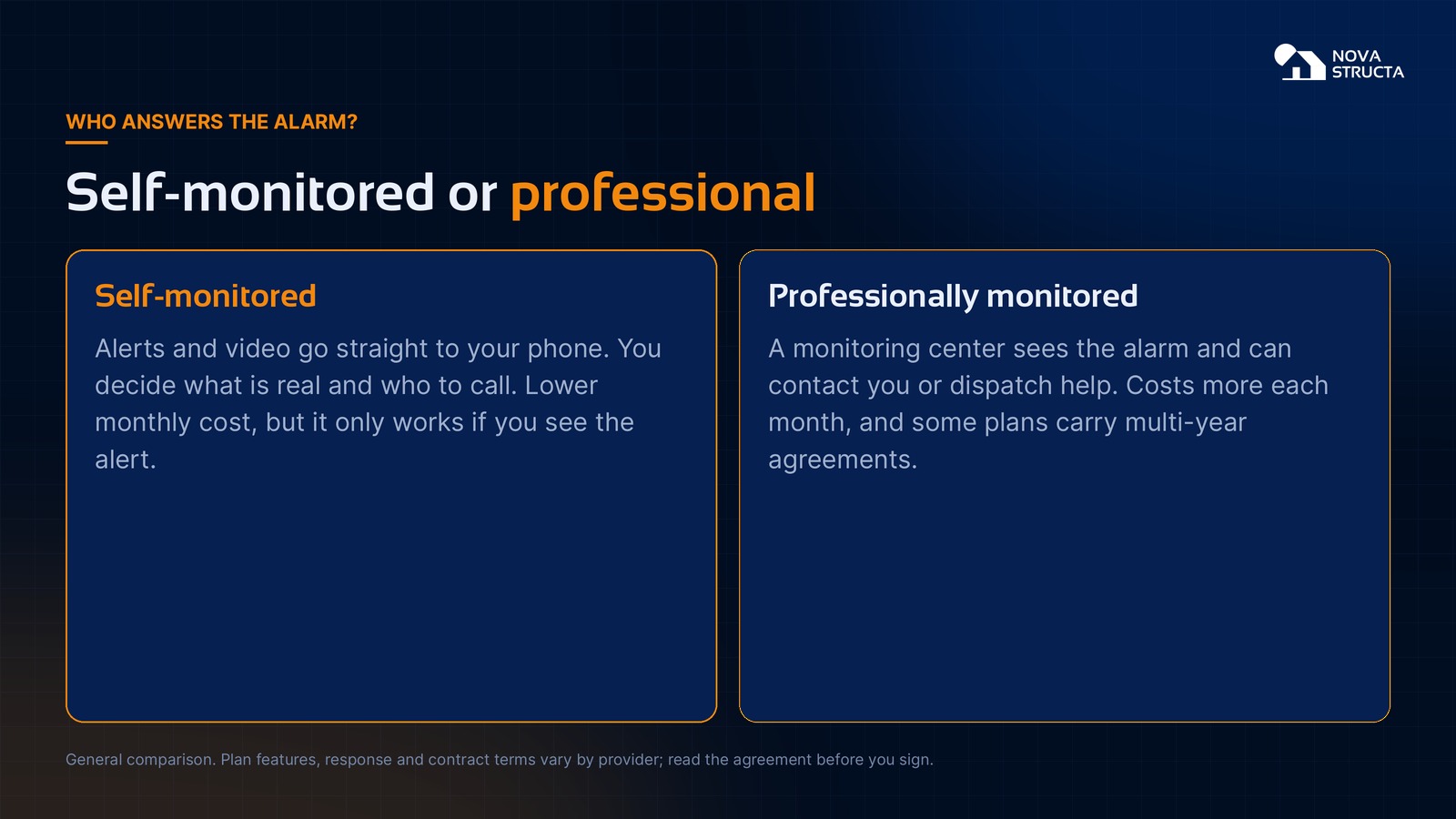
Self-monitored or professional? Be honest about how you live.
Self-monitoring sends every alert and clip to your phone. It costs less, and it only works if you see the alert and act on it.
Professional monitoring puts a center between the alarm and help. It costs more each month. If you travel, sleep through notifications or care for someone who could not respond, it can be worth it. Many smart systems let you add it month to month, with no long contract.
How do you keep a smart home from being hacked?
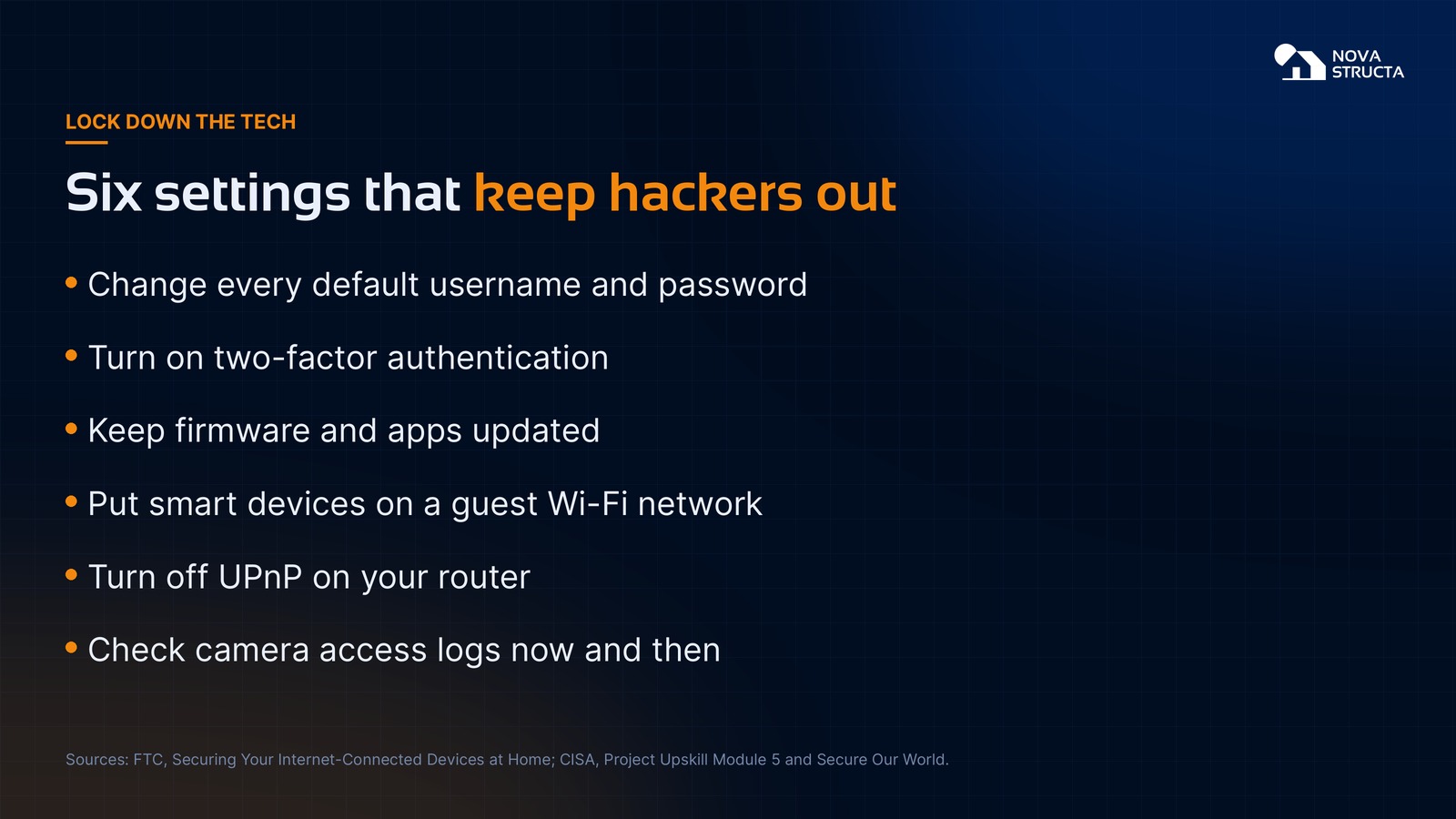
A camera inside your home is only an asset if you control who sees it. Federal consumer guidance is simple and worth following:
- Change every default username and password, the FTC says, if the device came with one [10].
- Turn on two-factor authentication wherever the app offers it [10] [12].
- Keep firmware updated, the software inside the device [10].
- Use a guest Wi-Fi network for smart devices that only need internet access, as CISA suggests [11].
- Turn off UPnP on your router [11].
- Check your camera's access logs now and then for anyone you do not recognize [10].
Two developments are worth knowing about. The FCC created the U.S. Cyber Trust Mark, a voluntary label for connected devices such as home security cameras, with a QR code that shows how long the product will get security updates [13]. The program changed administrators and named a new lead in April 2026 [14], so look for the label as products begin to carry it. And Matter, the industry standard that lets devices from different brands work together, added cameras in version 1.5 in November 2025 [15].
Florida rules before you record
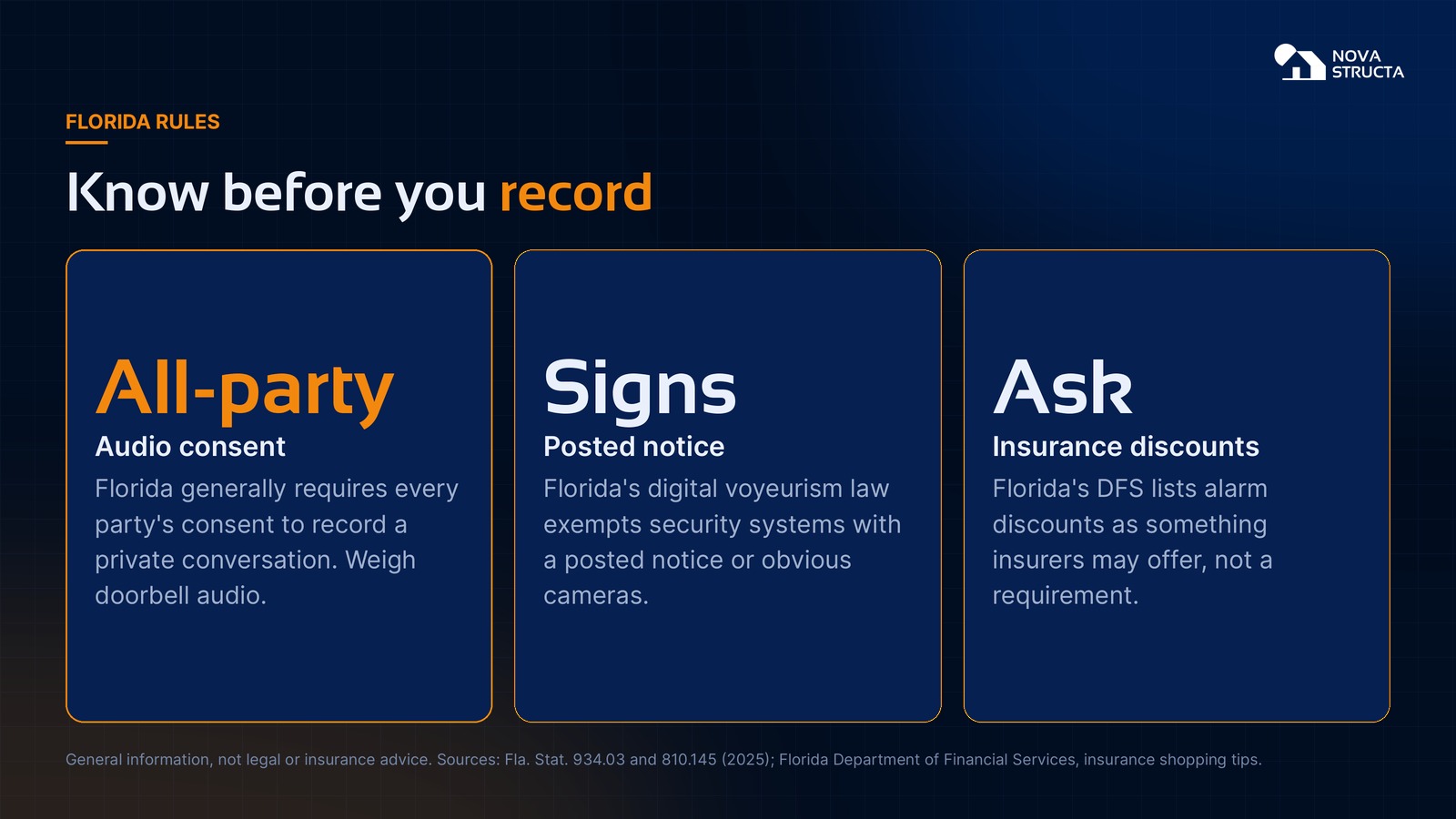
Three things Florida homeowners should know.
Audio is different from video. Florida law generally allows recording a private conversation only when all parties consent [17]. Whether a porch conversation counts as private depends on the circumstances, so many owners turn doorbell audio recording off or post a notice. If you are unsure, ask a lawyer.
Point cameras at your property, not into private spaces. Florida's digital voyeurism law exempts security systems where a written notice is posted conspicuously or the camera is clearly obvious [18]. Neither exemption covers aiming into a neighbor's windows.
Ask your insurer about a discount. Florida's Department of Financial Services lists a security alarm discount as something insurers may offer, set by each company's own guidelines [19]. Ask what equipment qualifies before you buy.
What happens when the power or internet goes out?
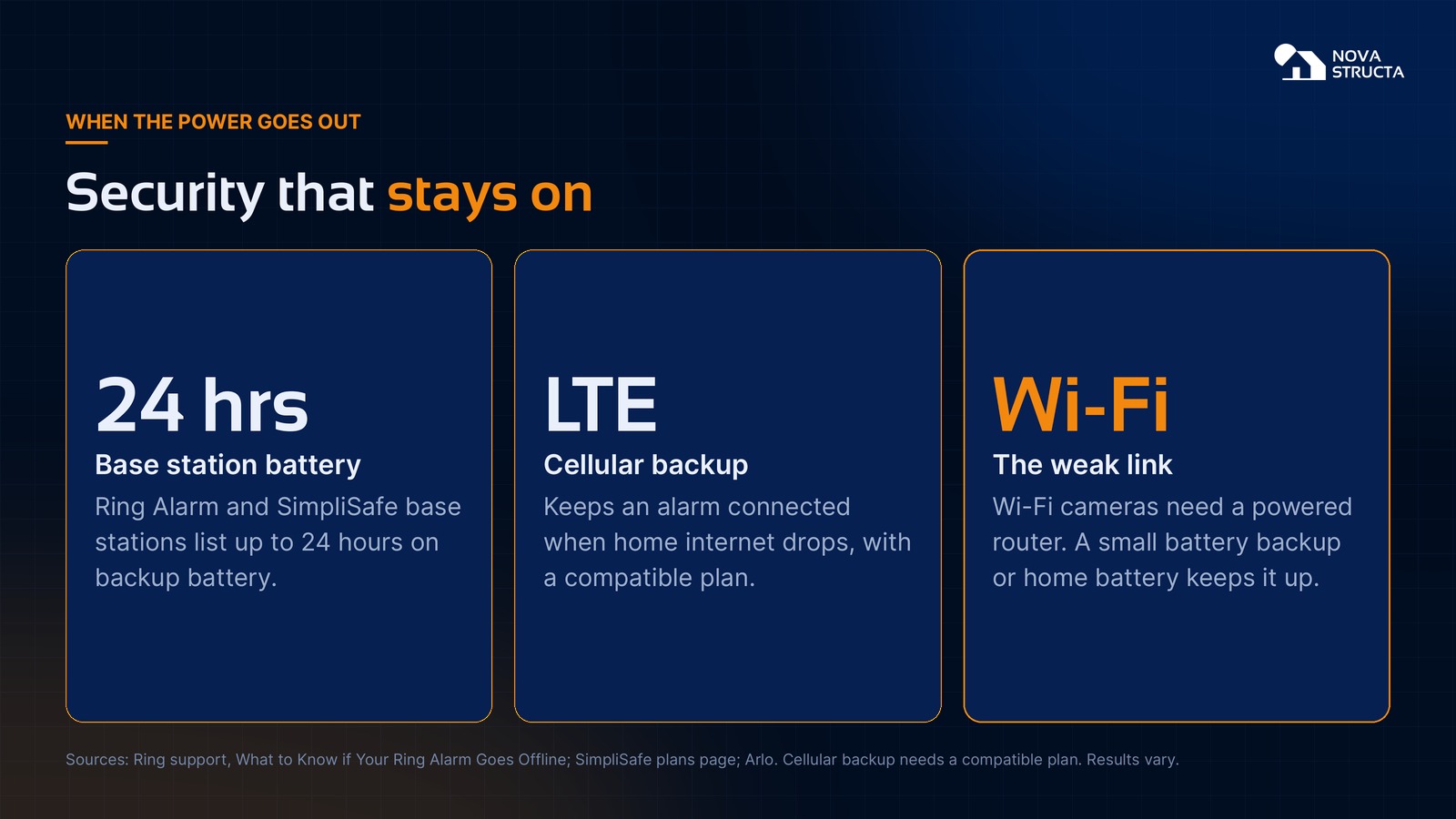
This is the Florida question. Many alarm base stations keep running on a built-in battery: Ring says up to 24 hours depending on use [21], and SimpliSafe lists up to 24 hours as well [7]. Ring's cellular backup keeps the alarm connected when home internet drops, with a compatible subscription [21].
Cameras are the weak link. Many need a Wi-Fi connection to work [9], which means a powered router and modem. A small battery backup on the network shelf covers short blinks. For longer outages, a home battery keeps the router, cameras and lights running with the rest of the house. See powering your home day and night and do solar panels work in a hurricane?
A setup checklist for a Florida home
- Start with the doors. A smart deadbolt on the front door, and contact sensors on every entry door and lanai slider.
- Add a doorbell camera, then one camera on the driveway and one on the side gate.
- Light the approach. Sunset and motion lighting on the walk, drive and side yard.
- Build a good night scene that locks everything and flags anything left open [3].
- Lock down the accounts: new passwords, two-factor authentication, a guest network for devices [10] [11].
- Decide on audio before you install a doorbell [17].
- Back up the network so the system stays online in a storm [21].
- Call your insurer about any alarm discount [19].
Questions to ask before you buy
- Which features need a subscription, and what does it cost per month and per year [6] [7]?
- Is there a contract, how long is it, and what does it cost to cancel [8]?
- Can I add or drop professional monitoring month to month?
- Does the camera store video locally, in the cloud, or both?
- How long will the maker send security updates for this device [13]?
- Does it work with my other devices, or with Matter [15]?
- What keeps it running in a power or internet outage [21]?
- Who installs the hardware, and who do I call when something stops working?
The bottom line
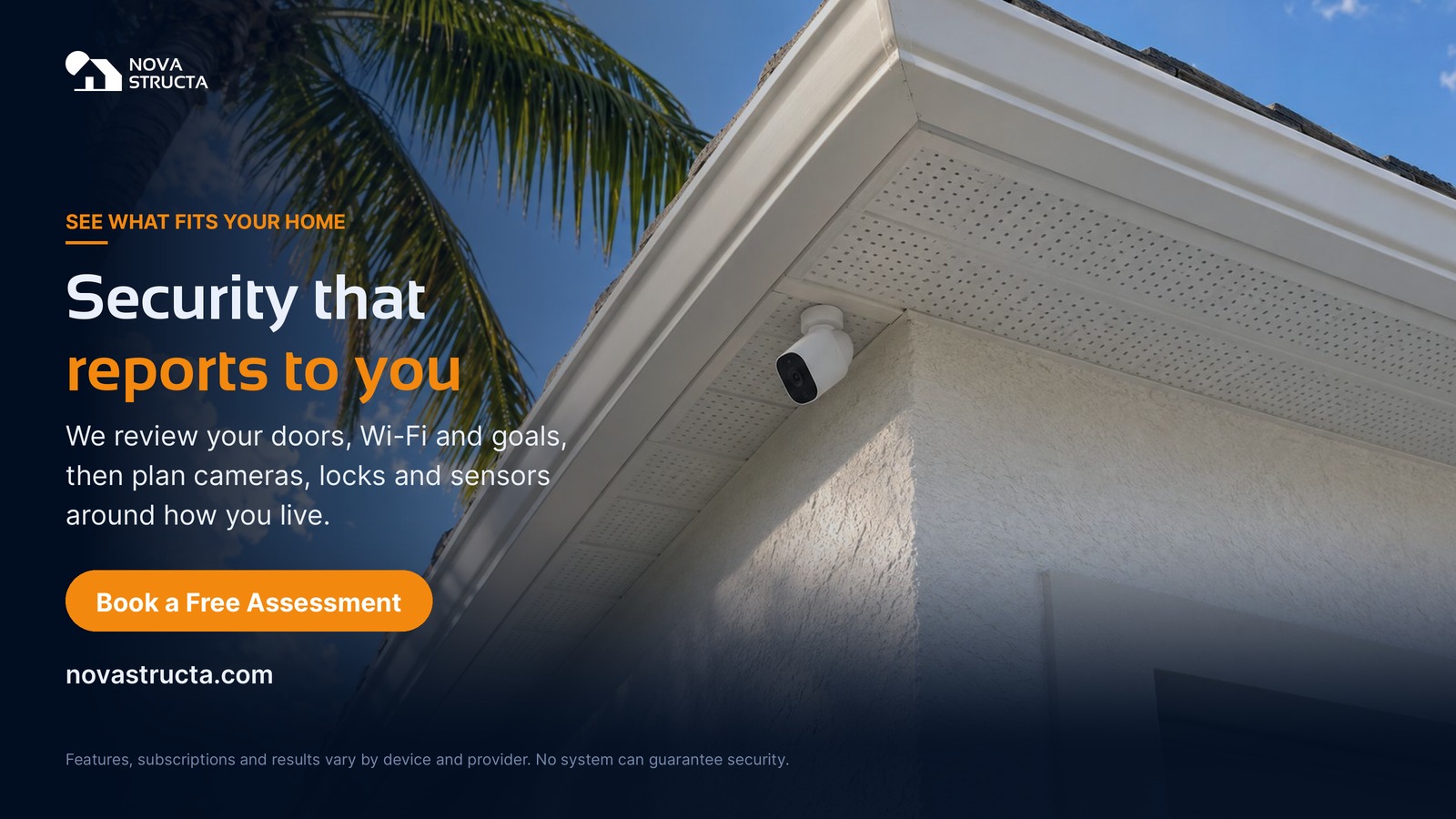
Most burglaries happen when nobody is home, often in daylight, and many start at an unlocked door [3]. Smart locks, sensors, cameras and lights go after exactly that: they lock what you forgot, light what someone wants dark and tell you the moment something changes. Burglars themselves say alarms and cameras push them elsewhere [5]. You can run it all from your phone for a few dollars a month, add professional monitoring when it makes sense, and skip the multi-year contract [6] [7]. No system can guarantee a home is safe, and connected devices need the same care as any account [10].
If you would like help planning cameras, locks and sensors around your doors, Wi-Fi and the way you live, see smart home and automation or book a free assessment. Any installation or configuration requiring licensed work is performed by independent qualified provider(s) or contractor(s), where required. Installations are performed by independent Florida licensed contractor(s).
Sources
- Federal Bureau of Investigation, "UCR Summary of Reported Crimes in the Nation, 2024," August 2025. cde.ucr.cjis.gov (PDF)
- USAFacts, "What is the crime rate in Florida?" using FBI data, updated June 5, 2026. usafacts.org
- S. Catalano, Bureau of Justice Statistics, "Victimization During Household Burglary," September 2010, NCJ 227379. bjs.ojp.gov (PDF)
- Bureau of Justice Statistics, "Criminal Victimization, 2024," September 2025, and property crime infographic. bjs.ojp.gov (PDF)
- K. Blevins, J. Kuhns and S. Lee, University of North Carolina at Charlotte, "Understanding Decisions to Burglarize from the Offender's Perspective," December 2012. Funded by the Alarm Industry Research and Educational Foundation. siacinc.org (PDF)
- Ring, "Ring Home Plans," prices as listed October 5, 2026. ring.com
- SimpliSafe, "Choose your monitoring," prices as listed October 5, 2026. simplisafe.com
- ADT, monitoring plans page (authorized dealer), prices as listed October 5, 2026. adt.com
- Arlo, "Arlo Go 2: a security camera without Wi-Fi," updated August 28, 2023. arlo.com
- Federal Trade Commission, "Securing Your Internet-Connected Devices at Home." consumer.ftc.gov
- Cybersecurity and Infrastructure Security Agency, Project Upskill, Module 5. cisa.gov
- Cybersecurity and Infrastructure Security Agency, Secure Our World, "Turn On MFA." cisa.gov
- Federal Communications Commission, news release on the U.S. Cyber Trust Mark, March 14, 2024. fcc.gov (PDF)
- Nextgov/FCW, "FCC selects ioXt Alliance to lead cyber labeling program," April 2026. nextgov.com
- Connectivity Standards Alliance, "Matter 1.5 introduces cameras, closures and enhanced energy management capabilities," November 2025. csa-iot.org
- Builders Hardware Manufacturers Association, "ANSI/BHMA A156.40-2025, Residential Deadbolts." buildershardware.com
- Florida Statutes, Section 934.03, Interception and disclosure of wire, oral, or electronic communications (2025). flsenate.gov
- Florida Statutes, Section 810.145, Digital voyeurism (2025). flsenate.gov
- Florida Department of Financial Services, "Tips for Shopping for Homeowners Insurance." myfloridacfo.com
- USPS Office of Inspector General, "Package Theft in the United States," RISC-WP-25-002, May 15, 2025. uspsoig.gov (PDF)
- Ring, "What to Know if Your Ring Alarm Goes Offline." ring.com
Savings and utility-bill examples shown are illustrative only, are not guaranteed, and may not reflect typical results. Actual savings depend on your energy usage, system size, roof and site conditions, financing terms, utility rates, net-metering rules, and other factors specific to your home.