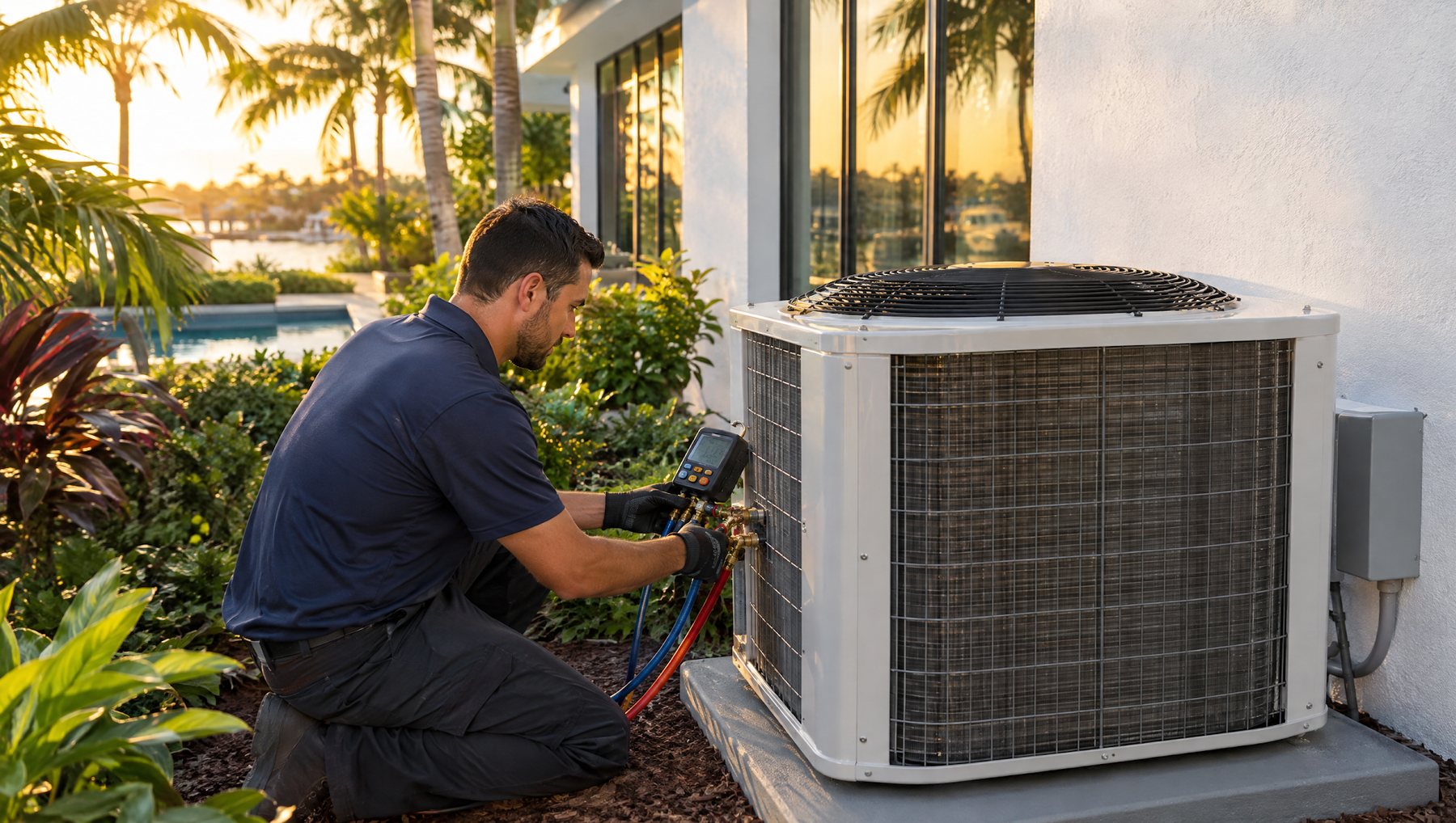
What size AC do I need for my Florida home?
Start at about 1 ton for every 500 to 600 square feet. By that rule of thumb, a 1,600 square foot home lands near 2.5 to 3 tons and a 2,000 square foot home near 3.5 to 4 tons [1]. Treat that as where the conversation starts, not where it ends. The real size comes from a Manual J load calculation on your house [3], and in Florida bigger is not better: an AC that is too big cools fast, shuts off and leaves the air damp [2].
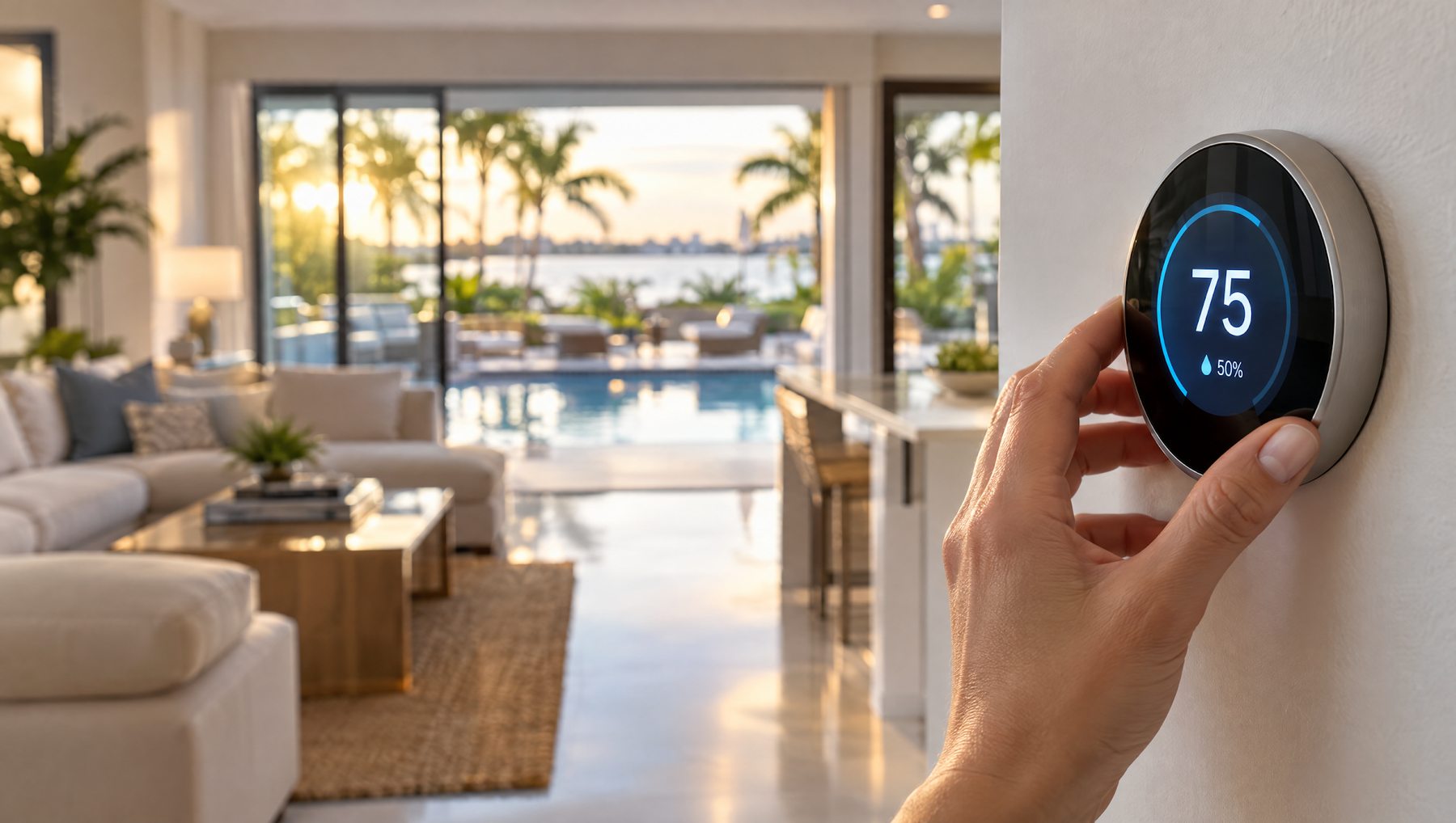
Find your starting point
How big is the cooled part of your home?
Tap a home size to see where the rule of thumb puts it.
About 2 to 2.5 tons24,000 to 30,000 Btu per hour. Common for condos and smaller single-story homes. A tight, shaded home may need less.
About 2.5 to 3 tons30,000 to 36,000 Btu per hour. Big west-facing glass or ducts in a hot attic push toward the top of the range; a newer, well-sealed home may land below it.
About 3.5 to 4 tons42,000 to 48,000 Btu per hour. This is where oversizing is most common, so ask to see the load calculation before you accept 4.
About 4 to 5 tons48,000 to 60,000 Btu per hour. Five tons is the top of Angi's residential tonnage chart [1], so a load calculation matters even more here.
5 tons or moreAt this size, many homes are better served by two systems or a zoned system, one per floor or wing [1].
Usually two systemsLarger homes are commonly split into two or more systems or zones so each part of the house runs long enough to stay dry [1].
These ranges are the 500 to 600 square feet per ton rule of thumb, rounded to the half-ton steps equipment comes in [1]. They are a sanity check for a quote, not a design. Building scientists point out that rules of thumb were built on older, leakier houses, and that even new code-built homes would likely come out oversized by them [3].
Same room, three ACs: tap to compare

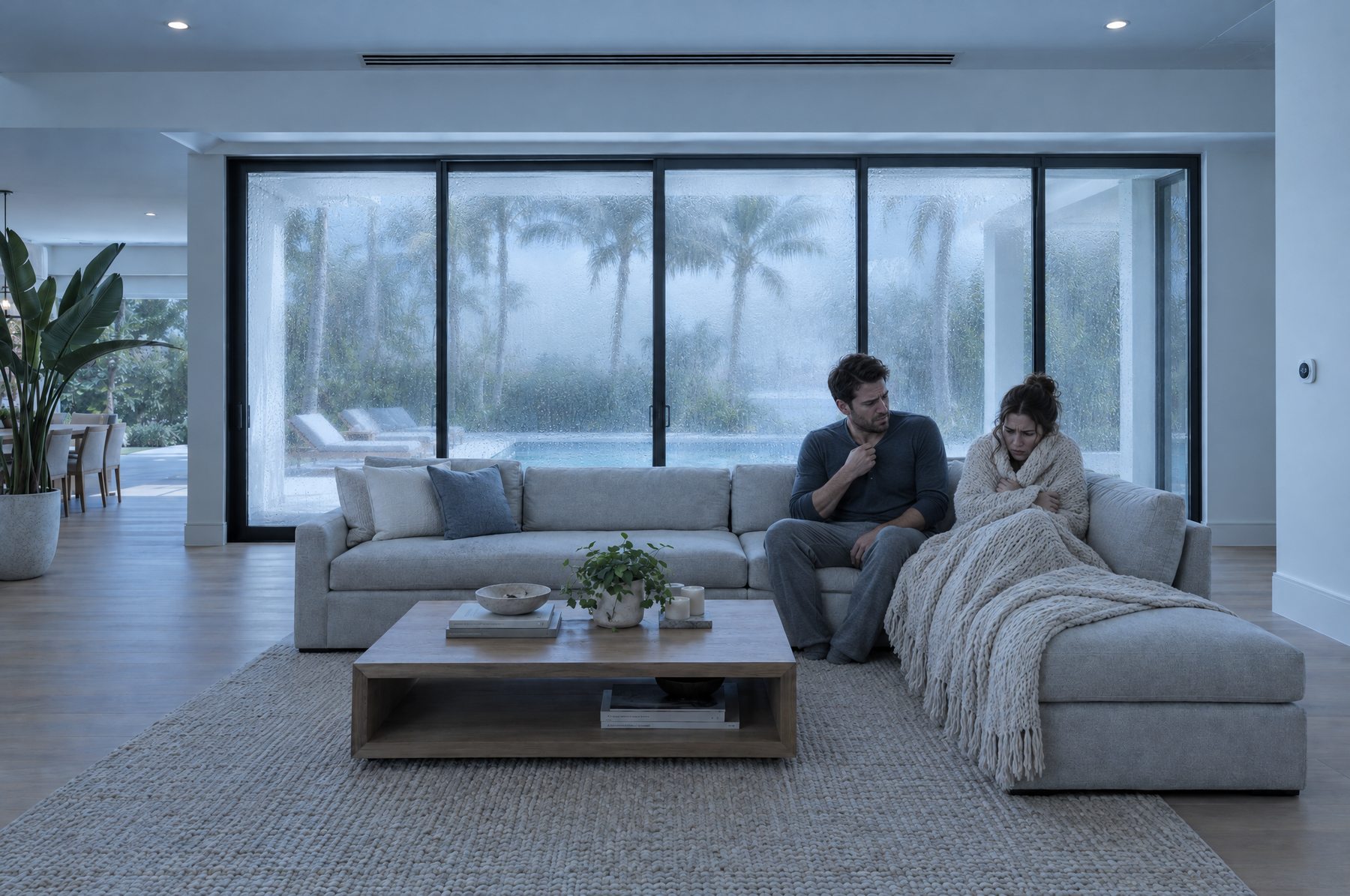

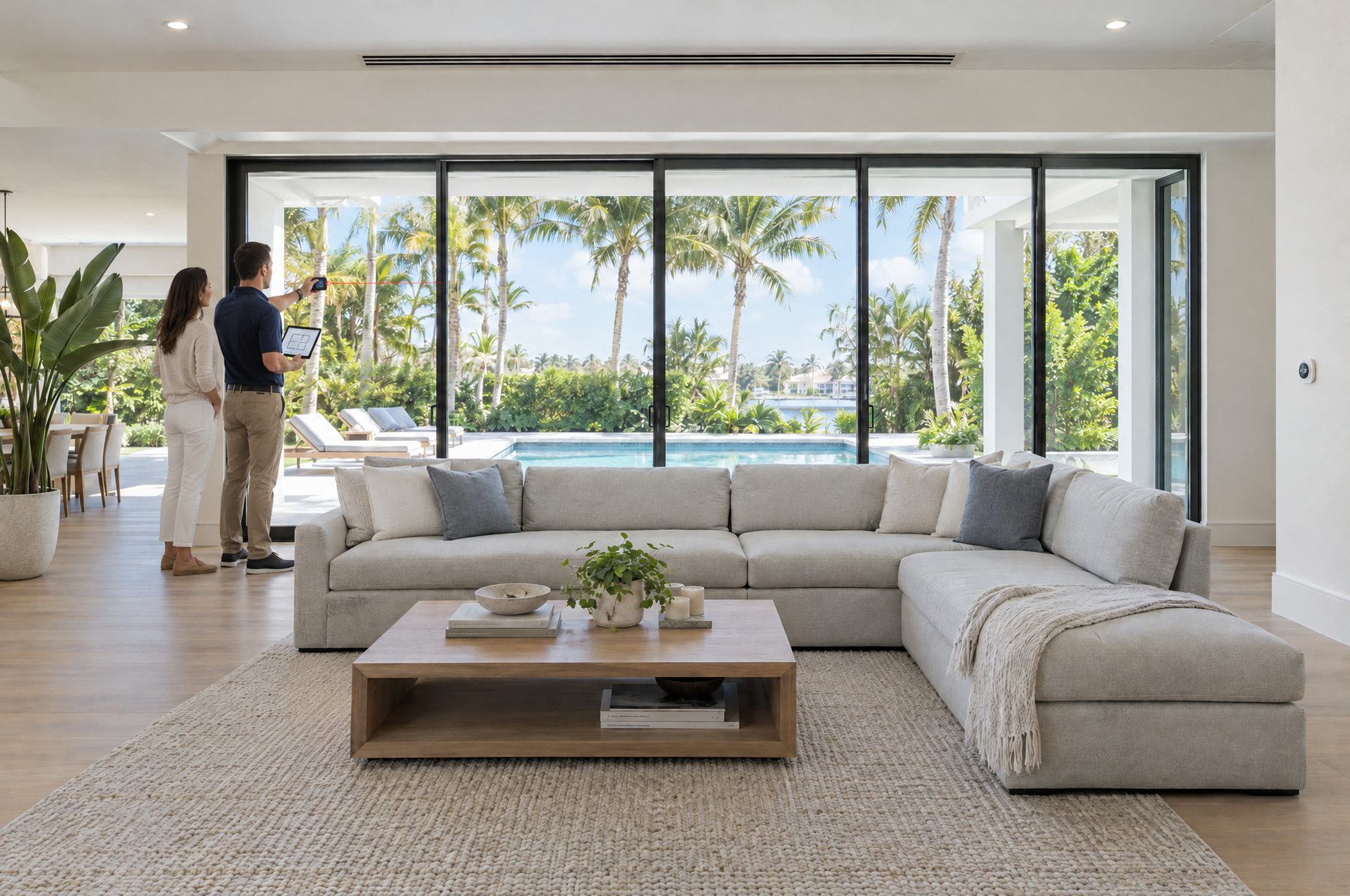 Too smallToo bigRight sizeHow you get there
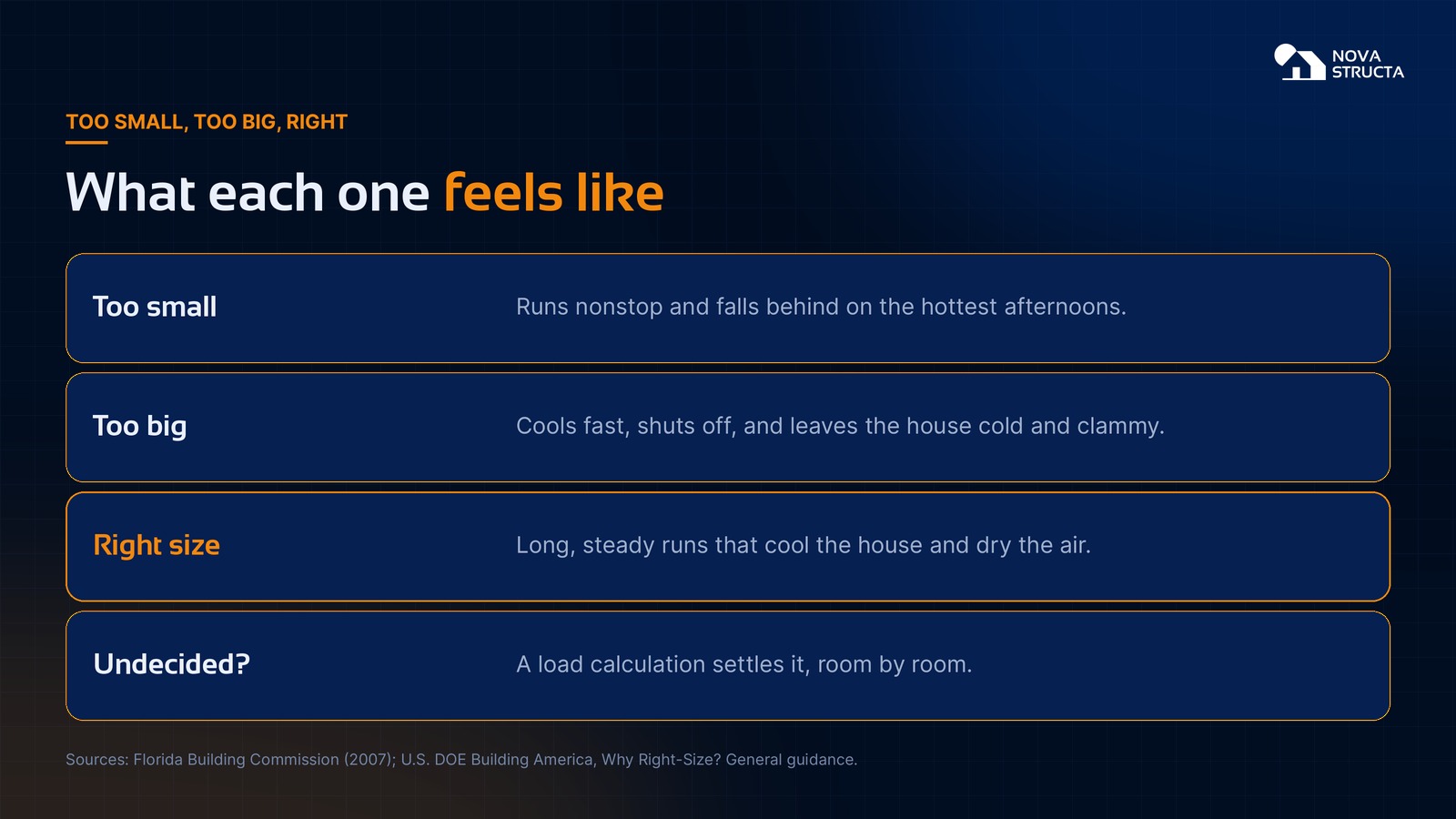
Too small. The system runs nonstop on a July afternoon and still falls behind. A right-sized system may also drift a couple of degrees on the very hottest hours of the year, which is normal; one that can't hold temperature most afternoons is undersized or has a duct or charge problem [3].
Too big. It hits the set temperature fast and shuts off before the coil has time to pull moisture out. The thermostat reads cool, the air feels damp, and humidity creeps up, which is how musty smells and mold get started [2] [4].
Right size. Long, steady run times. That is what lets water condense on the indoor coil and drain away, so the house is cool and dry at the same time [3].
How you get there. A Manual J load calculation measures the house: square footage, windows and which way they face, insulation, air leaks, ducts and the people who live there. Manual S then picks equipment to match [3].
Same room, same camera, four versions. Photos are illustrations.
Why bigger is not better in Florida
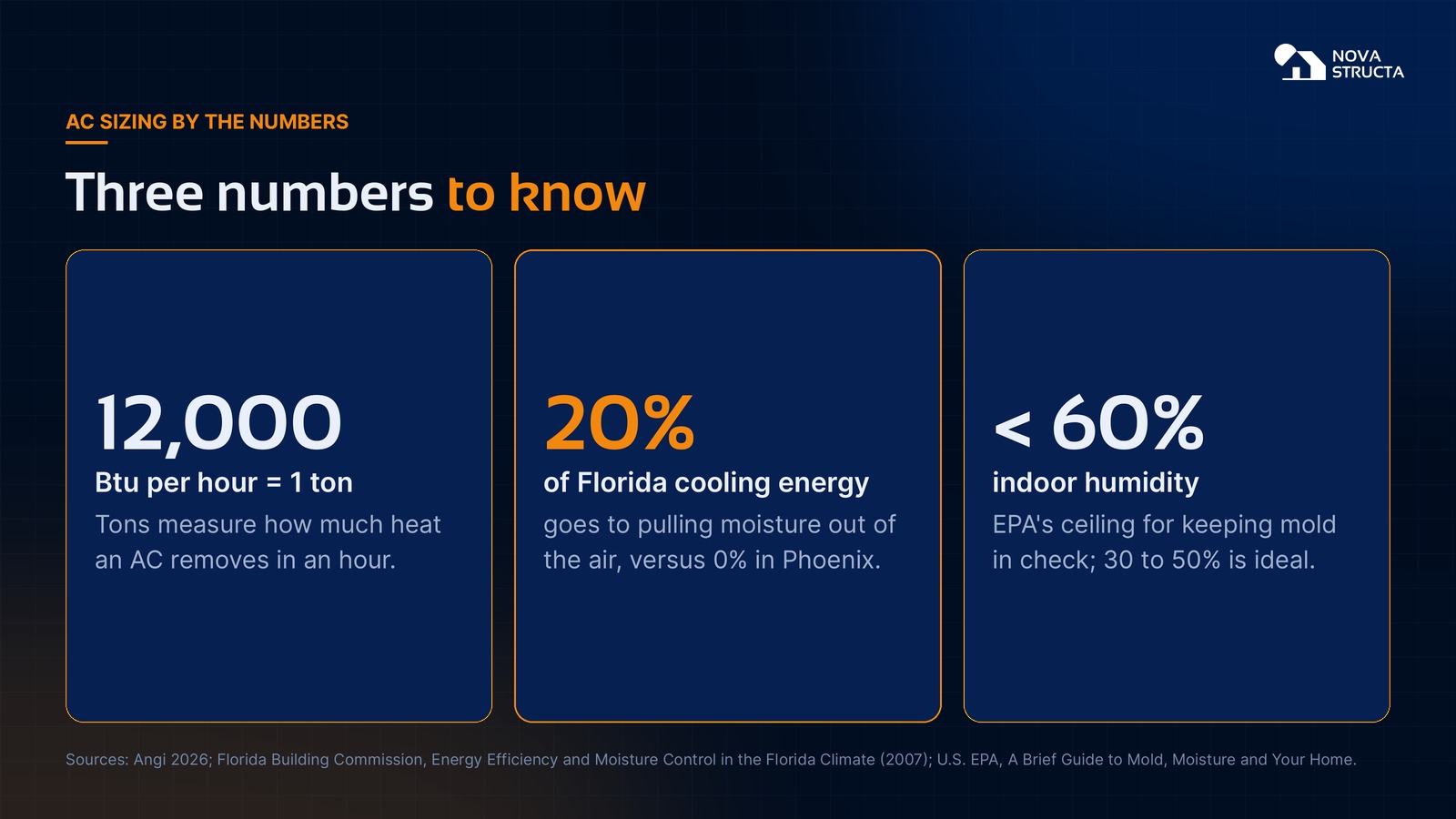
An air conditioner does two jobs at once: it lowers the temperature and it pulls water out of the air. In Phoenix the second job is close to zero. In Florida, about 20% of the energy used to cool a home goes to removing moisture [2].
The moisture only comes out while the indoor coil is colder than the air's dew point, so it depends on how long the system runs. A Florida Building Commission report put it plainly: oversized equipment short cycles, removes less water, and leaves indoor humidity higher [2]. That same report named oversizing and poor duct systems as widespread problems, and ranked proper sizing as the top priority for Florida homes [2].
Systems are typically designed for outdoor conditions that are exceeded only about 2.5% of the time [2]. Sizing for the single hottest afternoon of the year means short cycles, and a clammy house, for most of the other days.
What changes the number for your house
| Factor | Pushes the size | Why |
|---|---|---|
| West and south facing glass | Up | Sun through windows is one of the biggest heat gains in a Florida home [2] |
| Low-E, low solar gain windows | Down | Less solar heat gets in, so the load drops [2] |
| Attic insulation and air sealing | Down | Less heat and humid air leak in [2] |
| Leaky ducts in a hot attic | Up, or fix the ducts | A bigger unit is a common, wrong fix for hot rooms caused by ducts [2] |
| More people at home | Up | People add heat and moisture [3] |
| A newer, tighter house | Down | Rules of thumb were built on older homes [3] |
If your current system leaves certain rooms hot, the answer is often the ducts, not a bigger unit. Humidity problems and rooms that are too hot or too cold are both signs ENERGY STAR links to equipment, duct or insulation problems [5].
What to ask for before you sign
- A Manual J load calculation for your house, done before the equipment is chosen [3].
- Manual S equipment selection, so the unit matches the load instead of the label on the old one [3].
- A duct check, and a Manual D duct design if ducts are being changed [3].
- The AHRI certificate showing the outdoor unit, coil and air handler are rated together [3].
- Proof the refrigerant charge was set and tested, by superheat, subcooling or weight [3].
- A word about humidity. Ask how the system will keep the house under 60% humidity [4]; variable-speed air handlers can help the system dehumidify [3].
If a quote is a tonnage and a price with no calculation behind it, that is the rule of thumb. It may be close. The calculation is how you find out. For what a replacement typically costs, see how much a new AC costs in Florida.

Quick answers
How many square feet does a ton of AC cool?
About 500 to 600 square feet per ton is the common rule of thumb [1]. Well-sealed, well-shaded homes often need less, and a load calculation gives the real number [3].
What size AC do I need for a 2,000 square foot house in Florida?
The rule of thumb puts it around 3.5 to 4 tons [1]. Many newer or well-insulated Florida homes come in lower once a Manual J load calculation is done [3].
Is it bad to oversize an air conditioner?
In Florida, yes. An oversized AC short cycles, removes less moisture, and leaves the house cool but clammy, which raises the risk of mold [2] [4].
Can I just replace my AC with the same size?
You can, but the old unit may have been oversized from the start, and the house may have changed since: new windows, insulation or a closed-in lanai. A load calculation tells you whether the same size still fits [3].
What humidity should my house be in Florida?
EPA recommends keeping indoor humidity below 60%, ideally between 30% and 50% [4].
How many BTU is a ton?
One ton of cooling is 12,000 Btu per hour [1].
The bottom line
The square-foot rule of thumb gets you in the neighborhood: about 1 ton per 500 to 600 square feet [1]. In Florida, the right size is the one that runs long enough to dry the air, and the only way to know it is a load calculation on your house. Ask for it in writing, along with the matched equipment and a duct check.
If you would like a quote built that way, see HVAC systems or book a free assessment.
Results vary by home, equipment, usage and installation. Sizing ranges shown are general rules of thumb, not a design or a quote. Examples and visuals are illustrative only. Nova Structa coordinates consultations, project review, and customer support, but does not perform installation work. Installations are performed by independent Florida licensed contractor(s). ENERGY STAR is a registered trademark of the U.S. Environmental Protection Agency. Angi is a trademark of its owner. References are for identification only and do not imply sponsorship, endorsement, certification, partnership, or affiliation.
Sources
- Angi, "How Much Does AC Replacement Cost? [2026 Data]," updated July 20, 2026 (1 ton per 500 to 600 sq ft; 1 ton removes 12,000 Btu per hour; tonnage chart from 1.5 to 5 tons; larger homes may need more than one system). angi.com
- Florida Building Commission, "Energy Efficiency and Moisture Control in the Florida Climate," report of the February 28, 2007 symposium (latent load about 20% in Florida vs. 0% in Phoenix; short cycling from oversizing; 97.5% design condition; sizing ranked the top priority). floridabuilding.org
- U.S. Department of Energy, Building America, "Why Right-Size? Science versus Practicality" (Consortium for Advanced Residential Buildings, 2009). energy.gov (PDF)
- U.S. Environmental Protection Agency, "A Brief Guide to Mold, Moisture and Your Home." epa.gov
- ENERGY STAR, "When is it time to replace?" energystar.gov
Savings and utility-bill examples shown are illustrative only, are not guaranteed, and may not reflect typical results. Actual savings depend on your energy usage, system size, roof and site conditions, financing terms, utility rates, net-metering rules, and other factors specific to your home.